Blog

  • Messianic Jews: Constructive Relationships

    Messianic Jews: Constructive Relationships

    One of the big challenges from listening again to the Jewish voice concerns the relationship of Israel to the nations.

    There is much in the New Testament to indicate that this distinction did not lose its significance with the death and resurrection of Jesus. For example, the twelve are told by Jesus that “at the renewal of all things, when the Son of Man sits on his glorious throne, you who have followed me will also sit on twelve thrones, judging the twelve tribes of Israel.” (Matt. 19: 28).

    In his book La Promesse the late Cardinal Lustiger of Paris contrasted this judgment of the people of Israel with the judgment of “the nations” described in Matt. 25:

    “All the nations [that does not include Israel] will be gathered before him” (v. 32).

    In the Catholic – Messianic dialogue, one of the theologians in the Catholic team raised the question of the respective callings of Peter and Paul, pointing out that in Galatians 2, Peter is sent to the Jews and Paul to the nations.

    “For God, who was at work in the ministry of Peter as an apostle to the Jews, was also at work in my ministry as an apostle to the Gentiles.” (Gal. 2: 8).

    This may throw light on some puzzling aspects of the Acts of the Apostles. This is the slowness of the Twelve to leave Jerusalem. Even when wider persecution followed the stoning of Stephen, we are told:

    “On that day a great persecution broke out against the church at Jerusalem, and all except the apostles were scattered throughout Judea and Samaria.” (Acts 8: 1).

    They are all still in Jerusalem at the time of the council described in Acts 15, probably around the year 49. Then when the focus switches to Paul’s apostolic journeys, we hear no more of the Twelve. The explanation may be that when the Twelve did eventually go out, they went to the Jewish communities of the Diaspora, and the focus of Luke in Acts is on the spread of the Gospel among the Gentiles. I want to raise an interesting question here. This is not the expression of a position or conviction, but a thought that the Church may need to pursue. Just as Simon Peter represents those called through the earthly ministry of Jesus that is at the origin of the normal order of ministry in the Church, so Paul is the picture of a charismatic ministry through the intervention of the risen Christ that did not originate in ordination by the twelve. It is very important that Paul is integrated into the koinonia of the Church, that he brings the conflict in Antioch before the apostles and elders in Jerusalem, and that he recognizes the authority of the twelve, and of the “pillars” of the Church in Jerusalem (see Acts 21: 18 and Gal. 2: 1 – 2). But there is no evidence that Paul was ordained through the imposition of hands by any of the apostles. After his dramatic conversion, he says: “But when God, who set me apart from birth and called me by his grace, was pleased to reveal his Son in me so that I might preach him among the Gentiles, I did not consult any man, nor did I go up to Jerusalem to see those who were apostles before I was, but I went immediately into Arabia and later returned to Damascus.” (Gal. 1: 15 – 17).

    This is my question: Is God doing today with the Jewish people something parallel to Paul’s work among the nations? Is it possible and could our theologies and our Churches accept that God might be raising up by his Spirit evangelists and leaders among the Jewish people outside the normal order established among the nations? So far in this talk, the question has been: what do the Messianic Jews have to do to obtain some kind of historic Church recognition. But a different question faced the Catholic team in the dialogue. What do we have to do (a) to make such a recognition a possibility and (b) to make more Messianic Jews want such a recognition (for many today would not). For the dialogue team here is not typical of the Messianic movement as a whole. One reason is that the Messianic team have grown in their understanding and sympathy through nine years of dialogue. So I want to close by commenting on these two questions. What do we have to do to make such a recognition a possibility? First, as I have said, we have as Church to get to know the Messianic Jews better. Second, then it is important that our scholars and leaders enter into a process of re-interpreting the Scriptures including the New Testament in the perspective that God has not rejected the Jewish people and that they remain the covenant people, even in their non-acceptance or not-yet acceptance of Jesus as Messiah of Israel.

    What do we have to do to make more Messianic Jews want constructive relations with the ancient Churches? First, we need to humble ourselves and confess the ways in which we have oppressed the Jewish people over the centuries and the ways in which we have insulted and dishonoured them. One thinks here of the 8 homilies against the Jews of St John Chrysostom given in Antioch in 387. They are not why he was recognized as a saint and given the title “golden-mouthed”. Second, we need to make plain to them the ways in which our Churches have repudiated the rejection of the Jewish people. Third, we need to befriend them, and be aware of the way that they often experience being caught between the rejection of the synagogue and the rejection by Christians (why don’t you become ordinary Christians like everyone else?).

  • Messianic Jews: Recognition by the Church

    Messianic Jews: Recognition by the Church

    The Importance for the Messianic Jews for recognition by the Church

    The latest development with the making public of a key paper from the dialogue corresponds to a deep desire in the Messianic team for recognition by the Churches. From the start of this dialogue, the Catholic team’s main questions were “Who are you?” and “What do you believe?” (a very Gentile focus). The Messianic team’s basic question was: “How can we be recognized by the Catholic Church?” It is this question that I want to pursue more in this talk, because similar questions face you in the Orthodox Church.

    Naturally, the Catholic team made distinctions. What does recognition by the Church mean? Recognition has various levels and stages. It is not a “once-off” thing. Either you are recognized or not. No. First, there is an initial level of recognition in the mere holding of this dialogue. The dialogue is a statement to the Messianic Jews that the Catholic Church is ready – in its highest representatives at least – to recognize that the Messianic Jewish movement is a significant development that the Church cannot ignore. It is not just a sect. It is not just a deviation. It has a significance in God’s sight. It seems to me that in one sense this process has already begun in the Orthodox Church with the holding of these conferences. This is so particularly because of the strong corporate sense of the Catholic Church. Your leaders and people can never act just as individuals. But obviously such a recognition of basic significance increases as more representatives of the Orthodox Church take part or such conferences are also developed elsewhere.

    The publication of the Messianic paper from the Catholic dialogue is intended to promote wider discussion in the Catholic Church of the Messianic Jewish movement and the issues it raises for the Church. For as the Catholics have told the Messianic participants several times, a fuller recognition is impossible without a wider Catholic knowledge of the Messianic movement. So the Catholic team has accepted a responsibility to make the Messianic Jews more widely known in the Catholic Church. At present even most Catholic bishops know very little about the Messianic movement, and many have never heard of it.

    I can say that the Catholic team in the Dialogue has accepted the legitimacy of a Jewish expression of the Church and virtually all agree that such an expression is necessary.

    Obviously the Messianic Jews want more than the recognition that their movement has a significance in God’s sight. In particular, they first seek a recognition by the Church of their fundamental legitimacy. That is to say, they want the Church to recognize that it is both first legitimate for there to be an explicitly Jewish expression of the ekklesia and second it is necessary that such an expression should exist and be encouraged. This is in fact one of the elements central to the vision of the Toward Jerusalem Council II initiative, though which Johannes Fichtenbauer and I have come to know and appreciate Fr Vasile Mihoc. I can say that the Catholic team in the Dialogue has accepted the legitimacy of a Jewish expression of the Church and virtually all agree that such an expression is necessary. But we would all add that the Messianic Jewish movement in its present form cannot be the only possible valid Jewish expression. Some of the Catholic team have had close links with the Hebrew Catholics, who are Catholics from the Jewish people seeking to develop a Jewish identity in some way within the Catholic tradition and communion. One member in particular has links with Russia and contacts with the Orthodox Church there, particularly with the followers of Fr Alexander Men, among whom there are numerous believers of Jewish descent. So this question also faces the Orthodox Church. Apart from your response to the Messianic movement, can you recognize a distinct place and calling within the Orthodox Church for believers who affirm their continuing Jewishness.

    But of course the Messianic Jews also want to know how we regard their ministries. Can there be a possibility that the Church recognizes a validity in the ministry of Messianic Jewish leaders and pastors? If we can accept that their movement has a significance in the sight of God, is it possible that their ministries mean nothing and achieve nothing? Of course, a major question raised by the Catholics here is: How do you understand and how do you celebrate the eucharist? (though most Messianic Jews would not use that term). But with a greater emphasis in the Catholic Church since the Second Vatican Council on the liturgy of the Word and the foundational role of preaching the Gospel, there is emerging in Catholic theology the recognition that we can more easily recognize in some way the ministry of the Word in Christian communities lacking the apostolic succession of bishops than we can their ministry of the Eucharist. Though of course we also insist that the first is ordered towards the second, an emphasis which does not deny a validity to this distinction.

    In a moment I am going to make some comments that are more critical of the Evangelical and free church influences on the Messianic Jews. I do not want these comments to be received as a general criticism and rejection of our brothers in the free churches. They have many gifts and they have been used by the Lord in the raising up of the Messianic Jewish movement. With their love of the Scriptures and their heart for evangelism, they have impacted the Messianic movement very positively. They are one reason why the Messianic movement is strongly evangelistic and has spread so rapidly in recent times. So when I talk of negative influences from Evangelical Christians, do not forget the positive!

    While the Messianic Jews who seek recognition will naturally ask about their ministry, the Orthodox and the Catholic question will ask about their liturgy, particularly the eucharistic liturgy. In general, the ecumenical dialogue has brought a greater realism to our theological reflections. That is to say, the best theologians do not make the presence or absence of ministers ordained by bishops in the apostolic succession the only question to examine, which often made the theological evaluation basically legalistic. We also need to study how each community celebrates the eucharist, how they understand it and how important it is for them. Here it has to be said that from our point of view the practice and understanding of the Eucharist or the Lord’s supper in the Messianic movement appears to be weak and undeveloped. There is no regular pattern as to how often Messianic Jews keep this commandment of the Lord, “Do this in memory of me”. Some regularly, some maybe four times a year, a few only as Passover. Most have no liturgical form, no structure of prayer to the Father, no anamnesis of the Lord’s acts and no epiclesis. The patterns are often characteristic of charismatic free churches where there is often a casualness about the celebration. In our dialogue Dr Dan Juster, a Messianic Jewish scholar, has been very critical of these patterns. But as the Messianic movement seeks to become more authentically Jewish, there is a tendency for more Messianic congregations to introduce more liturgical forms. This tendency leads to more frequent celebration of the Lord’s supper and a greater dignity of celebration. Among the few Messianic congregations for whom the Eucharist has become very important, and that believe in the presence of the Lord in the elements, is that led by our brother Benjamin Berger and his brother Reuven in the old city of Jerusalem. Obviously further steps towards a historic church recognition of the Messianic Jewish movement require further progress in this area.

    But it needs to be added that the rise of the Messianic Jewish movement raises some new dimensions for this debate. The Messianic Jews remind us forcibly that the twelve apostles were all Jews, that the eucharist was instituted during a Jewish ritual celebration, that of Pesach or Passover, that Jesus presented the eschatological fulfilment in a very Jewish way as a celebratory banquet: “I say to you that many will come from the east and the west, and will take their places at the feast with Abraham, Issac and Jacob in the kingdom of heaven.” (Matt. 8: 11).

    Part 3 of this article coming soon…

  • Messianic Jews: Informal Dialogue

    Messianic Jews: Informal Dialogue

    The Experience of the Catholic / Messianic Jewish dialogue

    I have been involved for the last 9 years in an informal dialogue between the Catholic Church and the Messianic Jews. I want to share some things from this dialogue as I think it may be helpful both for how the Orthodox Church will relate to the Messianic Jewish movement and for the Messianic Jews at this meeting.

    Background

    This dialogue has been informal, because it has no official status. Unlike the dialogues between the Catholic Church and the various Christian Churches and traditions, it has not been commissioned by any authorities on either side, and so it has no official “reporting back” function about the meetings and their fruits. However, this dialogue is between the Catholic Church and the Messianic Jews because it is more than a group of Catholics meeting with Messianic Jews in a private capacity. At the beginning, the dialogue was proposed by Fr Georges Cottier, OP, then the theologian to the papal household, and has deliberately involved some Catholic bishops. I am sure that this dialogue and the episcopal participation reflected the desire of Pope John Paul II. More recently, Pope Benedict XVI has told some participants that he wants this dialogue to continue. For the Messianic Jews in the dialogue it has been very important to know that this dialogue although unofficial does engage the Catholic Church in some way. When it was clear that Cardinal Cottier could not continue much longer for age and health reasons, the Messianic Jewish team made clear how important it was that he was replaced by a high-ranking Catholic of comparable standing. So last year, the place of Cardinal Cottier has been taken by Cardinal Christoph Schönborn, Archbishop of Vienna, who is well-known in the Orthodox world.

    Toubled Beginnings

    Another facet of this dialogue has been the effort to engage Messianic Jews from several nations. At the start in 2000, there were 5 Messianic Jews from Israel and 2 from the USA. Within two years, there were 4 from Israel and 3 from the USA. In 2003, a brother from England joined the Messianic team, and we are joined by the main Messianic leader from Germany as well. We also made deliberate efforts to have the wide spectrum of Messianic Jewish understandings represented. This required both Americans and Israelis, those involved in the charismatic movement (in fact a majority in the Messianic movement) and those not so involved. Initially there were strong divergences between the Americans and the Israelis, with the Americans being more sympathetic to forms of continuity with traditional Judaism and the Israelis being less sympathetic. For the first eight years, we often had to have two Messianic papers, one from USA and one from Israel, to each Catholic paper. There were fierce struggles, particularly between some Israelis and two Americans, so we always had papers to present both sides. In fact, relations were so strained and the divisions among the Messianic Jews were so marked, that I was asked on behalf of the Catholic team to tell the Messianic team that they had to accept each other and to recognize that they were all equally part of the Messianic movement, whether they liked it or not. The Messianic team responded in a very positive manner to this challenge. They decided to meet together a day earlier in the following years, so as to pray and to seek the Lord together before the Catholic team arrived. This change brought dramatic changes so that the following year there was a totally different atmosphere and a real acceptance of each other. The fruit of this was seen last year when for the first time there was one Messianic paper, primarily the work of one American, but to which all contributed and to which all agreed. This development encouraged the Catholic leadership to propose that this Messianic paper be published in a Catholic journal to promote discussion of the issues raised by the Messianic Jews more widely in the Catholic Church.

    Part two of this article coming soon…

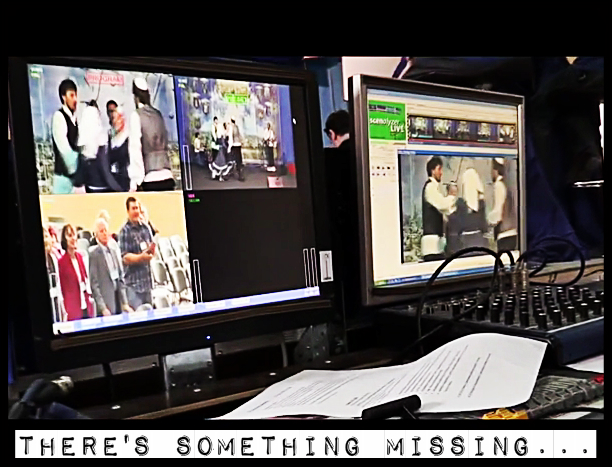
  • VIDEO: There’s something missing…

    VIDEO: There’s something missing…

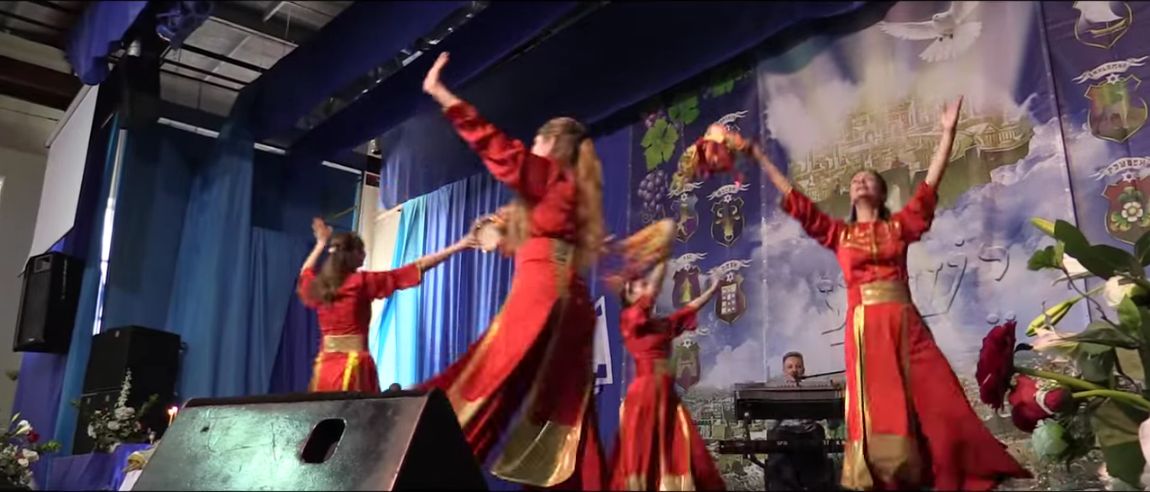
    In May this year Rev. Tim Butlin went to Kiev to speak at a Toward Jerusalem Council II conference promoting reconciliation between Eastern and Western churches, a 1000 year old church split that underlies the cultural divisions at work in Ukraine and Russia today. The conference was hosted by the Kiev Messianic Jewish Synagogue and this brought to the conference an even more ancient church split – between Jew and Gentile in Christ.

    As Canon Andrew White, the Vicar of Bagdad, makes clear, true Christian reconciliation and unity will, in the end, have to include Jewish believers in Jesus into the mix.  Without them, as the film suggests, ‘There’s something missing …’.

    We would love to read your comments about this piece.

  • Screening of “There’s Something Missing…”

    Screening of “There’s Something Missing…”

    “At the heart of reconciliation is the need for all Christians to take seriously their relationship with the Jewish people.”

    Canon Andrew White in “Father, Forgive: Reflections on Peacemaking” p122)

    In May this year I went to Kiev to speak at a Toward Jerusalem Council II conference promoting reconciliation between Eastern and Western churches, a 1000 year old church split that underlies the cultural divisions at work in Ukraine and Russia today. The conference was hosted by the Kiev Messianic Jewish Synagogue and this brought to the conference an even more ancient church split – between Jew and Gentile in Christ.  As Canon Andrew White, the Vicar of Bagdad, makes clear, true Christian reconciliation and unity will, in the end, have to include Jewish believers in Jesus into the mix.  Without them, as the film suggests, ‘There’s something missing …’.

    Derek Butler came with me and together we made this film about the people we met, the event itself, and the need to grasp this call for reconciliation in our broken world.

    On Sunday morning 7th September, in both our services, we will have a time of worship, show the film, talk some more about it and, as usual at the 9.00am service on the first Sunday of the month, include Holy Communion. 

    St. Peter’s Loudwater

  • The Messianic Jewish Movement in Israel

    The Messianic Jewish Movement in Israel

    Article by Prof. Dan Juster

    This is the 3rd article in a series on the Messianic Jewish Movement.  The 1st on North America, and 2nd on Russian-speaking Messianic Jews appear in the 2013 Spring and Summer issues, respectively.

    A few years ago, Toward Jerusalem Council II put out a booklet entitled The Messianic Jewish Movement. While there could be some improvement, it was basically accurate at the time it was written. Some of it was based on the book by Kai Kjaer-Hansen called Myths and Facts on Messianic Jews of Israel (1998).

    Generally, the bulk of the movement traces itself from after 1967. There were previous attempts at being something like a Messianic Jewish Movement in the British mandate period. This early history is well-documented in the writings of Gershon Nerel whose doctoral dissertation at Hebrew University dealt with the history of Messianic Jews in Israel and included that period.

    Leaders such as Moshe Immanuel Ben-Meir and Hyman Jacobs sought to found a fellowship in the 1920s and 1930s that sadly was short lived (4 years), and also sought ways to draw Jewish followers of Yeshua into union. However, many missions to the Jews did not embrace the idea of a significant distinct Jewish identity expressed in congregations and institutions apart from the historical churches.

    After independence in 1948 most of the Jewish believers in Yeshua left Israel and the handful that remained such as Moshe Ben-Meir, Abram Poljak, and Hayim Haimoff, maintained a stronger commitment to Jewish identity and organizational-congregational or corporate structures to foster Jewish identity in Yeshua. We see the beginnings during this time of promoting the term “Messianic Jew” as a self-identifying marker and avoiding the term Christian (“notzri” in Hebrew), which implied leaving the Jewish people, Jewish identity and Jewish destiny. These leaders argued for a Messianic Judaism rooted in the Land, in the pattern of life in the Torah with regard to the Sabbath and Feasts, circumcision for male babies, and more. It was a mostly non-rabbinic expression.

    A Hebrew Catholic Movement also was fostered in the Land. There were different orientations proposed by such figures as Fr. Daniel Rufeisen and Fr Elias Friedman (both Carmelites). However, Hebrew Catholics did identify as Christians, though hoping for a distinct Hebrew Catholic life and expression. There is a Hebrew translation of the Roman liturgy and a small identifiable group of Hebrew Catholics that continue to this day under the leadership of Fr. David Neuhaus, SJ.

    After the ’67 War, there was a stronger sense of Israeli identity among the handful of Jewish believers, perhaps numbering under 200. This began to grow from immigration, witness, and planting. The movement remained small but growing during the 1970s and 1980s, perhaps passing a thousand. Some came to faith in Yeshua during their post-Army trips where they met Christians who effectively shared their faith. With the coming of the Russian influx, the congregations swelled and the estimate by the end of the 1990s in Nerel and Hansen was over 5000. Today it is estimated that the number of Messianic Jews is from ten to fifteen thousand. I tend to think the more conservative number is more accurate, but there is no recent scientific survey for such a statistic. However, we can accurately name over 100 Messianic Jewish Congregations and house groups. The majority of such groups are Jewish in membership, with one such group being led by a Christian Arab who fosters Messianic Jewish life for the Jewish members. I am only counting here those groups that identify as Messianic Jewish congregations, not as Christian churches.

    Most Messianic Jewish congregations are independent. According to Hansen’s research, the majority have a doctrinal statement that is in line with the historic Creeds of the Church even though the language may be different. Most do not have formal membership, but consider membership according to the regular participation of their people. Water Immersion (Baptism) and Communion are significant in almost all the groups, but with variations concerning the interpretation of exactly what is received in the participation in the symbol.

    The majority of Messianic Jews today are from Russian-speaking backgrounds though many of their children are now attaining adulthood and are speaking fluent Hebrew. This has and will change patterns in these congregations. The second largest group is native-born Israelis who are part of congregations where Hebrew is the predominant language. Then we note the English-speaking Jews that constitute a significant group influencing congregations to provide English translation to aid their full participation. So generally we find congregations practicing dual language from either Hebrew-Russian, Hebrew-English and sometimes all three. Finally there are about ten Ethiopian Messianic Jewish congregations, five in one network and the others more independent where Amharic and Hebrew are dominant.

    The theology of the Messianic Jews of Israel tends to be an amalgam of Evangelical theology with Jewish or Torah rooted practices and patterns. There are interpretive differences from the Evangelical world, but the main thrust of theology is still Evangelical with many having a more significant role for Torah. The Messianic Jewish congregational world in Israel varies on the charismatic spectrum. My estimate is that about half are more charismatic and half tend to not emphasize the charismatic dimension. A few leaders have planted multiple congregations which remain in association.

    While there are no strong organizational ties, Messianic Jews in the Land do have greater unity and more mutual support than at any other time in the past. In addition, there are looser points of affiliation that are significant such as the Messianic Jewish Alliance of Israel, which brings Jewish believers into significant joint celebrations and an internet dialogue network for leaders. Finally, there is a loose fellowship of leaders which does sometimes take positions on important doctrinal and moral issues (Kennes Artzee-Meeting of the Land). There is also an attempt to join leaders and congregations through a fellowship called Olive Tree.

    Today, Messianic Jews are more integrated into the society. Most of the children in Messianic Jewish families attend the Israeli school system, serve in the Army and many go to Israeli universities.

    The Messianic Jewish movement is growing slowly but steadily at this time. There is a group of young people who are on the sidelines of the congregations. They are not satisfied with present congregational models and look for alternatives. We are challenged to hear them, reach them, and find ways to inspire them to involvement while incorporating their legitimate concerns.

    It is my hope that the Israel movement will develop in spiritual maturity, power, theology and organizational unity without any inordinate control. I think that the day will come when the Israel movement will be the head and not the tail of the worldwide Messianic Jewish movement.

  • For Such a Time as This?

    For Such a Time as This?

    Who knows but that you have come to your royal position for such a time as this? (Esther 4:14)

    The leadership conference run by a local church in the centre of London might not appear to herald a season of opportunity for those whose heart-cry is for the TJCII vision. But Holy Trinity Brompton (HTB), in London’s fashionable area of Knightsbridge, is no ordinary local church. It is a multi-site church with 11 congregations worshipping on Sunday and a string of church-plants across the capital. It is also the birthplace of the Alpha Course, an introduction to Christianity running in 163 countries, already attended by over 22 million people. HTB is certainly the most influential church in the UK.

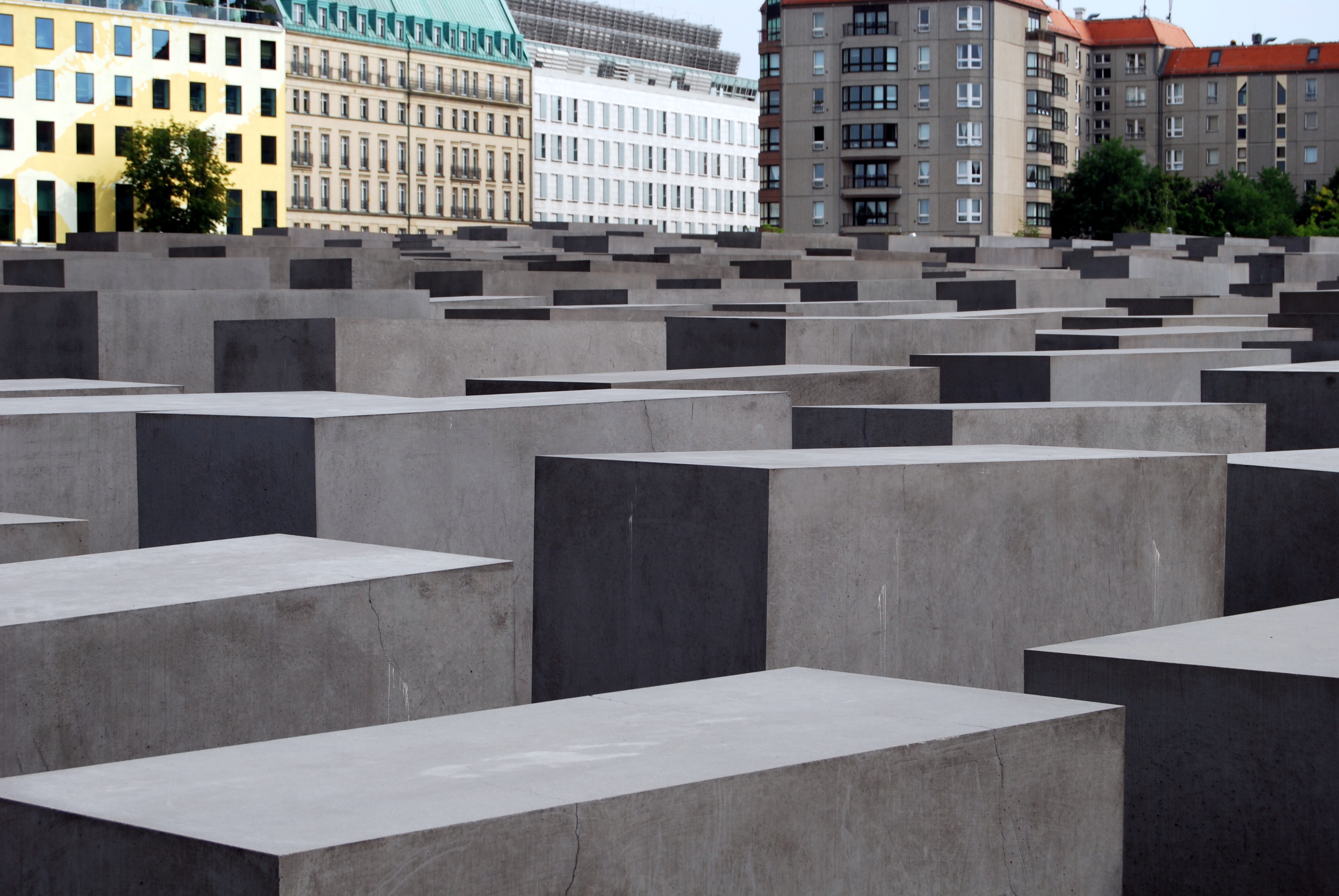
    In his opening address at this May’s conference, the senior leader and Anglican Vicar, Rev’d Nicky Gumbel, disclosed that 2012 had been a year in which he discovered the extent of his own Jewish heritage and the painful past that it carried, with many members he had never known lost in the Shoah. His family had been researched by a museum in Berlin and he had been linked to Jewish relatives he had never known, or known about. All this was by way of a sermon illustration, but it did set a scene for what was to follow.

    The conference’s first main guest speaker was the newly appointed Archbishop of Canterbury, Rt Rev’d Justin Welby. The British Press are notorious for digging up skeletons from unexpected places with which to embarrass unsuspecting public figures. That’s what journalists do, and so it was no surprise when, on his appointment as Archbishop of Canterbury at the end of 2012, Justin Welby was given such treatment. What was a surprise to him, and to everyone else, was to discover that he also had a German-Jewish father, and an unknown family lost in the Shoah – and this already alongside a personal history of positive statements about Jewish people and a heart for reconciliation.

    What these two men make of their recently begun journey into their Jewish past, and the implications this might have in their respective positions of leadership in the church worldwide, remains to be seen. But a clear sense of direction was offered by the conference’s next guest speaker. Following immediately after Justin Welby, Cardinal Christoph Schönborn, the Roman Catholic Archbishop of Vienna, was Rev’d Gumbel’s second interviewee of the morning. The topic of conversation was to do with leadership in the church but the conclusion to the interview was as much of a surprise to the audience as what had gone before.

    [youtube id=”http://youtu.be/CJfU4Ea1zzg” width=”600″ height=”350″]

    Rev’d Gumbel invited the Cardinal to bring a closing message with the words, “There are five and a half thousand people here. There are thousands more watching this online and I know everyone has appreciated your presence here. Is there any message you have to encourage everyone here?”

    The Cardinal responded,

    “Yes, I want to say one thing: I was so impressed with what you said yesterday, about your father and what Archbishop Justin told about his father. You have both German-Jewish fathers. And I think the deepest wound, in the Body of Christ, the unique Body of Christ, is the wound between Israel and the Gentiles. And in your body, and in your life, and in Archbishop Justin’s life, and a little bit also in my own life; I think we are called to ask the Lord to heal this deepest wound when it is His time.”

    And so it was that at this year’s HTB Leadership Conference, attended by 5700 people with a live stream watched by a further 60,000 online, a Catholic Cardinal in a Protestant country publically created (or acknowledged) a season of opportunity for the church in the UK to play its part in healing the deepest wound in the history of the Body of Messiah – this healing being precisely the vision of TJCII. And he invited the Church of England’s two most prominent leaders to play their own leadership role in the process. Has the significance of the moment been fully understood? How will we respond? Time will tell.

  • TJCII and the Jews in the Churches

    TJCII and the Jews in the Churches

    TJCII Executive Committee

     This statement concerns the place of the Jews who are part of the Christian Churches. It has become necessary for TJCII to address this question because of the increasing number of Jews within the Churches who are affirming their ongoing Jewish identity. This trend is reinforced by the Helsinki Consultations begun in 2010 that are gathering Jewish believers from several historic Church traditions and from the Messianic Jewish movement.

    http://helsinkiconsultation.squarespace.com/

    Within TJCII we uphold the divine election of the whole Jewish people. This includes all Jews, whether synagogue-attending Jews, secular Jews, or Jews adhering to other non-Christian religions.1 All the more so, the Jews who are members of Christian Churches remain part of the Jewish people and heirs to the promises given to Abraham and his descendants.2 As the Churches abandon supersessionist or replacement conceptions of the relationship between the Church and the Jewish people, they make possible an honoring of the witness of their Jewish members that refuses the older pattern of absorption or assimilation.

    As a single-focus initiative concerned solely with the full reconciliation of Jewish and non-Jewish believers, personally and corporately, within the one Body of Christ, TJCII recognizes that this reconciliation necessarily includes the Jewish members of the Christian Churches. But the TJCII Executive Committee recognizes that its distinctive vision arose within the Messianic Jewish movement that directly presents the challenge of faith in Yeshua as Messiah to the wider Jewish community. The Messianic Jewish movement affirms the importance of the ongoing Jewish identity of Jewish believers in Yeshua and their need for a corporate context to affirm and support their convictions. In contrast, the challenge of the Jews in the Churches can be their witness to the nature of the Church as the reconciliation of Jew and Gentile in the Messiah.3 The Jews in the Churches contribute to this reconciliation as they affirm their Jewishness publicly within their Churches and claim a space there for a distinctive Jewish witness. This witness will fully recognize the historic heritage of the Church rooted in the Jewish Scriptures in every way that is consonant with the Scriptures and the apostolic tradition. They can provide a model for Jewish believers learning from the wisdom of the Church and can be a means for the Churches to return more fully to the Jewish heritage of the Church’s origins.

    Since TJCII is a prophetic vision for the Lord’s full plan for gathering Jew and non-Jew under the Lordship of the Messiah of Israel and the Savior of the world, the TJCII leadership emphasizes that this process can only proceed as it is led by the Holy Spirit following the model of the first Jerusalem Council in full freedom and mutual respect. It is as the Jewish believers within the Churches give a distinct witness of their Jewish heritage and as they do so in unity with their non-Jewish brethren that they will play a role in the specific calling of TJCII. For this reason, the TJCII leadership welcomes the Paris Statement issued by the Helsinki Consultation of June 2011 affirming that “As Jewish believers in Jesus, we affirm our identity as both part of the people of Israel and of the Body of Christ” and that “we are a living witness to the mysterious and invisible bond which persists between the Church and Israel.” A healthy development of the relationship between the Jews within the Churches and their respective church bodies will produce blessing for both and can also contribute to the Churches taking the Messianic Jewish movement more seriously. Mutual interaction and mutual acceptance of Jew and non-Jew with the goal of mutual enrichment is the goal in all the TJCII work of reconciliation, both between the Messianic movement and the Churches, and between the Churches and their Jewish members.

  • Unity

    Unity

    One of the troubles with “unity” is that even the word sounds soppy. There’s nothing crisp or attractive about it. Synonyms such as “togetherness” or “oneness” are no better. They neither grab the heart or capture the imagination.

    Yet it was so important to Jesus that he spent considerable time praying about it on the very night he was arrested. As he prepared for trial and death, and as he prepared his disciples to be without him, we have his longest prayer on record (John 17) – and it’s about unity!

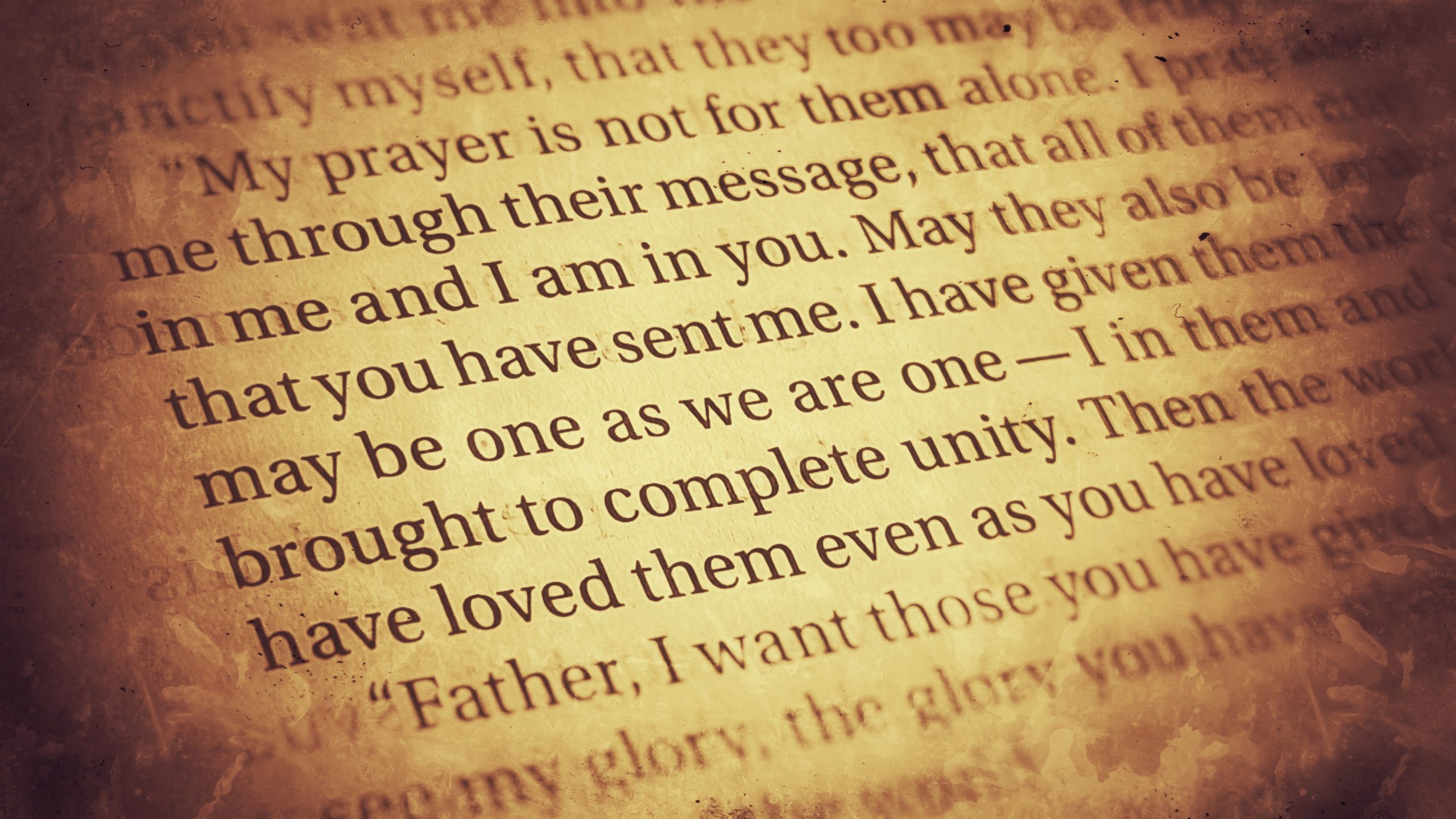
    “My prayer is not for them alone. I pray also for those who will believe in me through their message, that all of them may be one, Father, just as you are in me and I am in you. May they also be in us so that the world may believe that you have sent me.”
    (John 17:20-21).

    Later in the New Testament, the same subject is no less important to Paul. Significant column inches are devoted to coaching whole churches and their leaderships to discover, or rediscover, the basis of unity where there are personality differences, theological differences and racial differences. Whole chapters teaching us love for one another, the priority of reconciliation and the patterns of order to prioritise harmony in the church.

    And the foundation of all unity, foreseen in Jesus’ prayer and addressed with great clarity by Paul, is that unity between Jesus’ Jewish disciples, the Jewish believers that form the foundation of the church, and those of us who subsequently believe in Jesus through their message, Gentiles the world over. Jesus prayed that we remain as one so that the world may believe (John 17:21-22). Paul taught about Gentile believers gaining citizenship alongside their Jewish-believing brethren and forming one temple, indwelt by the Spirit (Ephesians 2:11-22). In fact one of the really central events of the whole New Testament story was the Jerusalem Council (Acts 15) to preserve this unity.

    So why is it that we find it so easy to justify division? And what is it about evangelicals (in particular) that cause us to separate over pretty-much everything? Why, in our hierarchies of truths and doctrines that we adhere to like limpets, is unity not right up there at the top of the stack?

  • What Can I do?

    What Can I do?

    1. Pray for the revelation about the importance of Israel and the Jewish people. We can read Scripture and never see its significance. Ponder well Paul’s 9th through 11th chapters of Romans, especially the 11th chapter where he clearly teaches that God is not finished with Israel, that He has not rejected them forever. Look carefully at Paul’s words regarding the salvation of Israel and the irrevocable call of God on this people, then pray that the “eyes of your heart may be opened (Ephesians 1).

    2. Repent for not being Romans 11:11 believers. Paul tells his Gentile believers that they should live such lives that will make Israel jealous for their own Messiah. We will make them jealous through our love for the Lord, for each other, and for all Jewish people everywhere.

    3. Bless Abraham’s descendants according to Genesis 12:1-3. The promise given to Abraham about his descendants is for all future generations. Those who bless them will be blessed. Those who curse (or esteem them lightly, as the Hebrew word implies) will be under a curse. This continues to be seen in the way God deals with nations who turn their backs on this chosen people. They have kept alive faith in the One True God. They have been used of God to bring to the world their Redeemer, and they figure prominently into God’s future for the nations. This is indicated clearly in the closing words of John’s Revelation when the names of Israel’s twelve sons still adorn the gates of the new city, and the names of the twelve Jewish apostles are written on the foundation stones that of the city. The redeemed people come from every nation, tribe, tongue and people, but their conduit nation into the Presence of God is the nation of Israel.

    4. Honor the Jewish people as our parents in the faith according to the principles of Malachi 4 and Ephesians 6. Malachi says that in the last days the hearts of the fathers will be turned to their children and the hearts of the children to their fathers (4:6). Paul urges the Ephesian believers to remember to honor their mothers and fathers, “that it may go well with you and that you may enjoy long life on the earth” (6:3). True, his primary concern is for natural blood parents, but the principle is the same. The Jewish nation is our parent faith. As one of my friends says, “Their family journal has become our Sacred Scriptures.”

    5. Restore the biblical priority of Romans 1:16, “to the Jew first.” Though Paul was a Jewish apostle to the Gentiles, he always went to the synagogues first to let his own people know that their Messiah had come. This principle has never been revoked. Whether your mission is to Uganda, Beijing, Buenos Aires, Kiev, Berlin, or New York, our first responsibility is to go to our Jewish friends, apologize to them for the great injustices that have been perpetrated on them in the name of God’s people, but also to let them know that we do indeed believe that we are worshipping their Messiah, to encourage them to consider the possibility that Yeshua (Jesus) is indeed the Messiah long ago foretold.

    6. Take upon ourselves the sins of our heritage and pray Daniel, Ezra, Nehemiah type prayers. Some call this identificational repentance. I choose to refer to it as identificational confession, since we cannot actually repent on behalf of someone else. Daniel (chapter 9), Ezra (9:5-7), and Nehemiah (1:5-7) all confessed their own sins, as well as the sins of former generations, kings and those in authority.

    7. Become Isaiah 49:22 Gentiles. Isaiah sees Gentiles bringing “your sons in their arms” and “daughters on their shoulders.” “Kings will be your foster fathers, and their queens your nursing mothers.” It is the Gentile Christian world that has often encouraged Israel’s return to the Land. It is often they who have leased aeroplanes and ships to bring the exiles back to their native land. Many descendants of Abraham, Isaac and Jacob remain in exile, but according to Ezekiel 39:21, they will all ultimately be back in the Land. As persecution continues to rise on this marked nation, those of us who are grafted in to their promises will need to hide them, stand beside them, and help them back to their homeland.

    8. Pray and work toward the Isaiah 6, Hosea 3, Ezekiel 36 fulfilment regarding Jewish eyes being opened. Isaiah speaks of the devastation that will come to the Land of Israel of the time of closed eyes and ears and hardened heart. In the closing verses however Isaiah shows this time to come to an end, seemingly when Israel again becomes a nation. Ezekiel agrees with Isaiah, that when Israel returns to the Land, “Then you will know that I am the LORD (36:11). Hosea predicts the absence of king, of sacrifices ceased, but assures Israel that “afterward the Israelites will return and seek the LORD their God… they will come trembling to the LORD and to his blessings in the last days.” We are in those days as is evidenced by the many thousands of Jewish people who have come to faith in Yeshua, more than at any former time in history, possibly even including the first century. Pray that more will have revelation about their Messiah even this very day!

    9. Pray for and work toward the “greater riches” revival of the nations according to Romans 11:12 and 15. For centuries the church believed God was finished with Israel. They saw evidence of this in the AD 70 destruction of Jerusalem and the subsequent removal of Jews from the area. However Paul clearly saw a time when the return of Israel would have an impact on the whole church. “How much greater riches will their fullness bring!” As you look at revival in many places in the earth, to nations that have long been closed (such as South Korea, China, Africa, Indonesia, and others), know that Israel’s return is prophetically affecting all of this. Pray for a continued major revival in every nation.