Daniel C Juster with Tikkun International and revive Israel goes beyond the idea of alignment to the idea of being joined together.
[intense_video video_type=”youtube” video_url=”https://www.youtube.com/watch?v=4HgGQkKvV0E”]
[intense_video video_type=”youtube” video_url=”https://www.youtube.com/watch?v=4HgGQkKvV0E”]
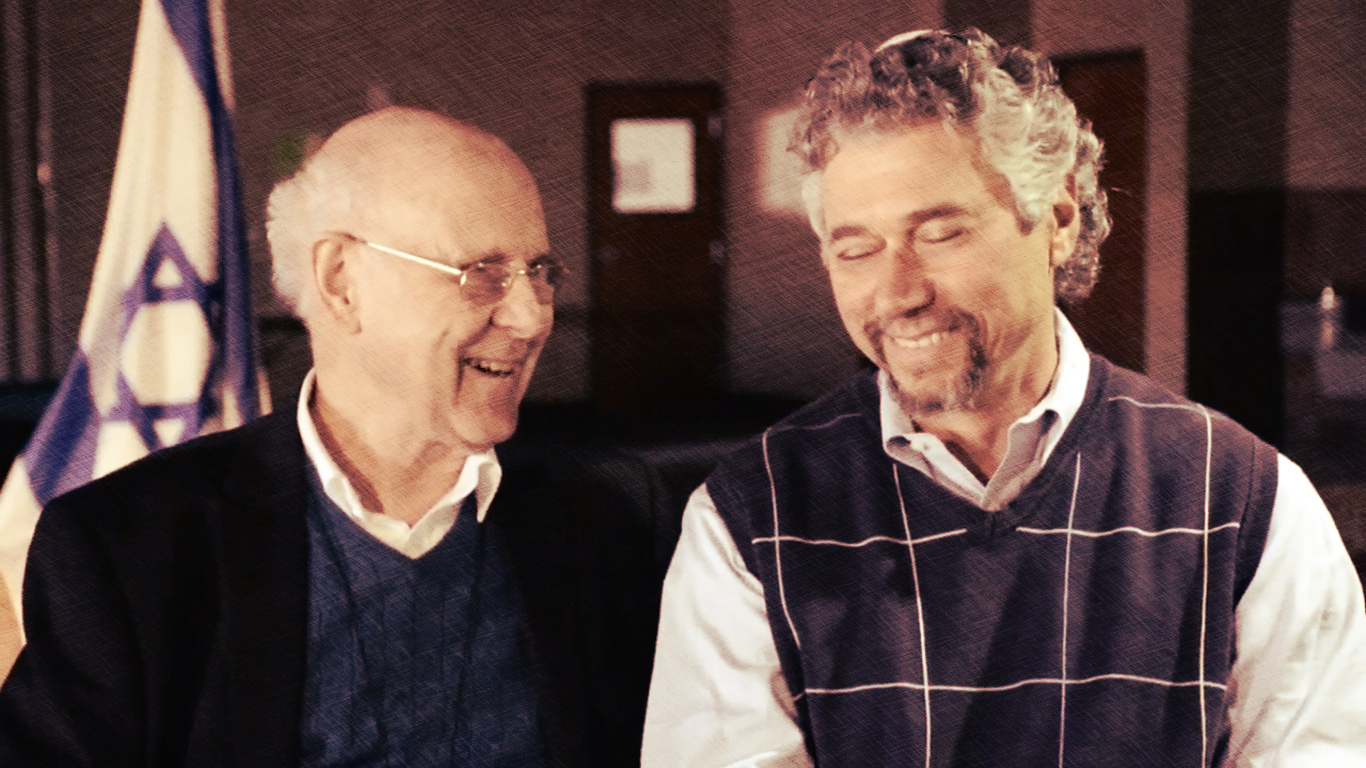
Many of us will know by now that Fr. Peter Hocken (pictured left on the featured image) passed away in early June 2017. Peter was was a British theologian and historian of the Catholic Charismatic Renewal and the Pentecostal movement in the twentieth century. Peter was a leader within Toward Jerusalem Council II and will be greatly missed by all of us. A number of branches of TJCII have made a statement regarding the passing of our brother in Christ and I would like to take the opportunity to mark his passing as well. Since I only met Peter once many years ago, I will not be able to say much about him personally so I thought it would be fitting to remember Peter through presenting his own words.
Fr. Peter, just like us all in TJCII have a strong yearning for Christian unity and to see the body of Messiah strengthened in accordance with the prayer of Jesus in John 17:21-23. In his book, “Pentecost and Parousia” Fr. Peter wrote the following about obeying the Lord together:
I have had the experience several times that a listening to the Lord together has led an interchurch group to change its plans, and that this obedience to the Word that was heard produced much greater fruit than could have been imagined from the original plan. I cite one instance from the initiative Toward Jerusalem Council Two (TJCII) involving messianic Jews and Christians from many backgrounds. At that time (autumn 2005), the international committee met twice each year, and was busy preparing an international pray gathering in Jerusalem for September 2006. We had earlier decided to go to Nairobi in East Africa in the spring of 2006. But we received a clear word to go to Antioch before we went to Jerusalem, because the road to Jerusalem passes through Antioch. We immediately sensed the rightness of this word, since Antioch was the first church to embody Paul’s vision of the “one new man”, in which Jew and Gentile are made one through the cross (see Eph 2:16, Acts 11:19-26). The resulting visiting to Antioch in May 2006 was very rich and powerful. During the first session, we read aloud all the passages in the New Testament that mention Antioch. After the reading, the messianic Jews recognised that three incidents damaging to the unity of the church took place in Antioch:
The messianic Jews were deeply convicted by the scandal presented to the newly-converted pagans by the Jewish believers (all involved in the squabbles were Jews), and this awareness led them to a repentance for their own lack of unity today. This heartfelt prayer made before the cave church of St. Peter.
May we never lose sight of this early revelation within TJCII and the sense of unity and joint repentance that has been so fruitful in our initiative. We thank God for the great contribution of Fr. Peter Hocken and recognise that while his passing is felt as a great loss, we must remember that to die in Christ is gain, so we rejoice as we recall the words of the Apostle Paul which Fr. Peter shared with a member of TJCII’s Now Generation:
I have fought the good fight, I have finished the race, I have kept the faith. Finally, there is laid up for me the crown of righteousness, which the Lord, the righteous Judge, will give to me on that Day, and not to me only but also to all who have loved His appearing.
-2 Tim 4:7-8
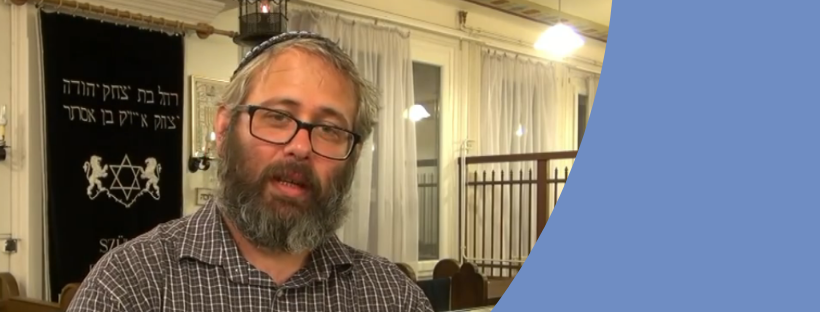
As someone who is aware of the first Jerusalem council of Acts 15, he welcomes the initiative. Understandably he is of the opinion that there was a great cost to the Torah following the outcome of the First Jerusalem Council which made it much easier for Gentiles to graft into the community of God’s people. However, it is encouraging to hear responses like this from the Jewish community, we pray God will continue to bless this movement.
[intense_video video_type=”youtube” video_url=”https://www.youtube.com/watch?v=J3bk9jNEOjQ”]
Benjamin Berger, Co-Pastor of “Kehilat ha’she al Har Zion” (The Congregation of the Lamb on Mt. Zion). The congregation meets at Christ Church Jerusalem (completed in 1849), spoke in Ireland on number of topics and we have most of the recordings here for you to listen back to.
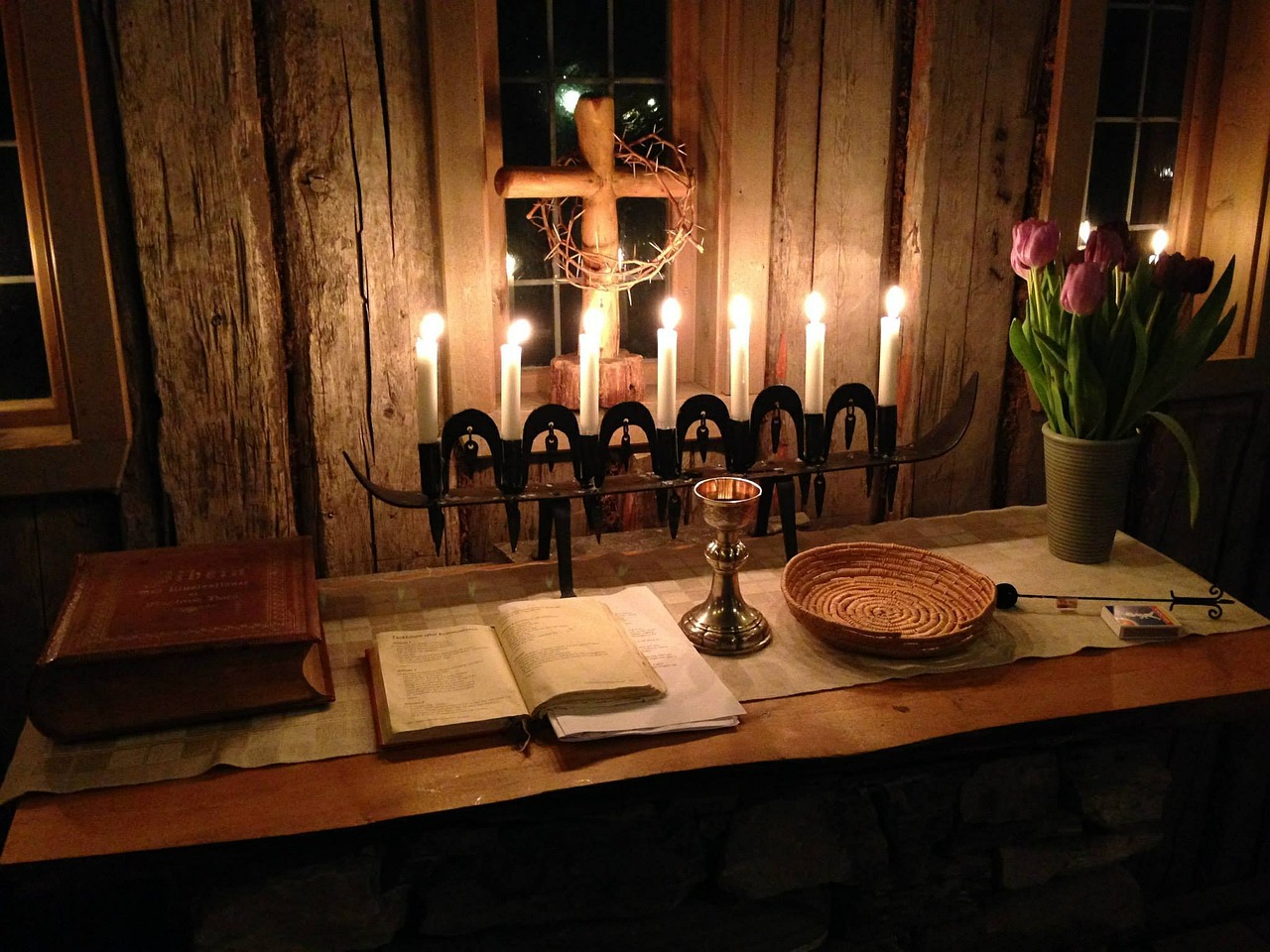
The reform movement in which Jan Hus (1369 – 1415) was a major figure was undoubtedly a major factor in the historical process that led a century later to the Protestant Reformation. The theological and spiritual conflicts were deeply connected to political and nationalist issues:
Hus became the national hero of the Czech people. He had translated the Bible into Czech. He was preacher at the Bethlehem Chapel that was founded by two businessmen specifically for preaching in the Czech language. It was here that Hus denounced corruption and called for reform in the Czech language after some years of doing so in Latin. This was provocative as the Latin sermons were only understood by the educated. His preaching in Czech made Hus a populist reformer.
For Hus, the Word of God was primary. Church reform based on the Scriptures was central, not one issue. All later disciples of Hus agreed in demanding open access to the Scriptures, free and open preaching, a poor Church, and worthy lifestyle for the priests, and the chalice for the laity. Hus was zealous for reform, for eliminating corruption, simony, and moral laxity. Thus he was very active in the hearing of confessions.
Hus opposed the use of force to counter heresy, as he also opposed any coercion of the Jewish people. One consequence was that the period after his death, when Prague was ruled by the followers of Hus, was a time of relief and blessing for the Jews of the city. This aspect of Hus explains why the Jews were accused of Hussite sympathies during the anti-Jewish disturbances in Austria in 1421, when 300 Jews were killed in Vienna-Erdberg.
The teaching of Hus on the Eucharist did not contain anything contrary to official Catholic teaching. The judgment of Hus as a heretic owed a lot to his being seen as a follower of John Wyclif. Hus defended Wyclif, but he did not follow him in all respects. One important area where Hus did not follow Wyclif was in teaching on the Eucharist. He rejected Wyclif’s teaching on “remanence” (it is still bread), and held to the Catholic teaching on transubstantiation. He advocated giving the chalice to the laity, but he never practised it (this started with some of his followers). It was not through Hus but through Jakoubek von Mies that the chalice became a symbol for the Hussites. The major rebellion on the chalice followed immediately upon Hus’s death. Historians say that for Hus the symbol was the pulpit and not the chalice.
The debates unleashed by Hus and other reforming preachers led to greater attention to eucharistic theology. For example, Jakoubek wrote: “What Christ commanded and enacted with his own hands, must be observed by Christians receiving the body and the blood of the Lord through bread and wine for the health of their souls. The body and the blood of Christ in the sacrament of the altar symbolize two powerful realities, which are both necessary for the upkeep of body and soul: the heavenly flesh for the body and the blood for the soul. … The lay chalice grounds a togetherness at table (Mahlgemeinschaft) that is a sign pointing to the end-times Church and allows a participation in the redemptive power of the atoning death of Christ.”
After the execution of Hus, the Czech people rose up in protest. Nearly 500 Czech nobles gathered in Prague to protest his condemnation and death. They entered into a solemn covenant, pledging to defend the Czech reformation against all external threats. From this gathering emerged the Four Articles of Prague (1419):
Hus stood in the line of an indigenous tradition of Czech reformers who emphasized preaching, studying the Scriptures, and eliminating clerical abuses. Hus’s rediscovery of the Augustinian doctrine of the invisible church enabled him to criticize contemporary church practices in the light of God’s sovereignty over time and eternity.
In effect, three major groupings developed as far as the Lord’s Supper or Eucharist is concerned:
In the years after the execution of Hus, there was much conflict. The new pope launched Crusades against the Hussites, but in the first four Crusades the radical Hussites defeated the imperial armies (1420, 1421, 1422, 1427). They made the chalice the symbol of their resistance, placing representations of the chalice on their weapons of war. The Hussites suffered their first military defeat in 1434.
Among the radical Hussites, however, there were differing emphases, particularly as regards lifestyle, with only a minority holding to more pacifist views.
At the Council of Basel, permission was given to the Church in Bohemia to give the chalice to lay people, but this was withdrawn a generation later by the Pope.
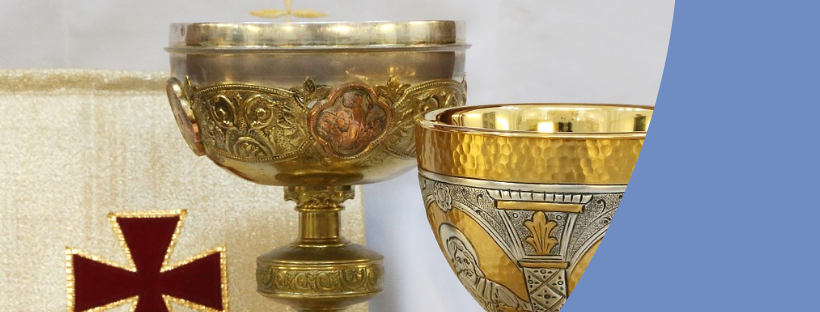
Issues concerning the Eucharist played a central role in the conflict that broke out in Bohemia in the first years of the fifteenth century between Jan Hus, a reforming priest, and the civil and ecclesiastical authorities. In fact the reforms advocated by Hus were wider than the Eucharist, but the dispute over communion from the chalice became the top symbolic issue. After the death of Hus, the chalice became a symbol for the Hussites, and often decorated their weapons of war.
However, the theology and the practice of the Eucharist had already suffered various forms of distortion and of narrowing since the close association of imperial and princely power with the power of the Pope and the bishops. Here we encounter one of the most serious abuses of the Eucharist, namely the abuse of power. This abuse of power was especially serious, because it directly contradicts the meaning of the Eucharist. The Eucharist is the efficacious memorial of the Lord Messiah’s self-giving and self-emptying which is the direct opposite of imposing the will of authority with the use or threat of violence. We need to pray for light as to the different ways in which the abuse of power affected the Church’s celebration and theology of the Eucharist. Different forms of the abuse of power in this area are indicated below.
The weakened relationships between the Eastern Churches and the Western Church that ended up with the schism of 1054 between Rome and Constantinople had unfortunate consequences in the sphere of worship.
Summary
This summary only surveys what led up to the Hussite controversy though its effects lasted long afterwards, some still operative today. It does not raise the question of the failings and distortions that followed in other Christian settings.
My TJCII UK colleague, Jonathan Allen, posted the following in his blog last month (see http://www.messianictrust.org.uk/frothing/index.php?art=15-06-26):
Conflict and Identity in Romans: The Social Setting of Paul’s Letter, Philip F. Esler, Fortress Press, 2003, page 66
Supporting Hodge’s arguments, Philip Esler affirms that
“before the destruction of the temple in 70 CE the law and the temple were twin foci of the Judeans … separating the two is not easy.“
Making the good point that one of the essential differences between those living in Judea and those living in the Diaspora was that the former had the temple on their doorstep, so to speak, whereas the latter group had to work much harder to maintain their individual and community identity, he concludes:
The major problem is that to translate Ioudaioi as “Jews” removes from the designation of this ethnic group the reference to Judea, to its temple and the cult practiced there, that both insiders and outsiders regarded as fundamental to its meaning and that accorded with the almost universal practice of naming ethnic groups after their territories.
At the same time I was struck with this report in my newsfeed from Israel regarding returnees from the sub-continent of India and their visit to the Tomb of Joseph.
http://www.michaelfreund.org/17505/bnei-menashe-joseph-tomb
The Bnei Menashe (Sons of Manasseh) are clearly not technically Jews, or Judeans, but returnees from the northern Kingdom of Israel taken into exile by the Assyrians in the 8th century BCE. Their return is fulfilling the prophecy of Ezekiel 37:15ff as they become the one tree / one nation and they have carried this longing for centuries and rehearsed / preserved it in a song in their language of exile.
The other thing of note in Michael Freund’s article, as Rabbi Allen subsequently observed, is the first sentence where he talks about “Palestinian-occupied Shechem”. Allen states
Clearly, given his known position, this is deliberate, but it is a point of view that is entirely missed by the West. While from an activist’s perspective, at least the West Bank (if not all Israel, but that’s a larger story) is Israeli-occupied territory, from a serious Jewish place, Shechem is Palestinian-occupied territory. This is connection between the Jews and the Land.
Everything that God does on planet earth is, and will continue to be, controversial until the day when “the kingdom of the world has become the kingdom of our Lord and of his Messiah, and he will reign for ever and ever” (Revelation 11:15). And until that day we will continue to work and pray for the prophetic scriptures to be fulfilled in the restoration of all Israel, Judeans and Israelites alike, to the Land, and the restoration and reconciliation of all those who own the name of Yeshua into one body.

In other words, the distinction between Israel and the nations also has major implications for our eschatology. In Romans, Paul uses the term “fullness” (pleroma), first of Israel (11: 12) and then of the nations (11:25). “Now if their transgression [that is, of Israel] means riches for the world, and if their defeat means riches for Gentiles, how much more will their fullness mean!” (Rom. 11:12). Later Paul writes, “I want you to understand this mystery” (i.e. this is part of God’s eternal plan): a hardening has come upon part of Israel, until the full number [pleroma] of the Gentiles has come in. And so all Israel will be saved.” (Rom. 11:25-26). The fullness of Israel and the fullness of the nations are inter-related; they cannot be realized independently of each other. This connectedness was expressed in a different way by Yeshua himself: “they [the Jews] will fall by the edge of the sword and be taken away as captives among all nations; and Jerusalem will be trampled on by the Gentiles, until the times of the Gentiles are fulfilled.” (Luke 21:24). This relates also to a verse in Matthew: “And this good news of the kingdom will be proclaimed throughout the world, as a testimony to all the nations; and then the end will come.” (Matt. 24:14). “For if their rejection (aposate = setting aside, that is, of Israel) is the reconciliation of the world, what will their acceptance be but life from the dead.” (Rom. 11:15).
The Church of Jew and Gentile together in one body, the Church of the One New Man, did not last. The warnings of Paul against Gentile boasting over the Jews were not heeded (see Rom. 11:18, 20, 25). By the fourth century, the Church did not permit converted Jews to retain their Jewish identity or to continue Jewish practices. The Church understood itself to be universal embracing all nations, and the main model for unity increasingly became the unity of the Roman-Byzantine Empire. Several Fathers of the Church recognized that the Jews would enter at the end, but this was understood as taking their place among the nations, not as restoration of the one new man.
This process had major repercussions in a number of areas, including church unity and eschatology. It had negative effects on eschatology because the Jewish people are the bearers of the Messianic promises: “to them belong the adoption, the glory, the covenants, the giving of the Law, the worship, and the promises” (Rom 9:5). Jewish life is rooted in the covenant with Abraham and in the Torah, being oriented to the Messianic promises. The references to past and to future are lived and expressed in the feasts of Israel. The promises given to Abraham, to David, and through the prophets, concern the coming Messiah-King-Deliverer and the coming Messianic age/kingdom of righteousness and peace that is established in and from Zion. When there is no longer an explicit Jewish presence in the Church, their strong Messianic orientation towards the final fulfilment is removed.
Was this orientation to the final fulfilment completely lost in the Church? No, and for two reasons. First, the Church rejected the attempt of Marcion to remove the Old Testament from the Christian Bible. The Scriptures of Israel remained foundational for the Church. Second, the liturgies of the Church retained the orientation to the completion that had come from the Jewish origins. But nonetheless in the teaching on eschatology something was lost.
How then did the distancing of the Church from its Jewish roots weaken the eschatological hope? Christians began to speak of the Church as the new Israel, saying that the Church has become heir to all God’s promises, with the assumption or explicit statement that the promises have been transferred to the Church because of Israel’s unbelief. When this happened, the promises were re-interpreted in a spiritualizing sense – so that the promised Land becomes heaven, the earthly Jerusalem is replaced by the heavenly, and the rule of the Messiah becomes the glorified Christ’s rule from heaven. In this process, the new realities with the coming of the Christ are seen as superior to the material things characterizing the covenants with Israel: the Jews are seen as carnal, the Christians as spiritual. Christians search the Old Testament for everything that can be interpreted as a type of Christ.
This form of spiritualizing in fact produces a rupture with the Messianic hope of Israel. Why? It is not because typological interpretation of the Old Testament is mistaken; we find typological interpretation in the New Testament, for example in 1 Cor. 10 “the rock was Christ” v. 4 and in the description of Jesus as the Lamb of God. Why then? First, because the only value of the type is its Christological signification – the covenants with Israel have no more value in themselves. Second, the Messianic promises were seen as totally fulfilled in the first coming of the Christ. This is the fundamental reason why the historic Churches have great difficulty in seeing any contemporary fulfilment of Messianic promises in events concerning Israel and the Jewish people in modern times. This conviction – total fulfilment in the first coming – cuts off the Messianic expectation of Israel: no more Messianic fulfilment, just the outworking of the consequences of the first coming. If Paul had believed that, he could not have told the Jews of Rome: “it is for the sake of the hope of Israel that I am bound with this chain.” (Acts 28:20).
I should add that some promises that just did not fit the spiritualizing reinterpretation were simply left out of our theology and our preaching: for example, the words of Jesus to the Twelve, “Truly, I say to you, in the new world, when the Son of man shall sit on his glorious throne, you who have followed me will also sit on twelve thrones, judging the twelve tribes of Israel.” (Matt. 19:28; see also Luke 22:30). This also applies to the words of Jesus at the Last Supper, “I tell you that I shall not drink again of this fruit of the vine until that day when I drink it new with you in my Father’s kingdom.” (Matt. 26:29). Understanding this last text literally did not immediately cease in the early Church, as we find St Irenaeus of Lyon explaining around the year 200: “In promising to drink there of the fruit of the vine with his disciples, he [Jesus] made two things known: the inheritance of the earth, in which will be drunk the new fruit of the vine, and the bodily resurrection of his disciples. For the flesh that will be raised in a new condition is also that which will share in the new cup. It is not in fact when he will be with his disciples in a superior and supra-heavenly place, that the Lord can be thought of as drinking the fruit of the vine”.
Seeing the Messianic fulfilment totally in the first coming was not just a fulfilment on earth, but fulfilment in the resurrection and ascension of Jesus. There is of course something fundamentally right in this. The resurrection and ascension of Jesus was for Jesus himself being “made perfect” (Heb. 5:8). This opened up the heavenly dimension, which becomes a characteristic element in New Testament faith. So for example Paul writes: “But our commonwealth [politeia] is in heaven” (Phil. 3:20) and “Set your mind on things that are above, not on things that are on earth, for you have died, and your life is hidden with Christ in God.” (Col. 3:2-3). But seeing the fulfilment of the promises totally in the first coming easily overlooks the total orientation of the first coming to the second. This becomes more serious when the role of the Holy Spirit from Pentecost onwards as totally preparing for the second coming is forgotten. As a result the second coming of Jesus in glory is not seen as the fulfilment of the Messianic promises, and the assumption is that Jesus comes in order to take us out of this creation to heaven. So the Church developed an eschatology that is markedly different from the hope of Israel. In general, the Church has looked to a heavenly fulfilment, and Israel to an earthly deliverance and fulfilment. The Church sees the fulfilment as outside and above human history, whereas for the Jewish people the fulfilment is within this creation and the climax to human history. This is one of the most serious results of the separation of Church and synagogue.
With the separation of the Church and the synagogue through the centuries we have inherited a situation in which the Church affirmed the newness of resurrection and glorification through the cross while the Jewish people affirmed the continuing validity of the promises concerning the Land of Israel and the city of Jerusalem. From the fourth century, Christian eschatology had no place for Israel as a distinct people. It developed differently in the Eastern churches from the West. Some of what I will say applies more particularly to Western Christianity, both Catholic and Protestant, and I leave it to any of you from the Orthodox Church to discern how much this also applies to you. In general, this distancing of the Church from the Jewish people intensified over the centuries leading to very negative presentations of the Jews by preachers and people.
More positive approaches began slowly following the Protestant Reformation. With the Protestant emphasis on the Bible, more Christians studied Hebrew, and a few scholars began to understand that the promises to Israel were permanent, and that many Old Testament prophecies remained unfulfilled. The number of Reformed and Evangelical scholars who believed in a future return of the Jews to the land of Israel and in their coming to faith in Jesus had increased by the 19th century. But here a complication entered. One Protestant who saw the contrast between the Jewish earthly hope and the Christian heavenly hope was John Nelson Darby, a founding figure among the Plymouth Brethren, who became a major architect of dispensationalism pre-millenialism. Darby sought to solve the dilemma by separating Israel and the Church even more, so he taught two distinct destinies, an earthly destiny for Israel and a heavenly destiny for the Church. This was the inspiration, if that is the right word, the origin of the teaching on an invisible rapture of the Church, separated from the second coming. In Darby’s scheme the Church had to be removed from the earth before Israel’s destiny on earth could begin to unfold. The teaching of an invisible rapture of “the church” before the visible coming of the Lord in glory removes a key element in the role of the Church of Jew and Gentile to prepare the way for the coming of the Lord. In this schema the Church is already in heaven for a significant period before the coming in glory.
We have to hold Israel and the Church together, recognizing that their hopes belong together, even if we cannot yet understand how, and so affirm that the Church is the union of Jew and Gentile in one new man. It will only be possible for the Jewish and the Christian worldviews to be brought together by the light of the Holy Spirit. What then is it that we have to bring together?
The heart of the Gospel is the death and resurrection of the incarnate Son of God for our salvation. The Christian life, life in Christ, or life in the Spirit, is being plunged into the death and resurrection of Jesus. Paul writes: “Do you now know that when you were baptized, you were baptized into his death?” (Rom. 6:3). Life in the Spirit is then to live in this new creation of being dead to sin and alive with the Holy Spirit. “So you also must consider yourselves dead to sin and alive to God in Christ Jesus.” (Rom. 6:11). It is the same in the first letter of Peter: “He himself bore our sins in his body on the cross, so that, free from sins, we might live for righteousness; by his wounds you have been healed.” (1 Peter 2:24). The Christian is then fed on the death and resurrection: “When you eat this bread and drink this cup you proclaim the death of the Lord until he comes.” (1 Cor. 11:26). We feed on his body given for us and drink of his blood that is poured out for us. In this way we are preparing for our resurrection on the last day: “Those who eat my flesh and drink my blood have eternal life, and I will raise them up on the last day.” (John 6:54).
There is something fundamentally right about a total fulfilment already in Jesus provided we understand that this fulfilment is in his resurrection-ascension to glory. Jesus has reached the goal, this total transformation or glorification, through his bodily resurrection and his ascension as man to the glory of the Father. But this completion has still to be achieved in the whole creation, in the world and in the Church; that is, also on earth. So the Old Testament promises that are not yet fulfilled all apply to the fulfilment in the creation, on earth and in the Church.
There is a challenge here from the Christian tradition to the Messianic Jews. With their reclaiming of the Messianic hope of Israel – for example, the return of King Yeshua to Jerusalem and his rule over the nations in righteousness – it can happen that full justice is not done to the genuine newness introduced by the resurrection and ascension of the Messiah that is at the heart of the New Covenant. This newness is the bodily resurrection to a glorified bodily existence that is a greater transformation than could ever have been imagined, even by those Jews who believed in the resurrection from the dead.
I sometimes give a teaching about the three phases of the Holy Spirit’s action upon Jesus as man. The first is clearly that Jesus is conceived by the Holy Spirit in the Virgin Mary. The second is his baptism in the Jordan. Here the Holy Spirit descends upon him, in consequence of which he begins his public ministry in the power of the Spirit. As Luke says, “Jesus returned in the power of the Spirit into Galilee” (Luke 4:14). But there is a third and final filling or total penetration by the Holy Spirit that we often overlook. It is the transformation in his resurrection and ascension. The verse that makes this clear is Acts 2:33: “Being therefore exalted at the right hand of God, and having received from the Father the promise of the Holy Spirit, he has poured out this which you see and hear” – that is, on the day of Pentecost. Herein Peter’s Pentecost message, we are told what Jesus received when he was exalted to the right hand of the Father. He is now in his humanity totally penetrated and glorified by the Holy Spirit, so that he can now pour out on us this same Holy Spirit through his glorified humanity.
This same transformation is promised to the disciples. This point is emphasized by the apostle in Ephesians, ch. 1: “so that with the eyes of your heart enlightened, you may know what is the hope to which he has called you, what are the riches of his glorious inheritance among the saints, and what is the immeasurable greatness of his power for us who believe, according to the working of his great power. God put this power to work in Christ when he raised him from the dead and seated him at his right hand in the heavenly places, far above all rule and authority and power and dominion, and above every name that is named, not only in this age but also in the age to come.” (Eph. 1:18-21).
An element here is the false idea that the Christian observance of the first day of the week was designed as a replacement for Shabbat. No, the first day of the week was originally observed because it was the day of the Resurrection of the Lord. This has eschatological significance, because the first day is also the eighth day, which symbolizes the final fulfilment after the Shabbat rest. It was no coincidence that the body of Jesus lay in the tomb on the day of rest. Not to honour the first day of the week can take attention away from the resurrection of Jesus as the core of New Covenant faith.
So I suggest that a central witness of the Churches that the Messianic Jews need to receive is the centrality of the death and resurrection of Yeshua in the New Covenant, with a deeper grasp of the mighty transformation that bodily resurrection will bring on the last day. We need Shabbat followed by Resurrection.
What is it that the Churches have to receive from the synagogue? The last verse from Ephesians 1 presents us with a fundamental element in the biblical and Jewish worldview: the difference between this age (aeon) and the age to come. Jesus mentions this in speaking of the sin against the Holy Spirit: Whoever speaks a word against the Son of Man will be forgiven, but whoever speaks against the Holy Spirit will not be forgiven, either in this age or in the age to come.” (Matt. 12:32). It is mentioned in Hebrews 6 in a warning about those who fall away, for those who have become believers in Messiah are described as “those who have once been enlightened, who have tasted the heavenly gift, and have become partakers of the Holy Spirit, and have tasted the goodness of the word of God and the powers of the age to come.” (Heb. 6:4-5).
The coming age is the Messianic age, the age of the rule of the Messiah in righteousness and peace. It is the rule of the servant of the Lord: “I have put my spirit upon him; he will bring forth justice to the nations.” (Is. 42:1). For the Messianic Jew, all the promises of the Lord given to Abraham, David and the prophets will be fulfilled. A few promises have been fulfilled in the first coming of the Lord – the virgin will be with child (Is. 7:14); the suffering of the servant as the apostle Peter notes: “God fulfilled what he had foretold through all the prophets, that his Messiah would suffer.” (Acts 3:18). But many prophecies of the Old Testament have not yet been fulfilled, or only partially. So Peter continues, as reported in Acts 3, “the Messiah appointed for you, that is, Jesus [who] must remain in heaven until the time of universal restoration that God announced long ago through his holy prophets.” (Acts 3:20-21). In effect, what Peter was doing in this message was a Jewish reinterpretation of the Messianic hope of Israel in the light of the Passion, Death and Resurrection-Ascension of Jesus (Yeshua).
What does the universal restoration mean? It means the liberation of the entire creation from the effects of evil and sin. Paul expresses this hope in Romans 8, the hope “that the creation itself will be set free from its bondage to decay and will obtain the freedom of the glory of the children of God.” (Rom. 8:21). It is a return to paradise, but not just a return, the entry into what is more than paradise. The Jewish witness to Yeshua challenges us all concerning this earthly fulfilment. The Christian challenge is that the fulfilment is a massive transformation that has at its centre the resurrection of the body. For the witness of the Scriptures is that the resurrection of the just occurs with the coming of the Lord Jesus in glory.
What is it then that the Christian Churches need to receive from the Jewish believers in Yeshua? Without detracting from the New Testament witness to the fullness of eternal life in communion with the Father and the Son, we need to receive the Jewish vision for the Messianic fulfilment in and of this creation. It is only in this context that the full significance of bodily resurrection can be understood. This will also involve rediscovering Yeshua as Messiah and not only as Saviour and Lord. As Son of David, Yeshua will rule over the kingdom that is grounded in Israel, centred in Jerusalem, and opened up to the nations.
We can say what are the elements that need to be incorporated into our eschatological vision. There will be a fulfilment of the promises to Israel – concerning the people, concerning the land, and concerning Jerusalem. What does this mean for Jerusalem? The Jewish tradition does not allow for a total displacement of the earthly Jerusalem by the heavenly. The Christian tradition does not allow for a return of Yeshua to the city of David that does not involve the mighty transformation of resurrection and glorification. He will come in glory. Now, the book of Revelation ends with the vision of “the holy city, the new Jerusalem, coming down out of heaven from God, prepared as a bride adorned for her husband.” (Rev. 21:2). It is pointless to try to imagine what the new Jerusalem will be like and how it comes down to earth. The foolishness of trying to imagine it is shown by the impossibility of imagining one tree that is found on both sides of the river that flows “through the middle of the street of the city.” (Rev. 22:2). But this vision tells us important things. It indicates that finally we are not taken up to God, but God comes down to us. “See, the home [tabernacle] of God is among men. He will dwell with them as their God; they will be his peoples, and God himself will be with them.” (Rev. 21:3). Later, “the throne of God and of the Lamb will be in it [the city]” (Rev. 22:3).
The task of Messianic Jews and of Christians from all traditions is to work for reconciliation in relation to “the one hope to which you were called” (Eph. 4:3). I do not believe that it is possible at this point in history to arrive at an adequate synthesis of the Jewish and Christian traditions concerning eschatology. At present none of our eschatologies do full justice to the Messianic hope of both Old and New Testaments. This reconciliation for which TJCII is working requires a purification in all of our theologies, so that what is from the Lord in each of them can be brought together in the one hope to which we are all called (see Eph. 4:4). This applies to the ancient Churches of East and West, to the Churches of the Reformation and to the free churches – and it applies to the Messianic Jews.
The history of the first centuries needs to be examined so as to determine what were precisely the consequences of the distancing from the Jewish roots. What resulted from wrong thinking that God had rejected the Jewish people? What came from losing sight of the Jewish character of the New Testament? What came from not understanding the “setting aside” of the Jews during the time of the Gentiles? This requires a careful re-reading of all the different strands in the New Testament, not neglecting the Epistle to the Hebrews. A purification is also needed in the teaching of those pro-Israel Evangelical Christians who teach the millennium, because in the teaching of Darby, Scofield and other dispensationalists, the millennium became part of a system involving the rapture of the Church, which is a very non-Jewish concept.
But the work of reconciliation cannot only be the work of scholars and specialists. The promises concern everyone. All of us have to apply the principles we have learned in reconciliation initiatives: the need for love and respect, the importance of confession of sin, the need for the purification of memories. We have to listen to one another, to study the Word together, and together to seek the leading of the Holy Spirit. Very importantly, we all have the hope within us by the gift of the Holy Spirit (see Rom. 5:5; 8:23-25). We have the full hope within us, not just part of the hope, even though we may not understand it fully or correctly. For the hope comes with the gift of the Holy Spirit.