Author: Editor

  • Messianic Jews: Informal Dialogue

    Messianic Jews: Informal Dialogue

    The Experience of the Catholic / Messianic Jewish dialogue

    I have been involved for the last 9 years in an informal dialogue between the Catholic Church and the Messianic Jews. I want to share some things from this dialogue as I think it may be helpful both for how the Orthodox Church will relate to the Messianic Jewish movement and for the Messianic Jews at this meeting.

    Background

    This dialogue has been informal, because it has no official status. Unlike the dialogues between the Catholic Church and the various Christian Churches and traditions, it has not been commissioned by any authorities on either side, and so it has no official “reporting back” function about the meetings and their fruits. However, this dialogue is between the Catholic Church and the Messianic Jews because it is more than a group of Catholics meeting with Messianic Jews in a private capacity. At the beginning, the dialogue was proposed by Fr Georges Cottier, OP, then the theologian to the papal household, and has deliberately involved some Catholic bishops. I am sure that this dialogue and the episcopal participation reflected the desire of Pope John Paul II. More recently, Pope Benedict XVI has told some participants that he wants this dialogue to continue. For the Messianic Jews in the dialogue it has been very important to know that this dialogue although unofficial does engage the Catholic Church in some way. When it was clear that Cardinal Cottier could not continue much longer for age and health reasons, the Messianic Jewish team made clear how important it was that he was replaced by a high-ranking Catholic of comparable standing. So last year, the place of Cardinal Cottier has been taken by Cardinal Christoph Schönborn, Archbishop of Vienna, who is well-known in the Orthodox world.

    Toubled Beginnings

    Another facet of this dialogue has been the effort to engage Messianic Jews from several nations. At the start in 2000, there were 5 Messianic Jews from Israel and 2 from the USA. Within two years, there were 4 from Israel and 3 from the USA. In 2003, a brother from England joined the Messianic team, and we are joined by the main Messianic leader from Germany as well. We also made deliberate efforts to have the wide spectrum of Messianic Jewish understandings represented. This required both Americans and Israelis, those involved in the charismatic movement (in fact a majority in the Messianic movement) and those not so involved. Initially there were strong divergences between the Americans and the Israelis, with the Americans being more sympathetic to forms of continuity with traditional Judaism and the Israelis being less sympathetic. For the first eight years, we often had to have two Messianic papers, one from USA and one from Israel, to each Catholic paper. There were fierce struggles, particularly between some Israelis and two Americans, so we always had papers to present both sides. In fact, relations were so strained and the divisions among the Messianic Jews were so marked, that I was asked on behalf of the Catholic team to tell the Messianic team that they had to accept each other and to recognize that they were all equally part of the Messianic movement, whether they liked it or not. The Messianic team responded in a very positive manner to this challenge. They decided to meet together a day earlier in the following years, so as to pray and to seek the Lord together before the Catholic team arrived. This change brought dramatic changes so that the following year there was a totally different atmosphere and a real acceptance of each other. The fruit of this was seen last year when for the first time there was one Messianic paper, primarily the work of one American, but to which all contributed and to which all agreed. This development encouraged the Catholic leadership to propose that this Messianic paper be published in a Catholic journal to promote discussion of the issues raised by the Messianic Jews more widely in the Catholic Church.

    Part two of this article coming soon…

  • VIDEO: There’s something missing…

    VIDEO: There’s something missing…

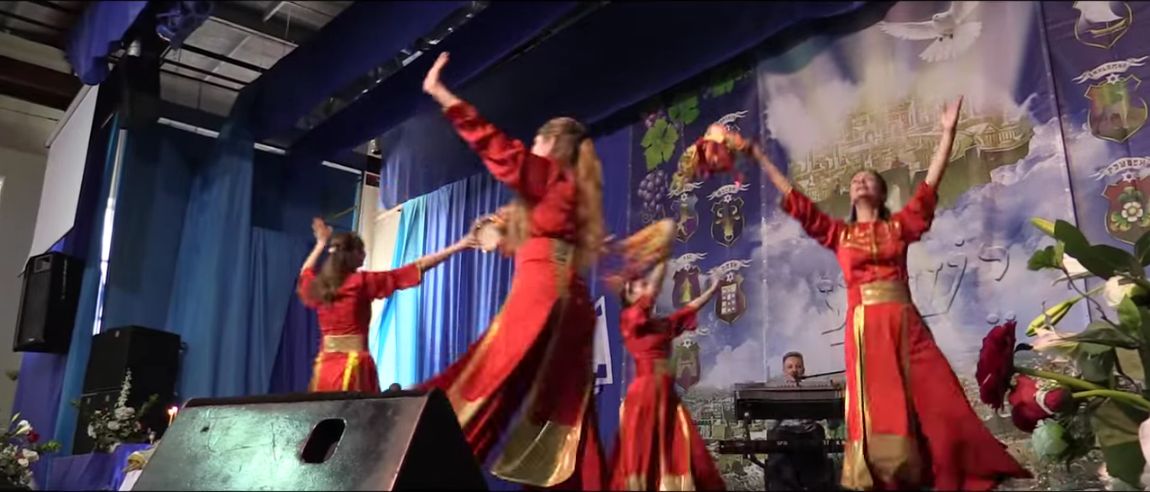
    In May this year Rev. Tim Butlin went to Kiev to speak at a Toward Jerusalem Council II conference promoting reconciliation between Eastern and Western churches, a 1000 year old church split that underlies the cultural divisions at work in Ukraine and Russia today. The conference was hosted by the Kiev Messianic Jewish Synagogue and this brought to the conference an even more ancient church split – between Jew and Gentile in Christ.

    As Canon Andrew White, the Vicar of Bagdad, makes clear, true Christian reconciliation and unity will, in the end, have to include Jewish believers in Jesus into the mix.  Without them, as the film suggests, ‘There’s something missing …’.

    We would love to read your comments about this piece.

  • The Messianic Jewish Movement in Israel

    The Messianic Jewish Movement in Israel

    Article by Prof. Dan Juster

    This is the 3rd article in a series on the Messianic Jewish Movement.  The 1st on North America, and 2nd on Russian-speaking Messianic Jews appear in the 2013 Spring and Summer issues, respectively.

    A few years ago, Toward Jerusalem Council II put out a booklet entitled The Messianic Jewish Movement. While there could be some improvement, it was basically accurate at the time it was written. Some of it was based on the book by Kai Kjaer-Hansen called Myths and Facts on Messianic Jews of Israel (1998).

    Generally, the bulk of the movement traces itself from after 1967. There were previous attempts at being something like a Messianic Jewish Movement in the British mandate period. This early history is well-documented in the writings of Gershon Nerel whose doctoral dissertation at Hebrew University dealt with the history of Messianic Jews in Israel and included that period.

    Leaders such as Moshe Immanuel Ben-Meir and Hyman Jacobs sought to found a fellowship in the 1920s and 1930s that sadly was short lived (4 years), and also sought ways to draw Jewish followers of Yeshua into union. However, many missions to the Jews did not embrace the idea of a significant distinct Jewish identity expressed in congregations and institutions apart from the historical churches.

    After independence in 1948 most of the Jewish believers in Yeshua left Israel and the handful that remained such as Moshe Ben-Meir, Abram Poljak, and Hayim Haimoff, maintained a stronger commitment to Jewish identity and organizational-congregational or corporate structures to foster Jewish identity in Yeshua. We see the beginnings during this time of promoting the term “Messianic Jew” as a self-identifying marker and avoiding the term Christian (“notzri” in Hebrew), which implied leaving the Jewish people, Jewish identity and Jewish destiny. These leaders argued for a Messianic Judaism rooted in the Land, in the pattern of life in the Torah with regard to the Sabbath and Feasts, circumcision for male babies, and more. It was a mostly non-rabbinic expression.

    A Hebrew Catholic Movement also was fostered in the Land. There were different orientations proposed by such figures as Fr. Daniel Rufeisen and Fr Elias Friedman (both Carmelites). However, Hebrew Catholics did identify as Christians, though hoping for a distinct Hebrew Catholic life and expression. There is a Hebrew translation of the Roman liturgy and a small identifiable group of Hebrew Catholics that continue to this day under the leadership of Fr. David Neuhaus, SJ.

    After the ’67 War, there was a stronger sense of Israeli identity among the handful of Jewish believers, perhaps numbering under 200. This began to grow from immigration, witness, and planting. The movement remained small but growing during the 1970s and 1980s, perhaps passing a thousand. Some came to faith in Yeshua during their post-Army trips where they met Christians who effectively shared their faith. With the coming of the Russian influx, the congregations swelled and the estimate by the end of the 1990s in Nerel and Hansen was over 5000. Today it is estimated that the number of Messianic Jews is from ten to fifteen thousand. I tend to think the more conservative number is more accurate, but there is no recent scientific survey for such a statistic. However, we can accurately name over 100 Messianic Jewish Congregations and house groups. The majority of such groups are Jewish in membership, with one such group being led by a Christian Arab who fosters Messianic Jewish life for the Jewish members. I am only counting here those groups that identify as Messianic Jewish congregations, not as Christian churches.

    Most Messianic Jewish congregations are independent. According to Hansen’s research, the majority have a doctrinal statement that is in line with the historic Creeds of the Church even though the language may be different. Most do not have formal membership, but consider membership according to the regular participation of their people. Water Immersion (Baptism) and Communion are significant in almost all the groups, but with variations concerning the interpretation of exactly what is received in the participation in the symbol.

    The majority of Messianic Jews today are from Russian-speaking backgrounds though many of their children are now attaining adulthood and are speaking fluent Hebrew. This has and will change patterns in these congregations. The second largest group is native-born Israelis who are part of congregations where Hebrew is the predominant language. Then we note the English-speaking Jews that constitute a significant group influencing congregations to provide English translation to aid their full participation. So generally we find congregations practicing dual language from either Hebrew-Russian, Hebrew-English and sometimes all three. Finally there are about ten Ethiopian Messianic Jewish congregations, five in one network and the others more independent where Amharic and Hebrew are dominant.

    The theology of the Messianic Jews of Israel tends to be an amalgam of Evangelical theology with Jewish or Torah rooted practices and patterns. There are interpretive differences from the Evangelical world, but the main thrust of theology is still Evangelical with many having a more significant role for Torah. The Messianic Jewish congregational world in Israel varies on the charismatic spectrum. My estimate is that about half are more charismatic and half tend to not emphasize the charismatic dimension. A few leaders have planted multiple congregations which remain in association.

    While there are no strong organizational ties, Messianic Jews in the Land do have greater unity and more mutual support than at any other time in the past. In addition, there are looser points of affiliation that are significant such as the Messianic Jewish Alliance of Israel, which brings Jewish believers into significant joint celebrations and an internet dialogue network for leaders. Finally, there is a loose fellowship of leaders which does sometimes take positions on important doctrinal and moral issues (Kennes Artzee-Meeting of the Land). There is also an attempt to join leaders and congregations through a fellowship called Olive Tree.

    Today, Messianic Jews are more integrated into the society. Most of the children in Messianic Jewish families attend the Israeli school system, serve in the Army and many go to Israeli universities.

    The Messianic Jewish movement is growing slowly but steadily at this time. There is a group of young people who are on the sidelines of the congregations. They are not satisfied with present congregational models and look for alternatives. We are challenged to hear them, reach them, and find ways to inspire them to involvement while incorporating their legitimate concerns.

    It is my hope that the Israel movement will develop in spiritual maturity, power, theology and organizational unity without any inordinate control. I think that the day will come when the Israel movement will be the head and not the tail of the worldwide Messianic Jewish movement.

  • TJCII and the Jews in the Churches

    TJCII and the Jews in the Churches

    TJCII Executive Committee

     This statement concerns the place of the Jews who are part of the Christian Churches. It has become necessary for TJCII to address this question because of the increasing number of Jews within the Churches who are affirming their ongoing Jewish identity. This trend is reinforced by the Helsinki Consultations begun in 2010 that are gathering Jewish believers from several historic Church traditions and from the Messianic Jewish movement.

    http://helsinkiconsultation.squarespace.com/

    Within TJCII we uphold the divine election of the whole Jewish people. This includes all Jews, whether synagogue-attending Jews, secular Jews, or Jews adhering to other non-Christian religions.1 All the more so, the Jews who are members of Christian Churches remain part of the Jewish people and heirs to the promises given to Abraham and his descendants.2 As the Churches abandon supersessionist or replacement conceptions of the relationship between the Church and the Jewish people, they make possible an honoring of the witness of their Jewish members that refuses the older pattern of absorption or assimilation.

    As a single-focus initiative concerned solely with the full reconciliation of Jewish and non-Jewish believers, personally and corporately, within the one Body of Christ, TJCII recognizes that this reconciliation necessarily includes the Jewish members of the Christian Churches. But the TJCII Executive Committee recognizes that its distinctive vision arose within the Messianic Jewish movement that directly presents the challenge of faith in Yeshua as Messiah to the wider Jewish community. The Messianic Jewish movement affirms the importance of the ongoing Jewish identity of Jewish believers in Yeshua and their need for a corporate context to affirm and support their convictions. In contrast, the challenge of the Jews in the Churches can be their witness to the nature of the Church as the reconciliation of Jew and Gentile in the Messiah.3 The Jews in the Churches contribute to this reconciliation as they affirm their Jewishness publicly within their Churches and claim a space there for a distinctive Jewish witness. This witness will fully recognize the historic heritage of the Church rooted in the Jewish Scriptures in every way that is consonant with the Scriptures and the apostolic tradition. They can provide a model for Jewish believers learning from the wisdom of the Church and can be a means for the Churches to return more fully to the Jewish heritage of the Church’s origins.

    Since TJCII is a prophetic vision for the Lord’s full plan for gathering Jew and non-Jew under the Lordship of the Messiah of Israel and the Savior of the world, the TJCII leadership emphasizes that this process can only proceed as it is led by the Holy Spirit following the model of the first Jerusalem Council in full freedom and mutual respect. It is as the Jewish believers within the Churches give a distinct witness of their Jewish heritage and as they do so in unity with their non-Jewish brethren that they will play a role in the specific calling of TJCII. For this reason, the TJCII leadership welcomes the Paris Statement issued by the Helsinki Consultation of June 2011 affirming that “As Jewish believers in Jesus, we affirm our identity as both part of the people of Israel and of the Body of Christ” and that “we are a living witness to the mysterious and invisible bond which persists between the Church and Israel.” A healthy development of the relationship between the Jews within the Churches and their respective church bodies will produce blessing for both and can also contribute to the Churches taking the Messianic Jewish movement more seriously. Mutual interaction and mutual acceptance of Jew and non-Jew with the goal of mutual enrichment is the goal in all the TJCII work of reconciliation, both between the Messianic movement and the Churches, and between the Churches and their Jewish members.

  • What Can I do?

    What Can I do?

    1. Pray for the revelation about the importance of Israel and the Jewish people. We can read Scripture and never see its significance. Ponder well Paul’s 9th through 11th chapters of Romans, especially the 11th chapter where he clearly teaches that God is not finished with Israel, that He has not rejected them forever. Look carefully at Paul’s words regarding the salvation of Israel and the irrevocable call of God on this people, then pray that the “eyes of your heart may be opened (Ephesians 1).

    2. Repent for not being Romans 11:11 believers. Paul tells his Gentile believers that they should live such lives that will make Israel jealous for their own Messiah. We will make them jealous through our love for the Lord, for each other, and for all Jewish people everywhere.

    3. Bless Abraham’s descendants according to Genesis 12:1-3. The promise given to Abraham about his descendants is for all future generations. Those who bless them will be blessed. Those who curse (or esteem them lightly, as the Hebrew word implies) will be under a curse. This continues to be seen in the way God deals with nations who turn their backs on this chosen people. They have kept alive faith in the One True God. They have been used of God to bring to the world their Redeemer, and they figure prominently into God’s future for the nations. This is indicated clearly in the closing words of John’s Revelation when the names of Israel’s twelve sons still adorn the gates of the new city, and the names of the twelve Jewish apostles are written on the foundation stones that of the city. The redeemed people come from every nation, tribe, tongue and people, but their conduit nation into the Presence of God is the nation of Israel.

    4. Honor the Jewish people as our parents in the faith according to the principles of Malachi 4 and Ephesians 6. Malachi says that in the last days the hearts of the fathers will be turned to their children and the hearts of the children to their fathers (4:6). Paul urges the Ephesian believers to remember to honor their mothers and fathers, “that it may go well with you and that you may enjoy long life on the earth” (6:3). True, his primary concern is for natural blood parents, but the principle is the same. The Jewish nation is our parent faith. As one of my friends says, “Their family journal has become our Sacred Scriptures.”

    5. Restore the biblical priority of Romans 1:16, “to the Jew first.” Though Paul was a Jewish apostle to the Gentiles, he always went to the synagogues first to let his own people know that their Messiah had come. This principle has never been revoked. Whether your mission is to Uganda, Beijing, Buenos Aires, Kiev, Berlin, or New York, our first responsibility is to go to our Jewish friends, apologize to them for the great injustices that have been perpetrated on them in the name of God’s people, but also to let them know that we do indeed believe that we are worshipping their Messiah, to encourage them to consider the possibility that Yeshua (Jesus) is indeed the Messiah long ago foretold.

    6. Take upon ourselves the sins of our heritage and pray Daniel, Ezra, Nehemiah type prayers. Some call this identificational repentance. I choose to refer to it as identificational confession, since we cannot actually repent on behalf of someone else. Daniel (chapter 9), Ezra (9:5-7), and Nehemiah (1:5-7) all confessed their own sins, as well as the sins of former generations, kings and those in authority.

    7. Become Isaiah 49:22 Gentiles. Isaiah sees Gentiles bringing “your sons in their arms” and “daughters on their shoulders.” “Kings will be your foster fathers, and their queens your nursing mothers.” It is the Gentile Christian world that has often encouraged Israel’s return to the Land. It is often they who have leased aeroplanes and ships to bring the exiles back to their native land. Many descendants of Abraham, Isaac and Jacob remain in exile, but according to Ezekiel 39:21, they will all ultimately be back in the Land. As persecution continues to rise on this marked nation, those of us who are grafted in to their promises will need to hide them, stand beside them, and help them back to their homeland.

    8. Pray and work toward the Isaiah 6, Hosea 3, Ezekiel 36 fulfilment regarding Jewish eyes being opened. Isaiah speaks of the devastation that will come to the Land of Israel of the time of closed eyes and ears and hardened heart. In the closing verses however Isaiah shows this time to come to an end, seemingly when Israel again becomes a nation. Ezekiel agrees with Isaiah, that when Israel returns to the Land, “Then you will know that I am the LORD (36:11). Hosea predicts the absence of king, of sacrifices ceased, but assures Israel that “afterward the Israelites will return and seek the LORD their God… they will come trembling to the LORD and to his blessings in the last days.” We are in those days as is evidenced by the many thousands of Jewish people who have come to faith in Yeshua, more than at any former time in history, possibly even including the first century. Pray that more will have revelation about their Messiah even this very day!

    9. Pray for and work toward the “greater riches” revival of the nations according to Romans 11:12 and 15. For centuries the church believed God was finished with Israel. They saw evidence of this in the AD 70 destruction of Jerusalem and the subsequent removal of Jews from the area. However Paul clearly saw a time when the return of Israel would have an impact on the whole church. “How much greater riches will their fullness bring!” As you look at revival in many places in the earth, to nations that have long been closed (such as South Korea, China, Africa, Indonesia, and others), know that Israel’s return is prophetically affecting all of this. Pray for a continued major revival in every nation.