Author: Editor

  • Obeying the Lord Together

    Obeying the Lord Together

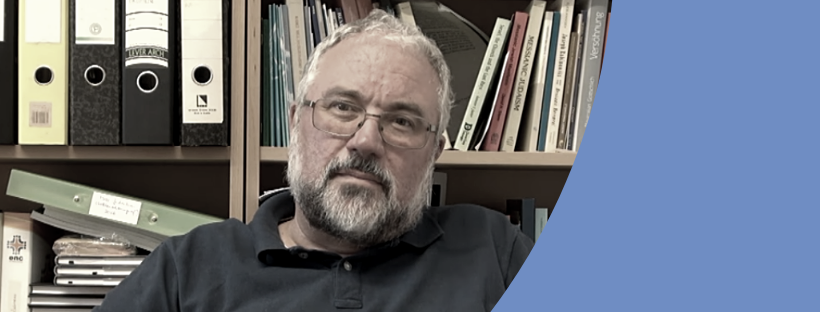
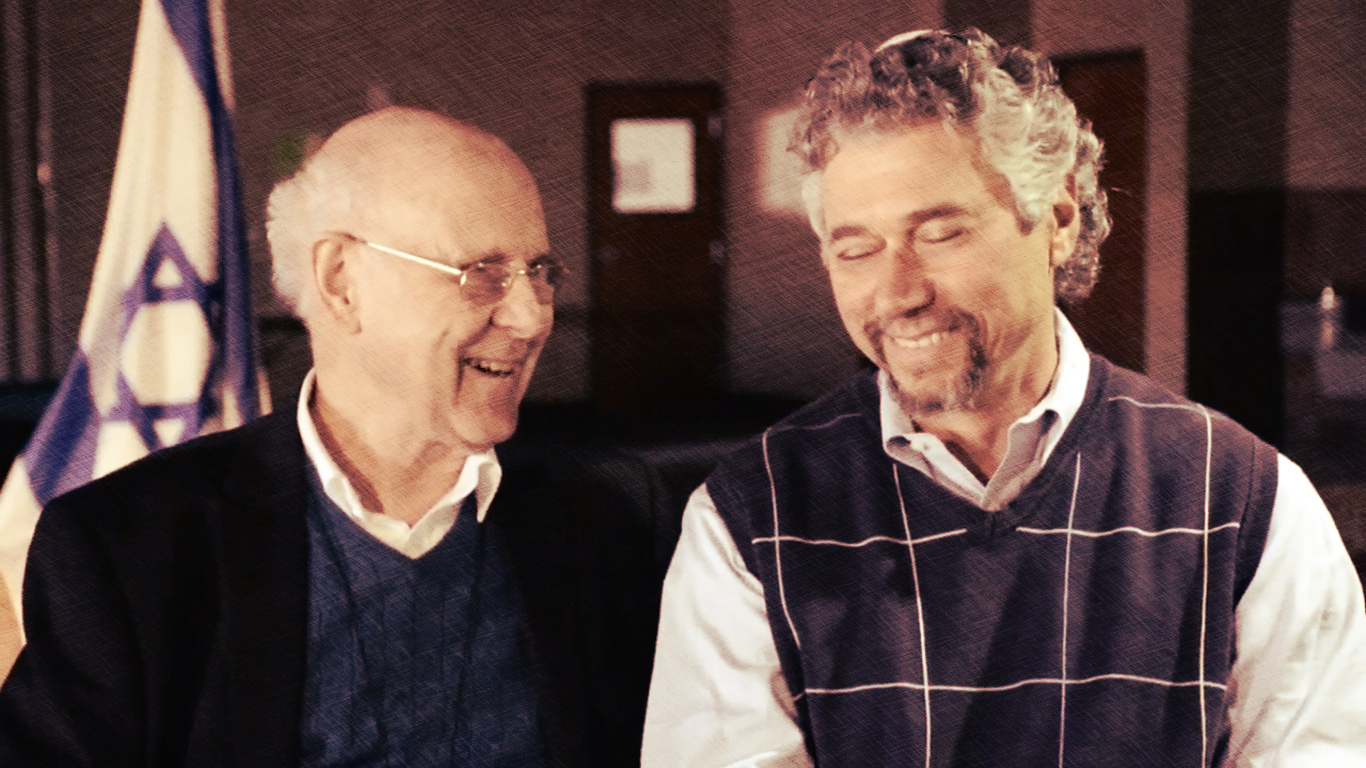
    Many of us will know by now that Fr. Peter Hocken (pictured left on the featured image) passed away in early June 2017. Peter was was a British theologian and historian of the Catholic Charismatic Renewal and the Pentecostal movement in the twentieth century. Peter was a leader within Toward Jerusalem Council II and will be greatly missed by all of us. A number of branches of TJCII have made a statement regarding the passing of our brother in Christ and I would like to take the opportunity to mark his passing as well. Since I only met Peter once many years ago, I will not be able to say much about him personally so I thought it would be fitting to remember Peter through presenting his own words.

    Fr. Peter, just like us all in TJCII have a strong yearning for Christian unity and to see the body of Messiah strengthened in accordance with the prayer of Jesus in John 17:21-23. In his book, “Pentecost and Parousia” Fr. Peter wrote the following about obeying the Lord together:

    I have had the experience several times that a listening to the Lord together has led an interchurch group to change its plans, and that this obedience to the Word that was heard produced much greater fruit than could have been imagined from the original plan. I cite one instance from the initiative Toward Jerusalem Council Two (TJCII) involving messianic Jews and Christians from many backgrounds. At that time (autumn 2005), the international committee met twice each year, and was busy preparing an international pray gathering in Jerusalem for September 2006. We had earlier decided to go to Nairobi in East Africa in the spring of 2006. But we received a clear word to go to Antioch before we went to Jerusalem, because the road to Jerusalem passes through Antioch. We immediately sensed the rightness of this word, since Antioch was the first church to embody Paul’s vision of the “one new man”, in which Jew and Gentile are made one through the cross (see Eph 2:16, Acts 11:19-26). The resulting visiting to Antioch in May 2006 was very rich and powerful. During the first session, we read aloud all the passages in the New Testament that mention Antioch. After the reading, the messianic Jews recognised that three incidents damaging to the unity of the church took place in Antioch: 

    1. The episode when brothers from Judea insisted that pagan converts should be circumcised in order to be saved (see Acts 15:1)
    2. The controversy between the Apostles Peter and Paul (see Gal 2:11); and 
    3. The disagreement between the partners in mission, Paul and Barnabas concerning John Mark, the nephew of Barnabas (see Acts 15:37-39)

    The messianic Jews were deeply convicted by the scandal presented to the newly-converted pagans by the Jewish believers (all involved in the squabbles were Jews), and this awareness led them to a repentance for their own lack of unity today. This heartfelt prayer made before the cave church of St. Peter.

    May we never lose sight of this early revelation within TJCII and the sense of unity and joint repentance that has been so fruitful in our initiative. We thank God for the great contribution of Fr. Peter Hocken and recognise that while his passing is felt as a great loss, we must remember that to die in Christ is gain, so we rejoice as we recall the words of the Apostle Paul which Fr. Peter shared with a member of TJCII’s Now Generation:

    I have fought the good fight, I have finished the race, I have kept the faith. Finally, there is laid up for me the crown of righteousness, which the Lord, the righteous Judge, will give to me on that Day, and not to me only but also to all who have loved His appearing.
    -2 Tim 4:7-8


  • Hungarian Orthodox Rabbi Supports TJCII Vision

    Hungarian Orthodox Rabbi Supports TJCII Vision

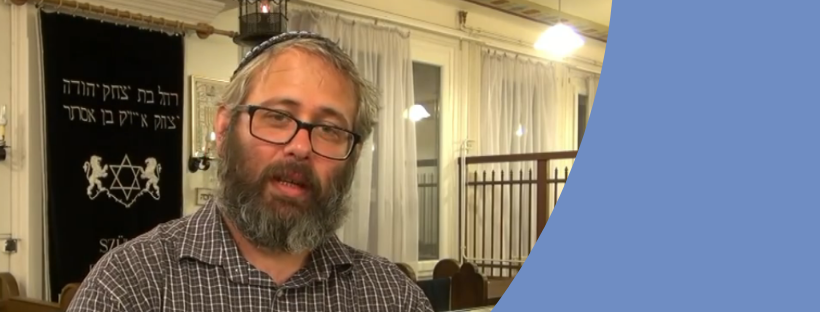
    Hungarian Rabbi, Gábor Fináli, give his views in this interview from an Orthodox standpoint.

    As someone who is aware of the first Jerusalem council of Acts 15, he welcomes the initiative. Understandably he is of the opinion that there was a great cost to the Torah following the outcome of the First Jerusalem Council which made it much easier for Gentiles to graft into the community of God’s people. However, it is encouraging to hear responses like this from the Jewish community, we pray God will continue to bless this movement.

    [intense_video video_type=”youtube” video_url=”https://www.youtube.com/watch?v=J3bk9jNEOjQ”]

  • Johannes Fichtenbauer Explains TJCII

    Johannes Fichtenbauer Explains TJCII

    [intense_video video_type=”youtube” video_url=”https://youtu.be/gF5iFmYZ3kE”]

  • Benjamin Berger Sessions & Dromantine Conference

    Benjamin Berger, Co-Pastor of “Kehilat ha’she al Har Zion” (The Congregation of the Lamb on Mt. Zion).  The congregation meets at Christ Church Jerusalem (completed in 1849), spoke in Ireland on number of topics and we have most of the recordings here for you to listen back to.

    Session 1 – Shabbat Celebration

    Session 2: Testimony & Questions

    Session 3: The Image of God

    Sesison 4: The Covenant With Abraham + Questions

    Session 6: Restoration

    Session 7: Questions & Conclusion

  • Hussite History

    Hussite History


    The reform movement in which Jan Hus (1369 – 1415) was a major figure was undoubtedly a major factor in the historical process that led a century later to the Protestant Reformation. The theological and spiritual conflicts were deeply connected to political and nationalist issues:

    • The relationships between the political rulers: Wenceslaus (Vaclav) IV, the King of Bohemia; Sigismund, his half-brother, King of Hungary and later also King of Germany.
    • The context of the great papal schism, which reached its climax with 3 claimants to the papacy in the last years of Hus’s life (1409 – 15). Hus made enemies in Prague over his role and influence on the King in support for a conciliar solution to the papal schism, and these enemies played a role in Hus’s condemnation at Constance.
    • The conflict between the German and German-speaking population and the Czechs.
    • Thus the conflict between Jan Hus and the Archbishop of Prague had a strong nationalist component, as well as one of reform. Hus was Czech, the Prague church establishment was German. Hus was a godly man, a preacher of repentance and reform; Archbishop Zbynek of Prague had bought the appointment at the age of 25.
    • The opposition to reform came from the people in power who were benefiting financially from forms of corruption and simony.


    Hus became the national hero of the Czech people. He had translated the Bible into Czech. He was preacher at the Bethlehem Chapel that was founded by two businessmen specifically for preaching in the Czech language. It was here that Hus denounced corruption and called for reform in the Czech language after some years of doing so in Latin. This was provocative as the Latin sermons were only understood by the educated. His preaching in Czech made Hus a populist reformer.

    For Hus, the Word of God was primary. Church reform based on the Scriptures was central, not one issue. All later disciples of Hus agreed in demanding open access to the Scriptures, free and open preaching, a poor Church, and worthy lifestyle for the priests, and the chalice for the laity. Hus was zealous for reform, for eliminating corruption, simony, and moral laxity. Thus he was very active in the hearing of confessions.

    Hus opposed the use of force to counter heresy, as he also opposed any coercion of the Jewish people. One consequence was that the period after his death, when Prague was ruled by the followers of Hus, was a time of relief and blessing for the Jews of the city. This aspect of Hus explains why the Jews were accused of Hussite sympathies during the anti-Jewish disturbances in Austria in 1421, when 300 Jews were killed in Vienna-Erdberg.

    The teaching of Hus on the Eucharist did not contain anything contrary to official Catholic teaching. The judgment of Hus as a heretic owed a lot to his being seen as a follower of John Wyclif. Hus defended Wyclif, but he did not follow him in all respects. One important area where Hus did not follow Wyclif was in teaching on the Eucharist. He rejected Wyclif’s teaching on “remanence” (it is still bread), and held to the Catholic teaching on transubstantiation. He advocated giving the chalice to the laity, but he never practised it (this started with some of his followers). It was not through Hus but through Jakoubek von Mies that the chalice became a symbol for the Hussites. The major rebellion on the chalice followed immediately upon Hus’s death. Historians say that for Hus the symbol was the pulpit and not the chalice.

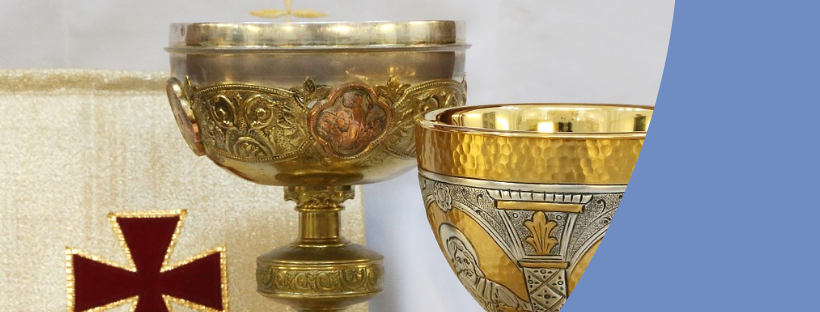
    The debates unleashed by Hus and other reforming preachers led to greater attention to eucharistic theology. For example, Jakoubek wrote: “What Christ commanded and enacted with his own hands, must be observed by Christians receiving the body and the blood of the Lord through bread and wine for the health of their souls. The body and the blood of Christ in the sacrament of the altar symbolize two powerful realities, which are both necessary for the upkeep of body and soul: the heavenly flesh for the body and the blood for the soul. … The lay chalice grounds a togetherness at table (Mahlgemeinschaft) that is a sign pointing to the end-times Church and allows a participation in the redemptive power of the atoning death of Christ.”

    After the execution of Hus, the Czech people rose up in protest. Nearly 500 Czech nobles gathered in Prague to protest his condemnation and death. They entered into a solemn covenant, pledging to defend the Czech reformation against all external threats. From this gathering emerged the Four Articles of Prague (1419):

    1. The Word of God is to be preached freely. … without institutional constraints or political interference.
    2. The sacrament of the body and blood of Christ is to be served in the form of both bread and wine to all faithful Christians.
    3. Priests are to relinquish earthly position and possessions and all are to begin an obedient life based on the apostolic model.
    4. All public sins are to be punished and public sinners in all positions are to be restrained. [Wyclif had taught that the authority for this lies with the civil authority – a result of church authority failing to do this – and this opened the door for Henry VIII and the German princes.]

    Hus stood in the line of an indigenous tradition of Czech reformers who emphasized preaching, studying the Scriptures, and eliminating clerical abuses. Hus’s rediscovery of the Augustinian doctrine of the invisible church enabled him to criticize contemporary church practices in the light of God’s sovereignty over time and eternity.

    In effect, three major groupings developed as far as the Lord’s Supper or Eucharist is concerned:

    1. The moderate Hussites (often called Calixtenes or Utraquists: utraque = both, i.e. bread and wine). They kept the Roman liturgy as before. Most Utraquists or Calixtenes were noblemen and university masters, were more socially conservative, and wanted to avoid a break with the Catholic Church. They were centered in Prague. The Catholic Church made a concession for Bohemia allowing communion from the chalice in Bohemia from 1434 to 1462.
    2. The radical Hussites or Taborites, who were generally from the peasant classes, demanded radical social change, and had apocalyptic ideas about the coming of Christ’s kingdom on earth. They were strong in the small towns and villages. They abandoned the Roman liturgy, and celebrated communion by saying the Our Father and reciting the narrative of the Last Supper. The Taborites emphasized the eschatological dimension of the Lord’s Supper, celebrating the Lord’s Supper under the open skies on mountaintops. As Jesus had ascended into heaven from the Mount of Olives, so he returned in bread and wine to celebrate with his people the coming kingdom of God. Their main leader who became their military general was Jan Zizka (1360 – 1424).
    3. The Catholics content to receive communion in one kind only.

    In the years after the execution of Hus, there was much conflict. The new pope launched Crusades against the Hussites, but in the first four Crusades the radical Hussites defeated the imperial armies (1420, 1421, 1422, 1427). They made the chalice the symbol of their resistance, placing representations of the chalice on their weapons of war. The Hussites suffered their first military defeat in 1434.

    Among the radical Hussites, however, there were differing emphases, particularly as regards lifestyle, with only a minority holding to more pacifist views.

    At the Council of Basel, permission was given to the Church in Bohemia to give the chalice to lay people, but this was withdrawn a generation later by the Pope.

  • Abuses of the Eucharist: A Western Catholic Confession

    Abuses of the Eucharist: A Western Catholic Confession

    Issues concerning the Eucharist played a central role in the conflict that broke out in Bohemia in the first years of the fifteenth century between Jan Hus, a reforming priest, and the civil and ecclesiastical authorities. In fact the reforms advocated by Hus were wider than the Eucharist, but the dispute over communion from the chalice became the top symbolic issue. After the death of Hus, the chalice became a symbol for the Hussites, and often decorated their weapons of war.
    However, the theology and the practice of the Eucharist had already suffered various forms of distortion and of narrowing since the close association of imperial and princely power with the power of the Pope and the bishops. Here we encounter one of the most serious abuses of the Eucharist, namely the abuse of power. This abuse of power was especially serious, because it directly contradicts the meaning of the Eucharist. The Eucharist is the efficacious memorial of the Lord Messiah’s self-giving and self-emptying which is the direct opposite of imposing the will of authority with the use or threat of violence. We need to pray for light as to the different ways in which the abuse of power affected the Church’s celebration and theology of the Eucharist. Different forms of the abuse of power in this area are indicated below.
    The weakened relationships between the Eastern Churches and the Western Church that ended up with the schism of 1054 between Rome and Constantinople had unfortunate consequences in the sphere of worship.

    • In the Western (Roman) Church, the Roman rite was privileged in a way that did not honour the many other liturgies of equal antiquity. This led during the Middle Ages, for example, to the arrogant attempt to impose the Roman liturgy and hierarchy on the Greeks in and around Constantinople following the Crusader intrusion of 1204. This exaltation of Roman practice and theology over the Eastern patterns of worship and thought had serious consequences for both practice and theology.
    • The later attitudes of Catholics to Protestant celebrations of the Lord’s Supper already had its antecedents in Latin attitudes to the Greek, the Syrian, and other liturgies of the East. These superior and disdainful attitudes were again manifest in India in the 16th and 17th centuries as the Portuguese Catholic missionaries tried to suppress the ancient Syrian liturgies.
    • A major abuse of power occurred regularly over several centuries when excommunication was used as a political weapon, depriving large numbers of people of eucharistic communion, sometimes for prolonged periods.
    • It is important to notice the big difference between the earlier evangelization of Western Europe, in which Celtic monks and Benedictine monasteries played a major role, and the later evangelization of central and Eastern Europe, in which the princes played a much greater part. In the first there were strong links to the monastic culture, and the formative role of the liturgy. With the latter, less attention was paid to the Word of God. This was “power evangelism” of a very different kind. A serious imbalance between the Word and the sacrament developed, both in the practice and in the theology. The standard of preaching was low except for some new reforming and preaching orders/congregations. Attending Mass on Sundays and holy days became a legal obligation, as did communion once a year around Easter. In practice, the liturgy of the Word came to be regarded as less important than the liturgy of the Eucharist, and only a prelude to “the real thing.”
    • With the foundation of the universities and the rise of scholastic theology, theological teaching in the West became less rooted in the Scriptures and gave a major place to Greek and Arab philosophy. In this theology, there was an increasing focus on the moment of consecration, and the transformation of the elements into the body and blood of Christ, with transubstantiation becoming the official term in 1215. In this way, the doctrine of the “real presence” became separated from an understanding of the liturgy. These tendencies had several unfortunate effects: a focus on the power of the priests who alone could effect the Eucharistic transformation; the concentration of the theology of ministry on the powers imparted through ordination; a neglect of the role of the Holy Spirit.
    • The protest of Hus can be seen as a Gospel protest against this priestly power-thinking. Hus did not contest the teaching on transsubstantiation, but he insisted on the chalice being given to the people. This formed part of his emphasis on the Bible and his protest against clericalism in the name of the Gospel. But the Catholic Church refused this protest, and relied on earthly power, when the Council of Constance condemned Hus to be burned at the stake in July 1415. Hus refused the list of errors attributed to him, because he said he had never taught those things.
    • An increased focus on the concept of sacrifice, which led to many attempts to show how the eucharist involved the essential elements of sacrifice; a lack of a proper understanding of the eucharist as memorial; the use of Aristotelian philosophy to resolve every kind of question concerning the real presence, and the sacramental presence of the Lord, separating this issue from the rest of theology.
    • The Lord’s continued presence in the Church came to be seen more and more as his presence in the consecrated elements; this sidelined the role of the Holy Spirit, the Lord’s presence in the Word and in the gathered body, and the purpose of communion as feeding the inner life of the Spirit.
    • Reception of the sacrament became rare for lay members of the Church over many centuries.
    • The dying out of concelebration in the Latin Church, and the increasing tendency for the celebration of private Masses, facilitated the multiplication of emphasis on Masses for the dead in the 14th – 16th centuries.
    • The ordination of uneducated priests in some countries financed by the more wealthy simply to celebrate Mass for the dead of their families, often in chapels specially built for the purpose (chantry Masses). All this contributed to the idea that the Catholic priesthood was simply a “sacrificing priesthood” independently of any ministry of the Word.
    • The multiplication of Masses led to a quantification of grace. The practice of Mass stipends complicated the picture, as the theology manuals illustrated this quantification – the more Masses, the more grace.
    • The relatively easy acceptance of the laity only receiving the host and not from the chalice, though this restriction was originally introduced for reasons of hygiene (e.g. during plagues).
    • The process whereby the focus (and the design of churches) moved to the eucharistic host as object of adoration rather than as spiritual food (this was facilitated by communion only under one kind).
    • Among the anti-Jewish myths quite widely believed was one that the Jews were looking to steal eucharistic hosts in order to desecrate them. This led to stories of hosts stabbed by Jews starting to bleed, which became one form of “eucharistic miracle.”

    Summary

    1. A series of harmful separations took place over a period of centuries:
      1. Sacrament from Word;
      2. Laity from clergy;
      3. chalice (wine) from the host (bread);
      4. The “real presence” from the whole Eucharistic action (Eucharist more as object than as action).
    2. The distancing of Christian theology from biblical Hebrew – Semitic thinking:
      1. “memory” (Do this in memory of me) being reduced to human recall of past events; the mysterious participatory character of Holy Spirit remembering is lost;
      2. “reified” thinking reduced the biblical signs to causes of grace: Do this and you get that – a mechanical conception. In this way the intrinsic power of symbols is not understood;
      3. through this quantitative thinking comes the argument that the Christian receives the total Jesus in the host, so it is not necessary to receive the chalice;
      4. the communal character of the remembrance is weakened (the model of the Passover is forgotten);
      5. the “Eucharist” can be reduced to the host independently of the Eucharistic action, and the theology of the Eucharist be reduced to the real presence. Then the consecrated host is the Eucharist, rather than the communal commemoration through which the unique sacrificial action of Jesus is made present.

    This summary only surveys what led up to the Hussite controversy though its effects lasted long afterwards, some still operative today. It does not raise the question of the failings and distortions that followed in other Christian settings.

  • TJCII: Reconciliation (Video)

    [intense_video video_type=”youtube” video_url=”https://youtu.be/lj1eh20m2js”]

  • Eschatology

    Eschatology

    Father Peter Hockens’ final talk at the Kiev conference went something like this…

    Everything that we have heard in this consultation so far – the complementarity of Israel and the nations, the Church as the union of Jew and Gentile through the cross of the Messiah, the ingrafting of the Gentiles into the natural olive tree of Israel, the need of Jews and Gentiles for each other – all this now needs to be applied in the area of eschatology. TJCII as a vision for Jewish and Gentile reconciliation in Messiah requires the reconciliation of the Jewish and the Christian contributions to eschatology, to our faith in the end-times and the restoration of all things in Messiah.

    In other words, the distinction between Israel and the nations also has major implications for our eschatology. In Romans, Paul uses the term “fullness” (pleroma), first of Israel (11: 12) and then of the nations (11:25). “Now if their transgression [that is, of Israel] means riches for the world, and if their defeat means riches for Gentiles, how much more will their fullness mean!” (Rom. 11:12). Later Paul writes, “I want you to understand this mystery” (i.e. this is part of God’s eternal plan): a hardening has come upon part of Israel, until the full number [pleroma] of the Gentiles has come in. And so all Israel will be saved.” (Rom. 11:25-26). The fullness of Israel and the fullness of the nations are inter-related; they cannot be realized independently of each other. This connectedness was expressed in a different way by Yeshua himself: “they [the Jews] will fall by the edge of the sword and be taken away as captives among all nations; and Jerusalem will be trampled on by the Gentiles, until the times of the Gentiles are fulfilled.” (Luke 21:24). This relates also to a verse in Matthew: “And this good news of the kingdom will be proclaimed throughout the world, as a testimony to all the nations; and then the end will come.” (Matt. 24:14). “For if their rejection (aposate = setting aside, that is, of Israel) is the reconciliation of the world, what will their acceptance be but life from the dead.” (Rom. 11:15).

    From the Church of the One New Man to One Universal Church

    The Church of Jew and Gentile together in one body, the Church of the One New Man, did not last. The warnings of Paul against Gentile boasting over the Jews were not heeded (see Rom. 11:18, 20, 25). By the fourth century, the Church did not permit converted Jews to retain their Jewish identity or to continue Jewish practices. The Church understood itself to be universal embracing all nations, and the main model for unity increasingly became the unity of the Roman-Byzantine Empire. Several Fathers of the Church recognized that the Jews would enter at the end, but this was understood as taking their place among the nations, not as restoration of the one new man.

    This process had major repercussions in a number of areas, including church unity and eschatology. It had negative effects on eschatology because the Jewish people are the bearers of the Messianic promises: “to them belong the adoption, the glory, the covenants, the giving of the Law, the worship, and the promises” (Rom 9:5). Jewish life is rooted in the covenant with Abraham and in the Torah, being oriented to the Messianic promises. The references to past and to future are lived and expressed in the feasts of Israel. The promises given to Abraham, to David, and through the prophets, concern the coming Messiah-King-Deliverer and the coming Messianic age/kingdom of righteousness and peace that is established in and from Zion. When there is no longer an explicit Jewish presence in the Church, their strong Messianic orientation towards the final fulfilment is removed.

    Was this orientation to the final fulfilment completely lost in the Church? No, and for two reasons. First, the Church rejected the attempt of Marcion to remove the Old Testament from the Christian Bible. The Scriptures of Israel remained foundational for the Church. Second, the liturgies of the Church retained the orientation to the completion that had come from the Jewish origins. But nonetheless in the teaching on eschatology something was lost.

    Effects on Eschatology of Distancing from Israel

    How then did the distancing of the Church from its Jewish roots weaken the eschatological hope? Christians began to speak of the Church as the new Israel, saying that the Church has become heir to all God’s promises, with the assumption or explicit statement that the promises have been transferred to the Church because of Israel’s unbelief. When this happened, the promises were re-interpreted in a spiritualizing sense – so that the promised Land becomes heaven, the earthly Jerusalem is replaced by the heavenly, and the rule of the Messiah becomes the glorified Christ’s rule from heaven. In this process, the new realities with the coming of the Christ are seen as superior to the material things characterizing the covenants with Israel: the Jews are seen as carnal, the Christians as spiritual. Christians search the Old Testament for everything that can be interpreted as a type of Christ.

    This form of spiritualizing in fact produces a rupture with the Messianic hope of Israel. Why? It is not because typological interpretation of the Old Testament is mistaken; we find typological interpretation in the New Testament, for example in 1 Cor. 10 “the rock was Christ” v. 4 and in the description of Jesus as the Lamb of God. Why then? First, because the only value of the type is its Christological signification – the covenants with Israel have no more value in themselves. Second, the Messianic promises were seen as totally fulfilled in the first coming of the Christ. This is the fundamental reason why the historic Churches have great difficulty in seeing any contemporary fulfilment of Messianic promises in events concerning Israel and the Jewish people in modern times. This conviction – total fulfilment in the first coming – cuts off the Messianic expectation of Israel: no more Messianic fulfilment, just the outworking of the consequences of the first coming. If Paul had believed that, he could not have told the Jews of Rome: “it is for the sake of the hope of Israel that I am bound with this chain.” (Acts 28:20).

    I should add that some promises that just did not fit the spiritualizing reinterpretation were simply left out of our theology and our preaching: for example, the words of Jesus to the Twelve, “Truly, I say to you, in the new world, when the Son of man shall sit on his glorious throne, you who have followed me will also sit on twelve thrones, judging the twelve tribes of Israel.” (Matt. 19:28; see also Luke 22:30). This also applies to the words of Jesus at the Last Supper, “I tell you that I shall not drink again of this fruit of the vine until that day when I drink it new with you in my Father’s kingdom.” (Matt. 26:29). Understanding this last text literally did not immediately cease in the early Church, as we find St Irenaeus of Lyon explaining around the year 200: “In promising to drink there of the fruit of the vine with his disciples, he [Jesus] made two things known: the inheritance of the earth, in which will be drunk the new fruit of the vine, and the bodily resurrection of his disciples. For the flesh that will be raised in a new condition is also that which will share in the new cup. It is not in fact when he will be with his disciples in a superior and supra-heavenly place, that the Lord can be thought of as drinking the fruit of the vine”.

    Seeing the Messianic fulfilment totally in the first coming was not just a fulfilment on earth, but fulfilment in the resurrection and ascension of Jesus. There is of course something fundamentally right in this. The resurrection and ascension of Jesus was for Jesus himself being “made perfect” (Heb. 5:8). This opened up the heavenly dimension, which becomes a characteristic element in New Testament faith. So for example Paul writes: “But our commonwealth [politeia] is in heaven” (Phil. 3:20) and “Set your mind on things that are above, not on things that are on earth, for you have died, and your life is hidden with Christ in God.” (Col. 3:2-3). But seeing the fulfilment of the promises totally in the first coming easily overlooks the total orientation of the first coming to the second. This becomes more serious when the role of the Holy Spirit from Pentecost onwards as totally preparing for the second coming is forgotten. As a result the second coming of Jesus in glory is not seen as the fulfilment of the Messianic promises, and the assumption is that Jesus comes in order to take us out of this creation to heaven. So the Church developed an eschatology that is markedly different from the hope of Israel. In general, the Church has looked to a heavenly fulfilment, and Israel to an earthly deliverance and fulfilment. The Church sees the fulfilment as outside and above human history, whereas for the Jewish people the fulfilment is within this creation and the climax to human history. This is one of the most serious results of the separation of Church and synagogue.

    With the separation of the Church and the synagogue through the centuries we have inherited a situation in which the Church affirmed the newness of resurrection and glorification through the cross while the Jewish people affirmed the continuing validity of the promises concerning the Land of Israel and the city of Jerusalem. From the fourth century, Christian eschatology had no place for Israel as a distinct people. It developed differently in the Eastern churches from the West. Some of what I will say applies more particularly to Western Christianity, both Catholic and Protestant, and I leave it to any of you from the Orthodox Church to discern how much this also applies to you. In general, this distancing of the Church from the Jewish people intensified over the centuries leading to very negative presentations of the Jews by preachers and people.

    More positive approaches began slowly following the Protestant Reformation. With the Protestant emphasis on the Bible, more Christians studied Hebrew, and a few scholars began to understand that the promises to Israel were permanent, and that many Old Testament prophecies remained unfulfilled. The number of Reformed and Evangelical scholars who believed in a future return of the Jews to the land of Israel and in their coming to faith in Jesus had increased by the 19th century. But here a complication entered. One Protestant who saw the contrast between the Jewish earthly hope and the Christian heavenly hope was John Nelson Darby, a founding figure among the Plymouth Brethren, who became a major architect of dispensationalism pre-millenialism. Darby sought to solve the dilemma by separating Israel and the Church even more, so he taught two distinct destinies, an earthly destiny for Israel and a heavenly destiny for the Church. This was the inspiration, if that is the right word, the origin of the teaching on an invisible rapture of the Church, separated from the second coming. In Darby’s scheme the Church had to be removed from the earth before Israel’s destiny on earth could begin to unfold. The teaching of an invisible rapture of “the church” before the visible coming of the Lord in glory removes a key element in the role of the Church of Jew and Gentile to prepare the way for the coming of the Lord. In this schema the Church is already in heaven for a significant period before the coming in glory.

    We have to hold Israel and the Church together, recognizing that their hopes belong together, even if we cannot yet understand how, and so affirm that the Church is the union of Jew and Gentile in one new man. It will only be possible for the Jewish and the Christian worldviews to be brought together by the light of the Holy Spirit. What then is it that we have to bring together?

    The Central Christian Witness: Death and Resurrection

    The heart of the Gospel is the death and resurrection of the incarnate Son of God for our salvation. The Christian life, life in Christ, or life in the Spirit, is being plunged into the death and resurrection of Jesus. Paul writes: “Do you now know that when you were baptized, you were baptized into his death?” (Rom. 6:3). Life in the Spirit is then to live in this new creation of being dead to sin and alive with the Holy Spirit. “So you also must consider yourselves dead to sin and alive to God in Christ Jesus.” (Rom. 6:11). It is the same in the first letter of Peter: “He himself bore our sins in his body on the cross, so that, free from sins, we might live for righteousness; by his wounds you have been healed.” (1 Peter 2:24). The Christian is then fed on the death and resurrection: “When you eat this bread and drink this cup you proclaim the death of the Lord until he comes.” (1 Cor. 11:26). We feed on his body given for us and drink of his blood that is poured out for us. In this way we are preparing for our resurrection on the last day: “Those who eat my flesh and drink my blood have eternal life, and I will raise them up on the last day.” (John 6:54).

    There is something fundamentally right about a total fulfilment already in Jesus provided we understand that this fulfilment is in his resurrection-ascension to glory. Jesus has reached the goal, this total transformation or glorification, through his bodily resurrection and his ascension as man to the glory of the Father. But this completion has still to be achieved in the whole creation, in the world and in the Church; that is, also on earth. So the Old Testament promises that are not yet fulfilled all apply to the fulfilment in the creation, on earth and in the Church.

    There is a challenge here from the Christian tradition to the Messianic Jews. With their reclaiming of the Messianic hope of Israel – for example, the return of King Yeshua to Jerusalem and his rule over the nations in righteousness – it can happen that full justice is not done to the genuine newness introduced by the resurrection and ascension of the Messiah that is at the heart of the New Covenant. This newness is the bodily resurrection to a glorified bodily existence that is a greater transformation than could ever have been imagined, even by those Jews who believed in the resurrection from the dead.

    I sometimes give a teaching about the three phases of the Holy Spirit’s action upon Jesus as man. The first is clearly that Jesus is conceived by the Holy Spirit in the Virgin Mary. The second is his baptism in the Jordan. Here the Holy Spirit descends upon him, in consequence of which he begins his public ministry in the power of the Spirit. As Luke says, “Jesus returned in the power of the Spirit into Galilee” (Luke 4:14). But there is a third and final filling or total penetration by the Holy Spirit that we often overlook. It is the transformation in his resurrection and ascension. The verse that makes this clear is Acts 2:33: “Being therefore exalted at the right hand of God, and having received from the Father the promise of the Holy Spirit, he has poured out this which you see and hear” – that is, on the day of Pentecost. Herein Peter’s Pentecost message, we are told what Jesus received when he was exalted to the right hand of the Father. He is now in his humanity totally penetrated and glorified by the Holy Spirit, so that he can now pour out on us this same Holy Spirit through his glorified humanity.

    This same transformation is promised to the disciples. This point is emphasized by the apostle in Ephesians, ch. 1: “so that with the eyes of your heart enlightened, you may know what is the hope to which he has called you, what are the riches of his glorious inheritance among the saints, and what is the immeasurable greatness of his power for us who believe, according to the working of his great power. God put this power to work in Christ when he raised him from the dead and seated him at his right hand in the heavenly places, far above all rule and authority and power and dominion, and above every name that is named, not only in this age but also in the age to come.” (Eph. 1:18-21).

    An element here is the false idea that the Christian observance of the first day of the week was designed as a replacement for Shabbat. No, the first day of the week was originally observed because it was the day of the Resurrection of the Lord. This has eschatological significance, because the first day is also the eighth day, which symbolizes the final fulfilment after the Shabbat rest. It was no coincidence that the body of Jesus lay in the tomb on the day of rest. Not to honour the first day of the week can take attention away from the resurrection of Jesus as the core of New Covenant faith.

    So I suggest that a central witness of the Churches that the Messianic Jews need to receive is the centrality of the death and resurrection of Yeshua in the New Covenant, with a deeper grasp of the mighty transformation that bodily resurrection will bring on the last day. We need Shabbat followed by Resurrection.

    The Central Jewish Witness: The Promises of the Kingdom of God

    What is it that the Churches have to receive from the synagogue? The last verse from Ephesians 1 presents us with a fundamental element in the biblical and Jewish worldview: the difference between this age (aeon) and the age to come. Jesus mentions this in speaking of the sin against the Holy Spirit: Whoever speaks a word against the Son of Man will be forgiven, but whoever speaks against the Holy Spirit will not be forgiven, either in this age or in the age to come.” (Matt. 12:32). It is mentioned in Hebrews 6 in a warning about those who fall away, for those who have become believers in Messiah are described as “those who have once been enlightened, who have tasted the heavenly gift, and have become partakers of the Holy Spirit, and have tasted the goodness of the word of God and the powers of the age to come.” (Heb. 6:4-5).

    The coming age is the Messianic age, the age of the rule of the Messiah in righteousness and peace. It is the rule of the servant of the Lord: “I have put my spirit upon him; he will bring forth justice to the nations.” (Is. 42:1). For the Messianic Jew, all the promises of the Lord given to Abraham, David and the prophets will be fulfilled. A few promises have been fulfilled in the first coming of the Lord – the virgin will be with child (Is. 7:14); the suffering of the servant as the apostle Peter notes: “God fulfilled what he had foretold through all the prophets, that his Messiah would suffer.” (Acts 3:18). But many prophecies of the Old Testament have not yet been fulfilled, or only partially. So Peter continues, as reported in Acts 3, “the Messiah appointed for you, that is, Jesus [who] must remain in heaven until the time of universal restoration that God announced long ago through his holy prophets.” (Acts 3:20-21). In effect, what Peter was doing in this message was a Jewish reinterpretation of the Messianic hope of Israel in the light of the Passion, Death and Resurrection-Ascension of Jesus (Yeshua).

    What does the universal restoration mean? It means the liberation of the entire creation from the effects of evil and sin. Paul expresses this hope in Romans 8, the hope “that the creation itself will be set free from its bondage to decay and will obtain the freedom of the glory of the children of God.” (Rom. 8:21). It is a return to paradise, but not just a return, the entry into what is more than paradise. The Jewish witness to Yeshua challenges us all concerning this earthly fulfilment. The Christian challenge is that the fulfilment is a massive transformation that has at its centre the resurrection of the body. For the witness of the Scriptures is that the resurrection of the just occurs with the coming of the Lord Jesus in glory.

    What is it then that the Christian Churches need to receive from the Jewish believers in Yeshua? Without detracting from the New Testament witness to the fullness of eternal life in communion with the Father and the Son, we need to receive the Jewish vision for the Messianic fulfilment in and of this creation. It is only in this context that the full significance of bodily resurrection can be understood. This will also involve rediscovering Yeshua as Messiah and not only as Saviour and Lord. As Son of David, Yeshua will rule over the kingdom that is grounded in Israel, centred in Jerusalem, and opened up to the nations.

    We can say what are the elements that need to be incorporated into our eschatological vision. There will be a fulfilment of the promises to Israel – concerning the people, concerning the land, and concerning Jerusalem. What does this mean for Jerusalem? The Jewish tradition does not allow for a total displacement of the earthly Jerusalem by the heavenly. The Christian tradition does not allow for a return of Yeshua to the city of David that does not involve the mighty transformation of resurrection and glorification. He will come in glory. Now, the book of Revelation ends with the vision of “the holy city, the new Jerusalem, coming down out of heaven from God, prepared as a bride adorned for her husband.” (Rev. 21:2). It is pointless to try to imagine what the new Jerusalem will be like and how it comes down to earth. The foolishness of trying to imagine it is shown by the impossibility of imagining one tree that is found on both sides of the river that flows “through the middle of the street of the city.” (Rev. 22:2). But this vision tells us important things. It indicates that finally we are not taken up to God, but God comes down to us. “See, the home [tabernacle] of God is among men. He will dwell with them as their God; they will be his peoples, and God himself will be with them.” (Rev. 21:3). Later, “the throne of God and of the Lamb will be in it [the city]” (Rev. 22:3).

    The Task for the Future

    The task of Messianic Jews and of Christians from all traditions is to work for reconciliation in relation to “the one hope to which you were called” (Eph. 4:3). I do not believe that it is possible at this point in history to arrive at an adequate synthesis of the Jewish and Christian traditions concerning eschatology. At present none of our eschatologies do full justice to the Messianic hope of both Old and New Testaments. This reconciliation for which TJCII is working requires a purification in all of our theologies, so that what is from the Lord in each of them can be brought together in the one hope to which we are all called (see Eph. 4:4). This applies to the ancient Churches of East and West, to the Churches of the Reformation and to the free churches – and it applies to the Messianic Jews.

    The history of the first centuries needs to be examined so as to determine what were precisely the consequences of the distancing from the Jewish roots. What resulted from wrong thinking that God had rejected the Jewish people? What came from losing sight of the Jewish character of the New Testament? What came from not understanding the “setting aside” of the Jews during the time of the Gentiles? This requires a careful re-reading of all the different strands in the New Testament, not neglecting the Epistle to the Hebrews. A purification is also needed in the teaching of those pro-Israel Evangelical Christians who teach the millennium, because in the teaching of Darby, Scofield and other dispensationalists, the millennium became part of a system involving the rapture of the Church, which is a very non-Jewish concept.

    But the work of reconciliation cannot only be the work of scholars and specialists. The promises concern everyone. All of us have to apply the principles we have learned in reconciliation initiatives: the need for love and respect, the importance of confession of sin, the need for the purification of memories. We have to listen to one another, to study the Word together, and together to seek the leading of the Holy Spirit. Very importantly, we all have the hope within us by the gift of the Holy Spirit (see Rom. 5:5; 8:23-25). We have the full hope within us, not just part of the hope, even though we may not understand it fully or correctly. For the hope comes with the gift of the Holy Spirit.
  • Messianic Jews: Constructive Relationships

    Messianic Jews: Constructive Relationships

    One of the big challenges from listening again to the Jewish voice concerns the relationship of Israel to the nations.

    There is much in the New Testament to indicate that this distinction did not lose its significance with the death and resurrection of Jesus. For example, the twelve are told by Jesus that “at the renewal of all things, when the Son of Man sits on his glorious throne, you who have followed me will also sit on twelve thrones, judging the twelve tribes of Israel.” (Matt. 19: 28).

    In his book La Promesse the late Cardinal Lustiger of Paris contrasted this judgment of the people of Israel with the judgment of “the nations” described in Matt. 25:

    “All the nations [that does not include Israel] will be gathered before him” (v. 32).

    In the Catholic – Messianic dialogue, one of the theologians in the Catholic team raised the question of the respective callings of Peter and Paul, pointing out that in Galatians 2, Peter is sent to the Jews and Paul to the nations.

    “For God, who was at work in the ministry of Peter as an apostle to the Jews, was also at work in my ministry as an apostle to the Gentiles.” (Gal. 2: 8).

    This may throw light on some puzzling aspects of the Acts of the Apostles. This is the slowness of the Twelve to leave Jerusalem. Even when wider persecution followed the stoning of Stephen, we are told:

    “On that day a great persecution broke out against the church at Jerusalem, and all except the apostles were scattered throughout Judea and Samaria.” (Acts 8: 1).

    They are all still in Jerusalem at the time of the council described in Acts 15, probably around the year 49. Then when the focus switches to Paul’s apostolic journeys, we hear no more of the Twelve. The explanation may be that when the Twelve did eventually go out, they went to the Jewish communities of the Diaspora, and the focus of Luke in Acts is on the spread of the Gospel among the Gentiles. I want to raise an interesting question here. This is not the expression of a position or conviction, but a thought that the Church may need to pursue. Just as Simon Peter represents those called through the earthly ministry of Jesus that is at the origin of the normal order of ministry in the Church, so Paul is the picture of a charismatic ministry through the intervention of the risen Christ that did not originate in ordination by the twelve. It is very important that Paul is integrated into the koinonia of the Church, that he brings the conflict in Antioch before the apostles and elders in Jerusalem, and that he recognizes the authority of the twelve, and of the “pillars” of the Church in Jerusalem (see Acts 21: 18 and Gal. 2: 1 – 2). But there is no evidence that Paul was ordained through the imposition of hands by any of the apostles. After his dramatic conversion, he says: “But when God, who set me apart from birth and called me by his grace, was pleased to reveal his Son in me so that I might preach him among the Gentiles, I did not consult any man, nor did I go up to Jerusalem to see those who were apostles before I was, but I went immediately into Arabia and later returned to Damascus.” (Gal. 1: 15 – 17).

    This is my question: Is God doing today with the Jewish people something parallel to Paul’s work among the nations? Is it possible and could our theologies and our Churches accept that God might be raising up by his Spirit evangelists and leaders among the Jewish people outside the normal order established among the nations? So far in this talk, the question has been: what do the Messianic Jews have to do to obtain some kind of historic Church recognition. But a different question faced the Catholic team in the dialogue. What do we have to do (a) to make such a recognition a possibility and (b) to make more Messianic Jews want such a recognition (for many today would not). For the dialogue team here is not typical of the Messianic movement as a whole. One reason is that the Messianic team have grown in their understanding and sympathy through nine years of dialogue. So I want to close by commenting on these two questions. What do we have to do to make such a recognition a possibility? First, as I have said, we have as Church to get to know the Messianic Jews better. Second, then it is important that our scholars and leaders enter into a process of re-interpreting the Scriptures including the New Testament in the perspective that God has not rejected the Jewish people and that they remain the covenant people, even in their non-acceptance or not-yet acceptance of Jesus as Messiah of Israel.

    What do we have to do to make more Messianic Jews want constructive relations with the ancient Churches? First, we need to humble ourselves and confess the ways in which we have oppressed the Jewish people over the centuries and the ways in which we have insulted and dishonoured them. One thinks here of the 8 homilies against the Jews of St John Chrysostom given in Antioch in 387. They are not why he was recognized as a saint and given the title “golden-mouthed”. Second, we need to make plain to them the ways in which our Churches have repudiated the rejection of the Jewish people. Third, we need to befriend them, and be aware of the way that they often experience being caught between the rejection of the synagogue and the rejection by Christians (why don’t you become ordinary Christians like everyone else?).

  • Messianic Jews: Recognition by the Church

    Messianic Jews: Recognition by the Church

    The Importance for the Messianic Jews for recognition by the Church

    The latest development with the making public of a key paper from the dialogue corresponds to a deep desire in the Messianic team for recognition by the Churches. From the start of this dialogue, the Catholic team’s main questions were “Who are you?” and “What do you believe?” (a very Gentile focus). The Messianic team’s basic question was: “How can we be recognized by the Catholic Church?” It is this question that I want to pursue more in this talk, because similar questions face you in the Orthodox Church.

    Naturally, the Catholic team made distinctions. What does recognition by the Church mean? Recognition has various levels and stages. It is not a “once-off” thing. Either you are recognized or not. No. First, there is an initial level of recognition in the mere holding of this dialogue. The dialogue is a statement to the Messianic Jews that the Catholic Church is ready – in its highest representatives at least – to recognize that the Messianic Jewish movement is a significant development that the Church cannot ignore. It is not just a sect. It is not just a deviation. It has a significance in God’s sight. It seems to me that in one sense this process has already begun in the Orthodox Church with the holding of these conferences. This is so particularly because of the strong corporate sense of the Catholic Church. Your leaders and people can never act just as individuals. But obviously such a recognition of basic significance increases as more representatives of the Orthodox Church take part or such conferences are also developed elsewhere.

    The publication of the Messianic paper from the Catholic dialogue is intended to promote wider discussion in the Catholic Church of the Messianic Jewish movement and the issues it raises for the Church. For as the Catholics have told the Messianic participants several times, a fuller recognition is impossible without a wider Catholic knowledge of the Messianic movement. So the Catholic team has accepted a responsibility to make the Messianic Jews more widely known in the Catholic Church. At present even most Catholic bishops know very little about the Messianic movement, and many have never heard of it.

    I can say that the Catholic team in the Dialogue has accepted the legitimacy of a Jewish expression of the Church and virtually all agree that such an expression is necessary.

    Obviously the Messianic Jews want more than the recognition that their movement has a significance in God’s sight. In particular, they first seek a recognition by the Church of their fundamental legitimacy. That is to say, they want the Church to recognize that it is both first legitimate for there to be an explicitly Jewish expression of the ekklesia and second it is necessary that such an expression should exist and be encouraged. This is in fact one of the elements central to the vision of the Toward Jerusalem Council II initiative, though which Johannes Fichtenbauer and I have come to know and appreciate Fr Vasile Mihoc. I can say that the Catholic team in the Dialogue has accepted the legitimacy of a Jewish expression of the Church and virtually all agree that such an expression is necessary. But we would all add that the Messianic Jewish movement in its present form cannot be the only possible valid Jewish expression. Some of the Catholic team have had close links with the Hebrew Catholics, who are Catholics from the Jewish people seeking to develop a Jewish identity in some way within the Catholic tradition and communion. One member in particular has links with Russia and contacts with the Orthodox Church there, particularly with the followers of Fr Alexander Men, among whom there are numerous believers of Jewish descent. So this question also faces the Orthodox Church. Apart from your response to the Messianic movement, can you recognize a distinct place and calling within the Orthodox Church for believers who affirm their continuing Jewishness.

    But of course the Messianic Jews also want to know how we regard their ministries. Can there be a possibility that the Church recognizes a validity in the ministry of Messianic Jewish leaders and pastors? If we can accept that their movement has a significance in the sight of God, is it possible that their ministries mean nothing and achieve nothing? Of course, a major question raised by the Catholics here is: How do you understand and how do you celebrate the eucharist? (though most Messianic Jews would not use that term). But with a greater emphasis in the Catholic Church since the Second Vatican Council on the liturgy of the Word and the foundational role of preaching the Gospel, there is emerging in Catholic theology the recognition that we can more easily recognize in some way the ministry of the Word in Christian communities lacking the apostolic succession of bishops than we can their ministry of the Eucharist. Though of course we also insist that the first is ordered towards the second, an emphasis which does not deny a validity to this distinction.

    In a moment I am going to make some comments that are more critical of the Evangelical and free church influences on the Messianic Jews. I do not want these comments to be received as a general criticism and rejection of our brothers in the free churches. They have many gifts and they have been used by the Lord in the raising up of the Messianic Jewish movement. With their love of the Scriptures and their heart for evangelism, they have impacted the Messianic movement very positively. They are one reason why the Messianic movement is strongly evangelistic and has spread so rapidly in recent times. So when I talk of negative influences from Evangelical Christians, do not forget the positive!

    While the Messianic Jews who seek recognition will naturally ask about their ministry, the Orthodox and the Catholic question will ask about their liturgy, particularly the eucharistic liturgy. In general, the ecumenical dialogue has brought a greater realism to our theological reflections. That is to say, the best theologians do not make the presence or absence of ministers ordained by bishops in the apostolic succession the only question to examine, which often made the theological evaluation basically legalistic. We also need to study how each community celebrates the eucharist, how they understand it and how important it is for them. Here it has to be said that from our point of view the practice and understanding of the Eucharist or the Lord’s supper in the Messianic movement appears to be weak and undeveloped. There is no regular pattern as to how often Messianic Jews keep this commandment of the Lord, “Do this in memory of me”. Some regularly, some maybe four times a year, a few only as Passover. Most have no liturgical form, no structure of prayer to the Father, no anamnesis of the Lord’s acts and no epiclesis. The patterns are often characteristic of charismatic free churches where there is often a casualness about the celebration. In our dialogue Dr Dan Juster, a Messianic Jewish scholar, has been very critical of these patterns. But as the Messianic movement seeks to become more authentically Jewish, there is a tendency for more Messianic congregations to introduce more liturgical forms. This tendency leads to more frequent celebration of the Lord’s supper and a greater dignity of celebration. Among the few Messianic congregations for whom the Eucharist has become very important, and that believe in the presence of the Lord in the elements, is that led by our brother Benjamin Berger and his brother Reuven in the old city of Jerusalem. Obviously further steps towards a historic church recognition of the Messianic Jewish movement require further progress in this area.

    But it needs to be added that the rise of the Messianic Jewish movement raises some new dimensions for this debate. The Messianic Jews remind us forcibly that the twelve apostles were all Jews, that the eucharist was instituted during a Jewish ritual celebration, that of Pesach or Passover, that Jesus presented the eschatological fulfilment in a very Jewish way as a celebratory banquet: “I say to you that many will come from the east and the west, and will take their places at the feast with Abraham, Issac and Jacob in the kingdom of heaven.” (Matt. 8: 11).

    Part 3 of this article coming soon…