Author: Brin Dunsire

  • TJCII in the United Kingdom

    TJCII in the United Kingdom

    by Rev. Timothy Butlin

    During 2018, three elements of our TJCII UK work have made headway.

    First, my co-director of TJCII UK, Messianic Rabbi Dr. Jonathan Allen, was awarded his Ph.D. (Doctor of Philosophy).  His Ph.D. research findings on how the gentile ‘church world’ responds to Jewish identity once a Jewish person comes to faith in Messiah were predictably negative. 
         
    The church in the UK is strongly assimilationist.  Messianic believers in the UK who affirm their Jewish identity face general cultural hostility against Israel. They also face an incredulity that anyone who trusts in Jesus/Yeshua would want a different expression of identity, and if they did want to identify as being Jewish, “Why?”. 

    Dr. Allen’s research picture is a clear demonstration of the situation that TJCII exists to solve, now seen not only anecdotally but in a proven and published record.   

    Second, Dominic McDermott is opening in-roads into the Roman Catholic community.  Dominic has been on TJCII Intercessory visits to Israel & Portugal and is now our UK co-leader, developing TJCII intercession and involvement in the UK. 

    Following Fr. Peter Hocken’s ‘promotion’ to glory, there has been a gap in our ability to connect into the UK’s Roman Catholic leadership.  Archbishop McDonald, a friend of Fr. Peter, pledged support to TJCII insofar as he is able in his current role leading English Catholics into renewal. 

    Thirdly, Dominic is planning a service of representative confession and reconciliation for a historic wrong in expelling the Jews from High Wycombe in 1234 CE. 

    All the dark memes of European hostility against Jews have surfaced at one time or another.  Hopefully, in the first quarter of 2019, we will re-lay the town’s spiritual foundations during a formal service with the Mayor, leading politicians, the Lord Lieutenant representing the Queen (as the original expulsion of Wycombe’s Jews in 1234 CE was by order of King Henry III 1216-1272) and with representatives of church denominations across the town.

    This will take place in All Saints, the town centre church whose current Rector is chaplain to the Mayor and a Jewish believer.  The prayer need now is to agree upon a date with the church and with the people who are involved. 
    You can check this link for additional information:
    https://www.woolf.cam.ac.uk/blog/promoting-reconciliation-through-repentance

    Rev. Timothy Butlin
    Director of TJCII UK

    Tim is from the UK, of English-Irish descent, a fifth generation Anglican priest. He holds a master’s degree in Applied Theology. After a short time teaching in the UK, he became a founding teacher of the Immanuel House Study Centre, Jaffa-Tel Aviv, under the Israel Trust of the Anglican Church before returning to over 30 years of ministry in the Diocese of Oxford.

    He served on the Board of CMJ (Church’s Ministry Among Jewish People) and was a participant in the Lambeth Jewish Forum dialogue.  He has been the Director of TJCII UK since 2008.  Currently, he devotes his time teaching and supporting TJCII and Christians in Government (CiG).
  • Judeans & The Bnei Menashe

    My TJCII UK colleague, Jonathan Allen, posted the following in his blog last month (see http://www.messianictrust.org.uk/frothing/index.php?art=15-06-26):

    Conflict and Identity in Romans: The Social Setting of Paul’s Letter,
Philip F. Esler, Fortress Press, 2003, page 66

    Supporting Hodge’s arguments, Philip Esler affirms that

    before the destruction of the temple in 70 CE the law and the temple were twin foci of the Judeans … separating the two is not easy.

    Making the good point that one of the essential differences between those living in Judea and those living in the Diaspora was that the former had the temple on their doorstep, so to speak, whereas the latter group had to work much harder to maintain their individual and community identity, he concludes:

    The major problem is that to translate Ioudaioi as “Jews” removes from the designation of this ethnic group the reference to Judea, to its temple and the cult practiced there, that both insiders and outsiders regarded as fundamental to its meaning and that accorded with the almost universal practice of naming ethnic groups after their territories.


    At the same time I was struck with this report in my newsfeed from Israel regarding returnees from the sub-continent of India and their visit to the Tomb of Joseph.

    http://www.michaelfreund.org/17505/bnei-menashe-joseph-tomb

    The Bnei Menashe (Sons of Manasseh) are clearly not technically Jews, or Judeans, but returnees from the northern Kingdom of Israel taken into exile by the Assyrians in the 8th century BCE. Their return is fulfilling the prophecy of Ezekiel 37:15ff as they become the one tree / one nation and they have carried this longing for centuries and rehearsed / preserved it in a song in their language of exile.  

    The other thing of note in Michael Freund’s article, as Rabbi Allen subsequently observed, is the first sentence where he talks about “Palestinian-occupied Shechem”. Allen states

    Clearly, given his known position, this is deliberate, but it is a point of view that is entirely missed by the West.  While from an activist’s perspective, at least the West Bank (if not all Israel, but that’s a larger story) is Israeli-occupied territory, from a serious Jewish place, Shechem is Palestinian-occupied territory.  This is connection between the Jews and the Land.

    Everything that God does on planet earth is, and will continue to be, controversial until the day when “the kingdom of the world has become the kingdom of our Lord and of his Messiah, and he will reign for ever and ever” (Revelation 11:15). And until that day we will continue to work and pray for the prophetic scriptures to be fulfilled in the restoration of all Israel, Judeans and Israelites alike, to the Land, and the restoration and reconciliation of all those who own the name of Yeshua into one body.

  • Screening of “There’s Something Missing…”

    Screening of “There’s Something Missing…”

    “At the heart of reconciliation is the need for all Christians to take seriously their relationship with the Jewish people.”

    Canon Andrew White in “Father, Forgive: Reflections on Peacemaking” p122)

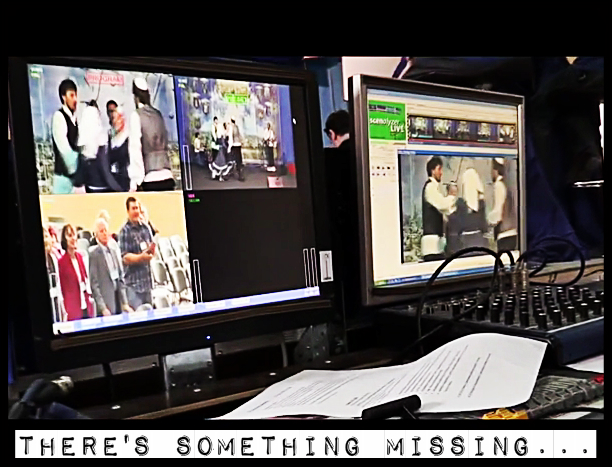
    In May this year I went to Kiev to speak at a Toward Jerusalem Council II conference promoting reconciliation between Eastern and Western churches, a 1000 year old church split that underlies the cultural divisions at work in Ukraine and Russia today. The conference was hosted by the Kiev Messianic Jewish Synagogue and this brought to the conference an even more ancient church split – between Jew and Gentile in Christ.  As Canon Andrew White, the Vicar of Bagdad, makes clear, true Christian reconciliation and unity will, in the end, have to include Jewish believers in Jesus into the mix.  Without them, as the film suggests, ‘There’s something missing …’.

    Derek Butler came with me and together we made this film about the people we met, the event itself, and the need to grasp this call for reconciliation in our broken world.

    On Sunday morning 7th September, in both our services, we will have a time of worship, show the film, talk some more about it and, as usual at the 9.00am service on the first Sunday of the month, include Holy Communion. 

    St. Peter’s Loudwater

  • For Such a Time as This?

    For Such a Time as This?

    Who knows but that you have come to your royal position for such a time as this? (Esther 4:14)

    The leadership conference run by a local church in the centre of London might not appear to herald a season of opportunity for those whose heart-cry is for the TJCII vision. But Holy Trinity Brompton (HTB), in London’s fashionable area of Knightsbridge, is no ordinary local church. It is a multi-site church with 11 congregations worshipping on Sunday and a string of church-plants across the capital. It is also the birthplace of the Alpha Course, an introduction to Christianity running in 163 countries, already attended by over 22 million people. HTB is certainly the most influential church in the UK.

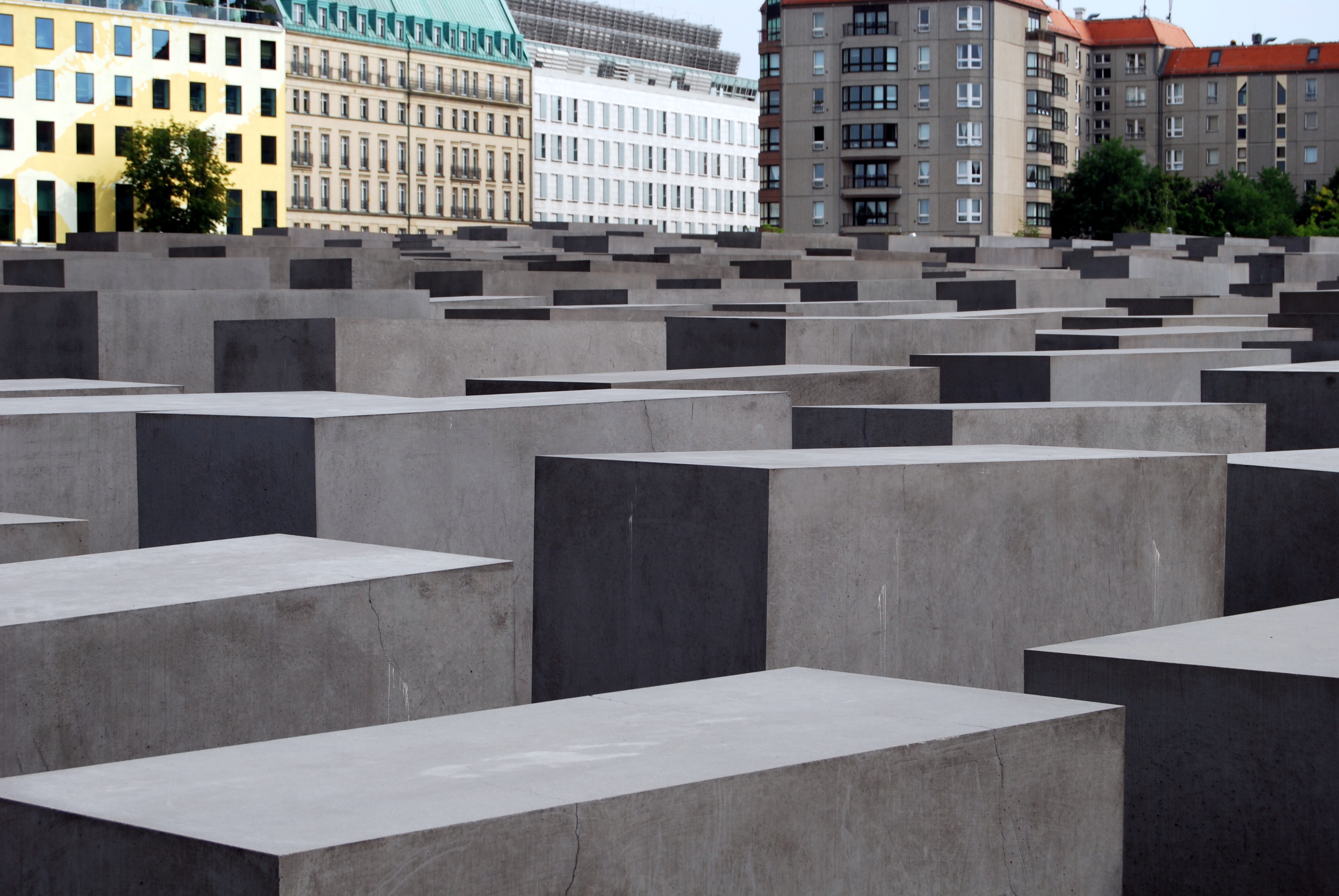
    In his opening address at this May’s conference, the senior leader and Anglican Vicar, Rev’d Nicky Gumbel, disclosed that 2012 had been a year in which he discovered the extent of his own Jewish heritage and the painful past that it carried, with many members he had never known lost in the Shoah. His family had been researched by a museum in Berlin and he had been linked to Jewish relatives he had never known, or known about. All this was by way of a sermon illustration, but it did set a scene for what was to follow.

    The conference’s first main guest speaker was the newly appointed Archbishop of Canterbury, Rt Rev’d Justin Welby. The British Press are notorious for digging up skeletons from unexpected places with which to embarrass unsuspecting public figures. That’s what journalists do, and so it was no surprise when, on his appointment as Archbishop of Canterbury at the end of 2012, Justin Welby was given such treatment. What was a surprise to him, and to everyone else, was to discover that he also had a German-Jewish father, and an unknown family lost in the Shoah – and this already alongside a personal history of positive statements about Jewish people and a heart for reconciliation.

    What these two men make of their recently begun journey into their Jewish past, and the implications this might have in their respective positions of leadership in the church worldwide, remains to be seen. But a clear sense of direction was offered by the conference’s next guest speaker. Following immediately after Justin Welby, Cardinal Christoph Schönborn, the Roman Catholic Archbishop of Vienna, was Rev’d Gumbel’s second interviewee of the morning. The topic of conversation was to do with leadership in the church but the conclusion to the interview was as much of a surprise to the audience as what had gone before.

    [youtube id=”http://youtu.be/CJfU4Ea1zzg” width=”600″ height=”350″]

    Rev’d Gumbel invited the Cardinal to bring a closing message with the words, “There are five and a half thousand people here. There are thousands more watching this online and I know everyone has appreciated your presence here. Is there any message you have to encourage everyone here?”

    The Cardinal responded,

    “Yes, I want to say one thing: I was so impressed with what you said yesterday, about your father and what Archbishop Justin told about his father. You have both German-Jewish fathers. And I think the deepest wound, in the Body of Christ, the unique Body of Christ, is the wound between Israel and the Gentiles. And in your body, and in your life, and in Archbishop Justin’s life, and a little bit also in my own life; I think we are called to ask the Lord to heal this deepest wound when it is His time.”

    And so it was that at this year’s HTB Leadership Conference, attended by 5700 people with a live stream watched by a further 60,000 online, a Catholic Cardinal in a Protestant country publically created (or acknowledged) a season of opportunity for the church in the UK to play its part in healing the deepest wound in the history of the Body of Messiah – this healing being precisely the vision of TJCII. And he invited the Church of England’s two most prominent leaders to play their own leadership role in the process. Has the significance of the moment been fully understood? How will we respond? Time will tell.

  • Unity

    Unity

    One of the troubles with “unity” is that even the word sounds soppy. There’s nothing crisp or attractive about it. Synonyms such as “togetherness” or “oneness” are no better. They neither grab the heart or capture the imagination.

    Yet it was so important to Jesus that he spent considerable time praying about it on the very night he was arrested. As he prepared for trial and death, and as he prepared his disciples to be without him, we have his longest prayer on record (John 17) – and it’s about unity!

    “My prayer is not for them alone. I pray also for those who will believe in me through their message, that all of them may be one, Father, just as you are in me and I am in you. May they also be in us so that the world may believe that you have sent me.”
    (John 17:20-21).

    Later in the New Testament, the same subject is no less important to Paul. Significant column inches are devoted to coaching whole churches and their leaderships to discover, or rediscover, the basis of unity where there are personality differences, theological differences and racial differences. Whole chapters teaching us love for one another, the priority of reconciliation and the patterns of order to prioritise harmony in the church.

    And the foundation of all unity, foreseen in Jesus’ prayer and addressed with great clarity by Paul, is that unity between Jesus’ Jewish disciples, the Jewish believers that form the foundation of the church, and those of us who subsequently believe in Jesus through their message, Gentiles the world over. Jesus prayed that we remain as one so that the world may believe (John 17:21-22). Paul taught about Gentile believers gaining citizenship alongside their Jewish-believing brethren and forming one temple, indwelt by the Spirit (Ephesians 2:11-22). In fact one of the really central events of the whole New Testament story was the Jerusalem Council (Acts 15) to preserve this unity.

    So why is it that we find it so easy to justify division? And what is it about evangelicals (in particular) that cause us to separate over pretty-much everything? Why, in our hierarchies of truths and doctrines that we adhere to like limpets, is unity not right up there at the top of the stack?