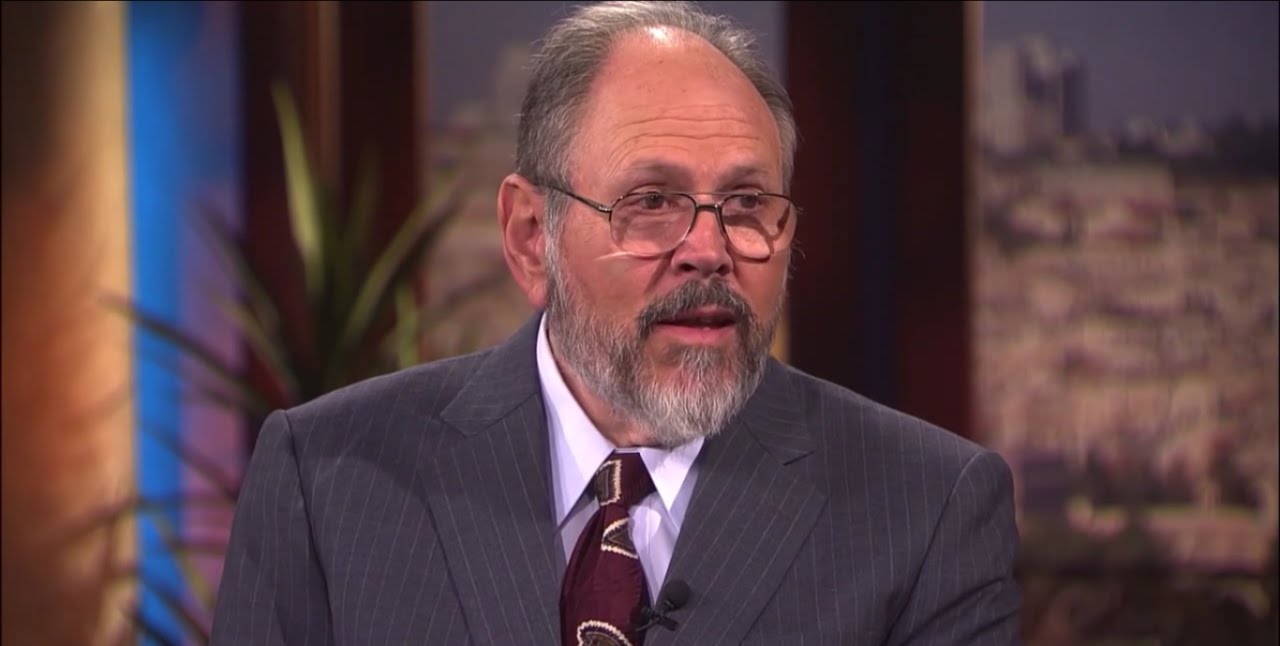
Article by Prof. Dan Juster
This is the 3rd article in a series on the Messianic Jewish Movement. The 1st on North America, and 2nd on Russian-speaking Messianic Jews appear in the 2013 Spring and Summer issues, respectively.
A few years ago, Toward Jerusalem Council II put out a booklet entitled The Messianic Jewish Movement. While there could be some improvement, it was basically accurate at the time it was written. Some of it was based on the book by Kai Kjaer-Hansen called Myths and Facts on Messianic Jews of Israel (1998).
Generally, the bulk of the movement traces itself from after 1967. There were previous attempts at being something like a Messianic Jewish Movement in the British mandate period. This early history is well-documented in the writings of Gershon Nerel whose doctoral dissertation at Hebrew University dealt with the history of Messianic Jews in Israel and included that period.
Leaders such as Moshe Immanuel Ben-Meir and Hyman Jacobs sought to found a fellowship in the 1920s and 1930s that sadly was short lived (4 years), and also sought ways to draw Jewish followers of Yeshua into union. However, many missions to the Jews did not embrace the idea of a significant distinct Jewish identity expressed in congregations and institutions apart from the historical churches.
After independence in 1948 most of the Jewish believers in Yeshua left Israel and the handful that remained such as Moshe Ben-Meir, Abram Poljak, and Hayim Haimoff, maintained a stronger commitment to Jewish identity and organizational-congregational or corporate structures to foster Jewish identity in Yeshua. We see the beginnings during this time of promoting the term “Messianic Jew” as a self-identifying marker and avoiding the term Christian (“notzri” in Hebrew), which implied leaving the Jewish people, Jewish identity and Jewish destiny. These leaders argued for a Messianic Judaism rooted in the Land, in the pattern of life in the Torah with regard to the Sabbath and Feasts, circumcision for male babies, and more. It was a mostly non-rabbinic expression.
A Hebrew Catholic Movement also was fostered in the Land. There were different orientations proposed by such figures as Fr. Daniel Rufeisen and Fr Elias Friedman (both Carmelites). However, Hebrew Catholics did identify as Christians, though hoping for a distinct Hebrew Catholic life and expression. There is a Hebrew translation of the Roman liturgy and a small identifiable group of Hebrew Catholics that continue to this day under the leadership of Fr. David Neuhaus, SJ.
After the ’67 War, there was a stronger sense of Israeli identity among the handful of Jewish believers, perhaps numbering under 200. This began to grow from immigration, witness, and planting. The movement remained small but growing during the 1970s and 1980s, perhaps passing a thousand. Some came to faith in Yeshua during their post-Army trips where they met Christians who effectively shared their faith. With the coming of the Russian influx, the congregations swelled and the estimate by the end of the 1990s in Nerel and Hansen was over 5000. Today it is estimated that the number of Messianic Jews is from ten to fifteen thousand. I tend to think the more conservative number is more accurate, but there is no recent scientific survey for such a statistic. However, we can accurately name over 100 Messianic Jewish Congregations and house groups. The majority of such groups are Jewish in membership, with one such group being led by a Christian Arab who fosters Messianic Jewish life for the Jewish members. I am only counting here those groups that identify as Messianic Jewish congregations, not as Christian churches.
Most Messianic Jewish congregations are independent. According to Hansen’s research, the majority have a doctrinal statement that is in line with the historic Creeds of the Church even though the language may be different. Most do not have formal membership, but consider membership according to the regular participation of their people. Water Immersion (Baptism) and Communion are significant in almost all the groups, but with variations concerning the interpretation of exactly what is received in the participation in the symbol.
The majority of Messianic Jews today are from Russian-speaking backgrounds though many of their children are now attaining adulthood and are speaking fluent Hebrew. This has and will change patterns in these congregations. The second largest group is native-born Israelis who are part of congregations where Hebrew is the predominant language. Then we note the English-speaking Jews that constitute a significant group influencing congregations to provide English translation to aid their full participation. So generally we find congregations practicing dual language from either Hebrew-Russian, Hebrew-English and sometimes all three. Finally there are about ten Ethiopian Messianic Jewish congregations, five in one network and the others more independent where Amharic and Hebrew are dominant.
The theology of the Messianic Jews of Israel tends to be an amalgam of Evangelical theology with Jewish or Torah rooted practices and patterns. There are interpretive differences from the Evangelical world, but the main thrust of theology is still Evangelical with many having a more significant role for Torah. The Messianic Jewish congregational world in Israel varies on the charismatic spectrum. My estimate is that about half are more charismatic and half tend to not emphasize the charismatic dimension. A few leaders have planted multiple congregations which remain in association.
While there are no strong organizational ties, Messianic Jews in the Land do have greater unity and more mutual support than at any other time in the past. In addition, there are looser points of affiliation that are significant such as the Messianic Jewish Alliance of Israel, which brings Jewish believers into significant joint celebrations and an internet dialogue network for leaders. Finally, there is a loose fellowship of leaders which does sometimes take positions on important doctrinal and moral issues (Kennes Artzee-Meeting of the Land). There is also an attempt to join leaders and congregations through a fellowship called Olive Tree.
Today, Messianic Jews are more integrated into the society. Most of the children in Messianic Jewish families attend the Israeli school system, serve in the Army and many go to Israeli universities.
The Messianic Jewish movement is growing slowly but steadily at this time. There is a group of young people who are on the sidelines of the congregations. They are not satisfied with present congregational models and look for alternatives. We are challenged to hear them, reach them, and find ways to inspire them to involvement while incorporating their legitimate concerns.
It is my hope that the Israel movement will develop in spiritual maturity, power, theology and organizational unity without any inordinate control. I think that the day will come when the Israel movement will be the head and not the tail of the worldwide Messianic Jewish movement.