Category: TJCII

  • The Seven Affirmations

    The Seven Affirmations

    Our Statement to Affirm the Messianic Jewish Movement

    Consistent with the principle of respect for diversity in the Body of Christ concerning Jewish and Gentile identity established in the original Jerusalem Council of Acts chapter 15, we make the following statement:

    1. We affirm the election of Israel, its irrevocable nature and God’s unfinished work with the Jewish people regarding salvation and the role of Israel as a blessing to the nations.
      
    2. We encourage Jews who come to faith in the Messiah, Jesus, to retain their Jewish identity and live as part of their people in ways consistent with the New Covenant.
      
    3. We affirm the formation of Messianic Jewish congregations as a significant and effective way to express Jewish collective identity in Jesus. We also affirm Jewish individuals and groups that are part of churches and encourage them in their commitment to Jewish life and identity.
      
    4. We invite churches and ecclesiastical bodies of all traditions to build bridges to Messianic Jewish congregations and groups, and extend to them the hand of friendship. 
      
    5. We encourage Messianic Jewish congregations to develop authentic Jewish expressions of their faith in Jesus the Messiah and so to fulfill their God-given purpose. They can rely on us as their brothers and sisters in Messiah.
      
    6. We affirm our willingness to be a voice within our own ecclesiastical structures and spheres of influence against all forms of anti-Semitism, replacement theology (supersessionism) and teaching that precludes Jewish expressions of identity in Jesus.
      
    7. We are confident that as Jewish and Gentile expressions of life in Jesus grow organically side by side, with distinct identities, that God will be glorified; that the Kingdom of Heaven will be advanced; and that the vision of “the one new man” in Ephesians 2 will unfold as fruit from the original Abrahamic blessing to the nations.
  • One New Man and the Spirit’s call for Unity

    One New Man and the Spirit’s call for Unity

    This article by Domonic McDermott originally appeared on http://ccr.org.uk

    In 2017 the Catholic Church celebrated a Jubilee, 50 years since CCR1 began in 1967.  But then the following year the question, began to be asked, we have had 50 years of CCR but what now, what does the Holy Spirit want from us now as a body? A European prophetic consultation was proposed to answer this question and gathered prophetic people for a weekend in Assisi in Italy close to where St Francis had heard God’s call to “Rebuild My Church”.

    I was there representing the European Network of Communities as I oversee ENC’s intercessory and prophetic network. I had turned up a day early because of flight availability. So the evening before it officially started, as a few of us were praying during mass, Ged Farrell from Scotland received a scripture Ezekiel 37:1-14 about Ezekiel’s vision of the dry bones coming back to life. These bones are Jewish bones, “the whole House of Israel” as it says in verse 11. But today I believe that this prophecy refers specifically to the Messianic Jews (those Jews who accept Jesus as their Messiah). Why?  Because they as a group had ceased to exist since about the year 400AD! But now (since 1967) God has raised them to life again in their thousands as, all across the world, they have found new life in Christ and through Him also the Holy Spirit, just as the passage says in verse 14. Also the Jewish people, of every sort, are being returned to their own land again just as the prophecy promises in verse 12.

    This was very exciting to me since in Dec 2017 the Boss had called me supernaturally out of 15 years of prison ministry to work for the unity of His Body – with the Messianic Jews as the instrument of that unity. The Lord had previously given me this Ezekiel 37:1-14 prophecy numerous times and in fact just before I left the prison work one prisoner even received the same vision as the prophet without having ever read the bible or even hearing the name Ezekiel before.

    Anyway the next evening, Friday in Assisi, the Consultation officially began and on that evening we as a gathering of several hundred prophetic people received two main words or pictures (among various others):

    • Firstly of a wall blocking and deflecting the flow of a river and
    • Secondly the scripture ref. Joshua 15/14 – the passage about Caleb fighting against and overcoming the three sons of Anak, who were blocking the way into his portion of the promised land.

    Nobody had an interpretation for either of these prophetic pictures at the time although I said I happened to know that the three sons of Anak were giants (I like giants I don’t know why) and Ged again said he felt that God wanted us to pull down this wall, whatever it was.

    That night The Boss started talking to me about these two images. Firstly Joshua 15:14 which is about the Exodus and describes how Joshua and the twelve tribes return to the Land of Cana (what will be Israel) after all the unbelieving people have died in the forty years of wandering in the wilderness. Caleb who was one of the two scouts willing to trust God the first time they came to the land said in the previous chapter to Joshua “let me go in and take this hill country for I am as strong now as I was 45 years ago”. True to his word he does go in and destroys the 3 giants and takes the land and renames it Hebron (Hebrew for covenant).

    The Lord showed me that these three giants are still blocking the way for the Church to come into the fullness of the covenant He has for us (as a united body of Gentile and Messianic Jewish believers) and I believe the Lord said that these three giants symbolically represent:

    Pride, Independence and Ownership, these three things keep us as Church from the Spirit of humility and service needed to build unity which will in turn release the power of His Spirit that The Boss wants released for us. You know the scripture;

    “Behold how good and pleasant it is for brothers to dwell together in unity…there God commands a blessing…”

    Psalm 133

    It is interesting to note that Caleb was being given a second chance to enter the Promised Land, as the first time forty-five years previously fear of the many other giants there had prevented the people entering in to receive all God had promised. Similarly the RC Church and CCR specifically are now, after 50 years, being given a second chance to overcome these giants and of entering in to the Covenant blessings that God has prepared for us to receive through  our humility and subsequent unity.

    The Lord then explained that the wall that was seen on the Friday night has a name and that name is the “Hostile Wall of Division” of Ephesians 2:14 – this is the wall of division between Jews and Gentiles, the wall which, the scripture says Christ broke down by His Cross to make us both one Body. It says that He pulled it down so:

     “…that from the two He might create in Himself One New Man…”.

    Ephesians 2:15

     This breaking down of the wall between us led to the Jews accepting the Gentile believers into the Jewish Church in Acts 15 (verses 16-20): at the event which we know as the Jerusalem Council, and hence the One New Man was given birth. But about 400 years later we, the Gentile believers, took their church from them and effectively told the Jewish believers “if you want to be in our church you must give up your Jewishness and become Gentiles”.

    So this wall, which was pulled down by Christ, we rebuilt and have been steadily rebuilding ever since how? Eg in:

    • 306AD the local Synod of Elvira forbade marriage and other interaction with Jews,
    • 321AD the Saturday Jewish Sabbath was replaced by Sunday as our holy day,
    • 325AD at the Council of Nicea – the dating of Easter was separated from the Jewish Passover to further distance us from the Jews because of Constantine’s anti-semitism
    • 341AD the Council of Antioch forbade Christians from celebrating Passover with the Jews… etc etc.

    The river that was seen at the Friday night of the Assisi Prophetic Consultation is the river of the Holy Spirit and was shown being diverted away from where it wants to flow by this wall of division between Jew and Gentile. This is not just about ancient history, because as the fruit of this original division the Church has suffered split after split ever since with great hostility involved each time almost like a virus of division. The other divisions which followed are not about the Jews but are still built upon this wall as their foundation, built upon the idea that a new church can rise up and replace the old as God’s true Church, as if the old was not established by God, so this replacement theology was at the heart of :

    • 1054 Great Schism between Eastern and Western Churches (Latin and Greek) leading to the separation of Orthodox and Catholic Churches
    • 1517 act of Luther which ignited the Reformation separating Catholics from Protestants.
    • 1901 the start of Pentacostalism which further separated the Protestant Church world in two, between charismatics and non-charismatics

    Today there are said to be about 35,000 different denominations in the world, but as my friend Archdeacon Johannes Fichtenbauer is fond of saying:

    “When the Lord comes back He is coming back not for a harem but for a single Bride!”

    So what does the Holy Spirit want of the Church?

    Unity! Unity is our Destiny. To restore unity to the dismembered Body of Christ (which the wooden sculpture of the crucified Christ in our meeting hall in Assisi so graphically illustrated).

    To restore the unity Christ won for us on the cross as it says in Ephesians 2:14 we again need to pull down this wall of division – to start to heal these ancient wounds of division?  The Lord showed me, I believe, that the power of the River/His Spirit will do most of the heavy work if we make an attempt at dealing with the wall in humility.

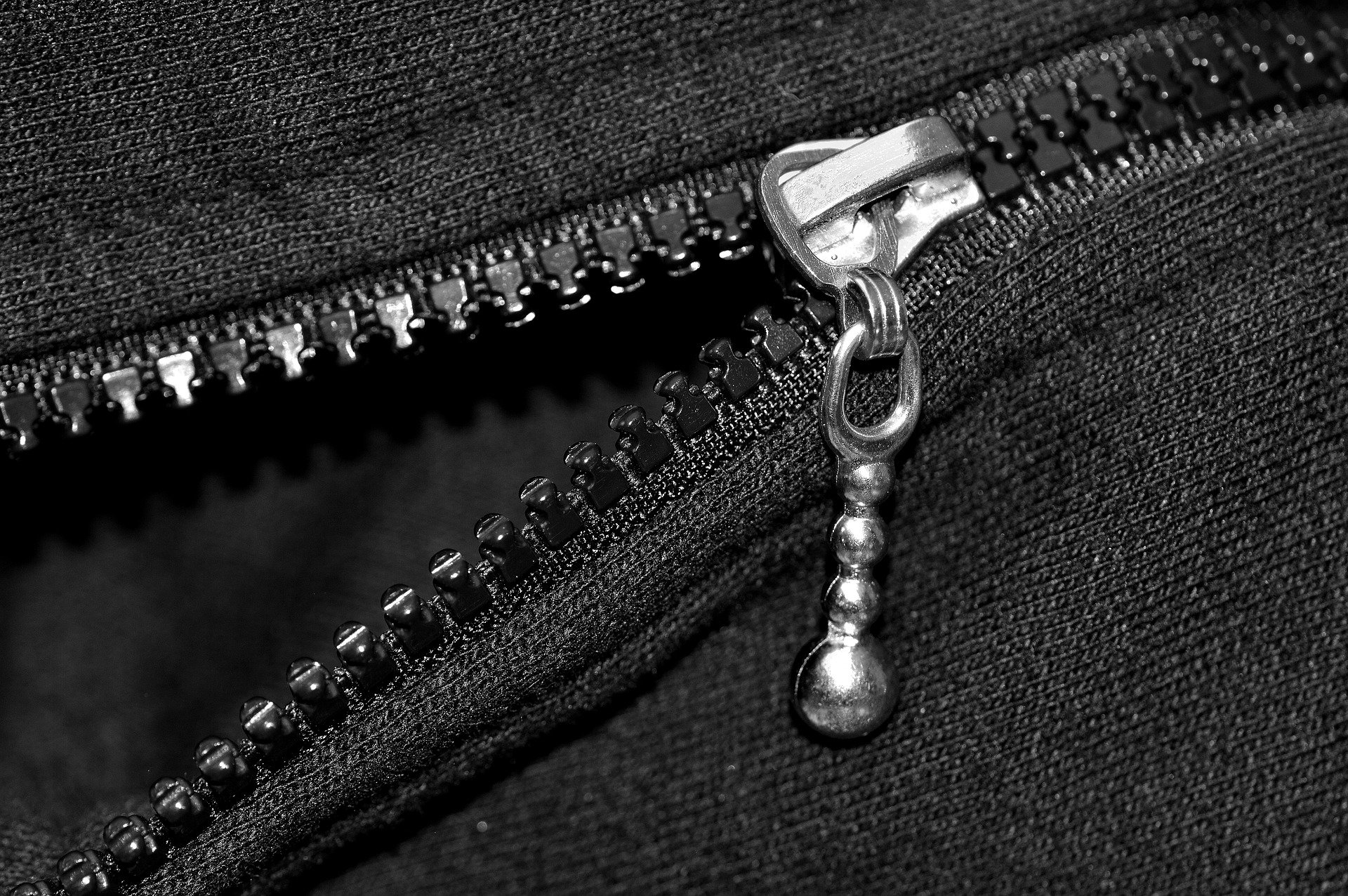
    To switch images for a moment, the efforts to build unity in the Body of Christ is, He showed me, like a zip fastener on a jacket, you can try and do the jacket up from the top (the current day) by pushing the pieces of the zip (the various parts/churches of the Body) together, or you can start at the bottom with the zip fastener and align the two lower halves (Gentile and Jewish believers) and then everything will come together with minimum effort in the right (spiritual) order. “Okay” I said “what is this zip fastener?” and He said “The Messianic Jews are the zip fastener!”  ie those Jews who have accepted Jesus (or Yeshua as they call him). So we Gentile believers need to take hold of the Messianic Jews and lift them up (honour and support them) in order to bring about unity through healing of this original wound of division,  and then all the subsequent wounds of division will start to heal too. But this acceptance of the Messianic Jews (MJs) by the Church will only happen through the Charismatic Renewal. This is why I believe there was so much emphasis on ecumenism at the beginning of the outpouring of the Holy Spirit in 1967. Why do I say only through the CR because the understanding of the importance of the Jewish People is only received by a Church or part of a church that studies it’s bible and honours the prophecies it finds clearly written there.

    It may surprise you to know that the Catechism of the Catholic Church paragraph 674 clearly teaches that “All Israel must be saved before Jesus returns” this itself being based upon St Paul’s teaching in Romans 11:26 and Jesus own words to the Jews in Matthew 23:39 that;

    “…you [Jews] will not see Me again until you say ‘Blessed is He who comes in the name of the Lord’”.

    Matthew 23:39

    Jesus was quoting from Psalm 118:26 which He knew referred to Himself, the Messiah, the stone which the builders rejected (Psalm 118:22). So if we want Jesus to come again we need to do everything we can to bring Israel to accept Jesus as Messiah (as the Messianic Jews already have).

    But how are the Jewish people to come to know Jesus as Messiah when we as Gentile Christians have done everything we can to destroy them and their way of life down through the centuries. We need some kind of bridge to reach them and this is exactly what God, in His wisdom, has provided for us in the MJ movement. Whilst Jews won’t listen to Christians, because of our history of persecution, replacement theology, crusades, pogroms and the Holocaust, they are much more likely to listen to other Jews who have come to recognise the name of their long awaited Messiah: Yeshua. The work of the MJ in converting their brothers is not easy and we as Gentile believers have a sacred duty and interest in supporting them – especially if we understand that Jesus will not return until they succeed!

    But why would Jesus put this condition upon His own return?

    Because the Jews are the original and natural Olive tree of faith that God Himself planted and that we as Gentile believers are grafted into, St Paul clearly teaches this in Romans 11:17. It is not the other way around, i.e. we are not trying to get the believing Jews grafted into our Church, as if we Gentiles were the original Olive Tree – although we have acted as if it was for the last 1700 years. This revelation can only come from God but when it does, we then come to recognise the Jews as our older brothers in faith as Pope John 23rd understood when he said to the Jewish leaders visiting the Vatican “Behold I am Joseph your brother” (quoting Gen 45/4 where Joseph reveals his identity to his estranged brothers). This word of the pope was an astonishingly prophetic act as God had allowed the separation of Joseph and his brothers so that Joseph through being accepted by the Gentiles (in Egypt) would finally be in a position to help his Jewish brothers in their hour of need and be reunited with them, once there was mutual recognition.

    This acceptance of the Jews as our older brother acknowledges their “irrevocable call and gifting by God” and this is also written in the CCC paragraph 839 quoting Rom 11:29 (irrevocable call) and Rom 9:4-5 (God’s gifts to them). This St Paul says, means that God’s calling of Israel and the Jewish people to reveal His nature to the world is an eternal calling. It further acknowledges that we Gentile believers get to share in the New Covenant that God, in Christ, made with them (see Jer 31:31). If we begin to acknowledge all this by honouring and lifting up the MJ (grasping and raising up the ‘zipper’ to go back to my analogy) then, I believe, bit by bit we will also receive the ecumenical unity that God desires of us and that Jesus on His last night of life on the planet prayed so earnestly for – John 17:21 “that they all may be one …so that the world may believe and be convinced that You have sent Me.” and so when the world is convinced through our unity of the truth of Christ’s incarnation then the grace of God’s Spirit will be poured out in a new wave through the unified Body of Messiah upon the world for the final and great Harvest.

    In other words;

    • the world’s conversion which we all pray so hard for, is dependent upon our Unity as a Body.
    • Our Unity depends firstly upon our recognition, in humility, of God’s eternal plan to reveal Himself through the Jewish people and secondly
    • Our work to heal the many wounds and divisions of the past beginning with the Messianic Jews – so that Jesus may return for a single glorious Bride without spot or wrinkle.

    One last thing, I began this article referring to the Jubilee in Rome in 2017 celebrating 50 years of CCR (and also 50 years of the resurrection of a MJ part of the Body of Christ). I was there in Rome for the celebration of that Jubilee with the ENC2 council and just before it began we were praying for the event as some disagreement had arisen between the organisers and the Pope who had effectively said “you don’t have to make the event ecumenical but if you don’t then I won’t come”.

    As we prayed we received a word for Pope Francis himself:

    “I have laid upon his shoulder the key to the House of David and what (door) he opens no man shall shut…”

    Isaiah 22:22

    This came with a strong sense that the door that God was opening, through Pope Francis, which no-one will be able to shut, is a door for ecumenism in the Church especially including the Messianic Jews, (hence the Key being the key of the House of David). Then in the days that followed both Pope Francis and Raniero Cantalamessa (the preacher to the papal household) spoke from the stage to 60,000 wild charismatics about the Charismatic Renewal being a current of grace for the whole Church and not just for Catholics, an ecumenism of “reconciled diversity” that “especially includes the MJs!”

  • TJCII in the United Kingdom

    TJCII in the United Kingdom

    by Rev. Timothy Butlin

    During 2018, three elements of our TJCII UK work have made headway.

    First, my co-director of TJCII UK, Messianic Rabbi Dr. Jonathan Allen, was awarded his Ph.D. (Doctor of Philosophy).  His Ph.D. research findings on how the gentile ‘church world’ responds to Jewish identity once a Jewish person comes to faith in Messiah were predictably negative. 
         
    The church in the UK is strongly assimilationist.  Messianic believers in the UK who affirm their Jewish identity face general cultural hostility against Israel. They also face an incredulity that anyone who trusts in Jesus/Yeshua would want a different expression of identity, and if they did want to identify as being Jewish, “Why?”. 

    Dr. Allen’s research picture is a clear demonstration of the situation that TJCII exists to solve, now seen not only anecdotally but in a proven and published record.   

    Second, Dominic McDermott is opening in-roads into the Roman Catholic community.  Dominic has been on TJCII Intercessory visits to Israel & Portugal and is now our UK co-leader, developing TJCII intercession and involvement in the UK. 

    Following Fr. Peter Hocken’s ‘promotion’ to glory, there has been a gap in our ability to connect into the UK’s Roman Catholic leadership.  Archbishop McDonald, a friend of Fr. Peter, pledged support to TJCII insofar as he is able in his current role leading English Catholics into renewal. 

    Thirdly, Dominic is planning a service of representative confession and reconciliation for a historic wrong in expelling the Jews from High Wycombe in 1234 CE. 

    All the dark memes of European hostility against Jews have surfaced at one time or another.  Hopefully, in the first quarter of 2019, we will re-lay the town’s spiritual foundations during a formal service with the Mayor, leading politicians, the Lord Lieutenant representing the Queen (as the original expulsion of Wycombe’s Jews in 1234 CE was by order of King Henry III 1216-1272) and with representatives of church denominations across the town.

    This will take place in All Saints, the town centre church whose current Rector is chaplain to the Mayor and a Jewish believer.  The prayer need now is to agree upon a date with the church and with the people who are involved. 
    You can check this link for additional information:
    https://www.woolf.cam.ac.uk/blog/promoting-reconciliation-through-repentance

    Rev. Timothy Butlin
    Director of TJCII UK

    Tim is from the UK, of English-Irish descent, a fifth generation Anglican priest. He holds a master’s degree in Applied Theology. After a short time teaching in the UK, he became a founding teacher of the Immanuel House Study Centre, Jaffa-Tel Aviv, under the Israel Trust of the Anglican Church before returning to over 30 years of ministry in the Diocese of Oxford.

    He served on the Board of CMJ (Church’s Ministry Among Jewish People) and was a participant in the Lambeth Jewish Forum dialogue.  He has been the Director of TJCII UK since 2008.  Currently, he devotes his time teaching and supporting TJCII and Christians in Government (CiG).
  • Obeying the Lord Together

    Obeying the Lord Together

    Many of us will know by now that Fr. Peter Hocken (pictured left on the featured image) passed away in early June 2017. Peter was was a British theologian and historian of the Catholic Charismatic Renewal and the Pentecostal movement in the twentieth century. Peter was a leader within Toward Jerusalem Council II and will be greatly missed by all of us. A number of branches of TJCII have made a statement regarding the passing of our brother in Christ and I would like to take the opportunity to mark his passing as well. Since I only met Peter once many years ago, I will not be able to say much about him personally so I thought it would be fitting to remember Peter through presenting his own words.

    Fr. Peter, just like us all in TJCII have a strong yearning for Christian unity and to see the body of Messiah strengthened in accordance with the prayer of Jesus in John 17:21-23. In his book, “Pentecost and Parousia” Fr. Peter wrote the following about obeying the Lord together:

    I have had the experience several times that a listening to the Lord together has led an interchurch group to change its plans, and that this obedience to the Word that was heard produced much greater fruit than could have been imagined from the original plan. I cite one instance from the initiative Toward Jerusalem Council Two (TJCII) involving messianic Jews and Christians from many backgrounds. At that time (autumn 2005), the international committee met twice each year, and was busy preparing an international pray gathering in Jerusalem for September 2006. We had earlier decided to go to Nairobi in East Africa in the spring of 2006. But we received a clear word to go to Antioch before we went to Jerusalem, because the road to Jerusalem passes through Antioch. We immediately sensed the rightness of this word, since Antioch was the first church to embody Paul’s vision of the “one new man”, in which Jew and Gentile are made one through the cross (see Eph 2:16, Acts 11:19-26). The resulting visiting to Antioch in May 2006 was very rich and powerful. During the first session, we read aloud all the passages in the New Testament that mention Antioch. After the reading, the messianic Jews recognised that three incidents damaging to the unity of the church took place in Antioch: 

    1. The episode when brothers from Judea insisted that pagan converts should be circumcised in order to be saved (see Acts 15:1)
    2. The controversy between the Apostles Peter and Paul (see Gal 2:11); and 
    3. The disagreement between the partners in mission, Paul and Barnabas concerning John Mark, the nephew of Barnabas (see Acts 15:37-39)

    The messianic Jews were deeply convicted by the scandal presented to the newly-converted pagans by the Jewish believers (all involved in the squabbles were Jews), and this awareness led them to a repentance for their own lack of unity today. This heartfelt prayer made before the cave church of St. Peter.

    May we never lose sight of this early revelation within TJCII and the sense of unity and joint repentance that has been so fruitful in our initiative. We thank God for the great contribution of Fr. Peter Hocken and recognise that while his passing is felt as a great loss, we must remember that to die in Christ is gain, so we rejoice as we recall the words of the Apostle Paul which Fr. Peter shared with a member of TJCII’s Now Generation:

    I have fought the good fight, I have finished the race, I have kept the faith. Finally, there is laid up for me the crown of righteousness, which the Lord, the righteous Judge, will give to me on that Day, and not to me only but also to all who have loved His appearing.
    -2 Tim 4:7-8


  • Hungarian Orthodox Rabbi Supports TJCII Vision

    Hungarian Orthodox Rabbi Supports TJCII Vision

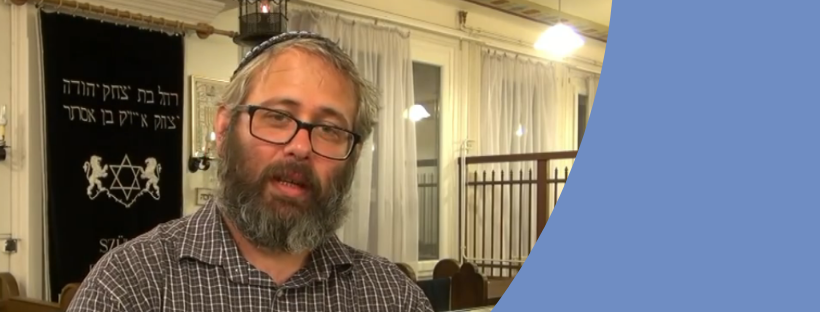
    Hungarian Rabbi, Gábor Fináli, give his views in this interview from an Orthodox standpoint.

    As someone who is aware of the first Jerusalem council of Acts 15, he welcomes the initiative. Understandably he is of the opinion that there was a great cost to the Torah following the outcome of the First Jerusalem Council which made it much easier for Gentiles to graft into the community of God’s people. However, it is encouraging to hear responses like this from the Jewish community, we pray God will continue to bless this movement.

    [intense_video video_type=”youtube” video_url=”https://www.youtube.com/watch?v=J3bk9jNEOjQ”]

  • Johannes Fichtenbauer Explains TJCII

    Johannes Fichtenbauer Explains TJCII

    [intense_video video_type=”youtube” video_url=”https://youtu.be/gF5iFmYZ3kE”]

  • Eschatology

    Eschatology

    Father Peter Hockens’ final talk at the Kiev conference went something like this…

    Everything that we have heard in this consultation so far – the complementarity of Israel and the nations, the Church as the union of Jew and Gentile through the cross of the Messiah, the ingrafting of the Gentiles into the natural olive tree of Israel, the need of Jews and Gentiles for each other – all this now needs to be applied in the area of eschatology. TJCII as a vision for Jewish and Gentile reconciliation in Messiah requires the reconciliation of the Jewish and the Christian contributions to eschatology, to our faith in the end-times and the restoration of all things in Messiah.

    In other words, the distinction between Israel and the nations also has major implications for our eschatology. In Romans, Paul uses the term “fullness” (pleroma), first of Israel (11: 12) and then of the nations (11:25). “Now if their transgression [that is, of Israel] means riches for the world, and if their defeat means riches for Gentiles, how much more will their fullness mean!” (Rom. 11:12). Later Paul writes, “I want you to understand this mystery” (i.e. this is part of God’s eternal plan): a hardening has come upon part of Israel, until the full number [pleroma] of the Gentiles has come in. And so all Israel will be saved.” (Rom. 11:25-26). The fullness of Israel and the fullness of the nations are inter-related; they cannot be realized independently of each other. This connectedness was expressed in a different way by Yeshua himself: “they [the Jews] will fall by the edge of the sword and be taken away as captives among all nations; and Jerusalem will be trampled on by the Gentiles, until the times of the Gentiles are fulfilled.” (Luke 21:24). This relates also to a verse in Matthew: “And this good news of the kingdom will be proclaimed throughout the world, as a testimony to all the nations; and then the end will come.” (Matt. 24:14). “For if their rejection (aposate = setting aside, that is, of Israel) is the reconciliation of the world, what will their acceptance be but life from the dead.” (Rom. 11:15).

    From the Church of the One New Man to One Universal Church

    The Church of Jew and Gentile together in one body, the Church of the One New Man, did not last. The warnings of Paul against Gentile boasting over the Jews were not heeded (see Rom. 11:18, 20, 25). By the fourth century, the Church did not permit converted Jews to retain their Jewish identity or to continue Jewish practices. The Church understood itself to be universal embracing all nations, and the main model for unity increasingly became the unity of the Roman-Byzantine Empire. Several Fathers of the Church recognized that the Jews would enter at the end, but this was understood as taking their place among the nations, not as restoration of the one new man.

    This process had major repercussions in a number of areas, including church unity and eschatology. It had negative effects on eschatology because the Jewish people are the bearers of the Messianic promises: “to them belong the adoption, the glory, the covenants, the giving of the Law, the worship, and the promises” (Rom 9:5). Jewish life is rooted in the covenant with Abraham and in the Torah, being oriented to the Messianic promises. The references to past and to future are lived and expressed in the feasts of Israel. The promises given to Abraham, to David, and through the prophets, concern the coming Messiah-King-Deliverer and the coming Messianic age/kingdom of righteousness and peace that is established in and from Zion. When there is no longer an explicit Jewish presence in the Church, their strong Messianic orientation towards the final fulfilment is removed.

    Was this orientation to the final fulfilment completely lost in the Church? No, and for two reasons. First, the Church rejected the attempt of Marcion to remove the Old Testament from the Christian Bible. The Scriptures of Israel remained foundational for the Church. Second, the liturgies of the Church retained the orientation to the completion that had come from the Jewish origins. But nonetheless in the teaching on eschatology something was lost.

    Effects on Eschatology of Distancing from Israel

    How then did the distancing of the Church from its Jewish roots weaken the eschatological hope? Christians began to speak of the Church as the new Israel, saying that the Church has become heir to all God’s promises, with the assumption or explicit statement that the promises have been transferred to the Church because of Israel’s unbelief. When this happened, the promises were re-interpreted in a spiritualizing sense – so that the promised Land becomes heaven, the earthly Jerusalem is replaced by the heavenly, and the rule of the Messiah becomes the glorified Christ’s rule from heaven. In this process, the new realities with the coming of the Christ are seen as superior to the material things characterizing the covenants with Israel: the Jews are seen as carnal, the Christians as spiritual. Christians search the Old Testament for everything that can be interpreted as a type of Christ.

    This form of spiritualizing in fact produces a rupture with the Messianic hope of Israel. Why? It is not because typological interpretation of the Old Testament is mistaken; we find typological interpretation in the New Testament, for example in 1 Cor. 10 “the rock was Christ” v. 4 and in the description of Jesus as the Lamb of God. Why then? First, because the only value of the type is its Christological signification – the covenants with Israel have no more value in themselves. Second, the Messianic promises were seen as totally fulfilled in the first coming of the Christ. This is the fundamental reason why the historic Churches have great difficulty in seeing any contemporary fulfilment of Messianic promises in events concerning Israel and the Jewish people in modern times. This conviction – total fulfilment in the first coming – cuts off the Messianic expectation of Israel: no more Messianic fulfilment, just the outworking of the consequences of the first coming. If Paul had believed that, he could not have told the Jews of Rome: “it is for the sake of the hope of Israel that I am bound with this chain.” (Acts 28:20).

    I should add that some promises that just did not fit the spiritualizing reinterpretation were simply left out of our theology and our preaching: for example, the words of Jesus to the Twelve, “Truly, I say to you, in the new world, when the Son of man shall sit on his glorious throne, you who have followed me will also sit on twelve thrones, judging the twelve tribes of Israel.” (Matt. 19:28; see also Luke 22:30). This also applies to the words of Jesus at the Last Supper, “I tell you that I shall not drink again of this fruit of the vine until that day when I drink it new with you in my Father’s kingdom.” (Matt. 26:29). Understanding this last text literally did not immediately cease in the early Church, as we find St Irenaeus of Lyon explaining around the year 200: “In promising to drink there of the fruit of the vine with his disciples, he [Jesus] made two things known: the inheritance of the earth, in which will be drunk the new fruit of the vine, and the bodily resurrection of his disciples. For the flesh that will be raised in a new condition is also that which will share in the new cup. It is not in fact when he will be with his disciples in a superior and supra-heavenly place, that the Lord can be thought of as drinking the fruit of the vine”.

    Seeing the Messianic fulfilment totally in the first coming was not just a fulfilment on earth, but fulfilment in the resurrection and ascension of Jesus. There is of course something fundamentally right in this. The resurrection and ascension of Jesus was for Jesus himself being “made perfect” (Heb. 5:8). This opened up the heavenly dimension, which becomes a characteristic element in New Testament faith. So for example Paul writes: “But our commonwealth [politeia] is in heaven” (Phil. 3:20) and “Set your mind on things that are above, not on things that are on earth, for you have died, and your life is hidden with Christ in God.” (Col. 3:2-3). But seeing the fulfilment of the promises totally in the first coming easily overlooks the total orientation of the first coming to the second. This becomes more serious when the role of the Holy Spirit from Pentecost onwards as totally preparing for the second coming is forgotten. As a result the second coming of Jesus in glory is not seen as the fulfilment of the Messianic promises, and the assumption is that Jesus comes in order to take us out of this creation to heaven. So the Church developed an eschatology that is markedly different from the hope of Israel. In general, the Church has looked to a heavenly fulfilment, and Israel to an earthly deliverance and fulfilment. The Church sees the fulfilment as outside and above human history, whereas for the Jewish people the fulfilment is within this creation and the climax to human history. This is one of the most serious results of the separation of Church and synagogue.

    With the separation of the Church and the synagogue through the centuries we have inherited a situation in which the Church affirmed the newness of resurrection and glorification through the cross while the Jewish people affirmed the continuing validity of the promises concerning the Land of Israel and the city of Jerusalem. From the fourth century, Christian eschatology had no place for Israel as a distinct people. It developed differently in the Eastern churches from the West. Some of what I will say applies more particularly to Western Christianity, both Catholic and Protestant, and I leave it to any of you from the Orthodox Church to discern how much this also applies to you. In general, this distancing of the Church from the Jewish people intensified over the centuries leading to very negative presentations of the Jews by preachers and people.

    More positive approaches began slowly following the Protestant Reformation. With the Protestant emphasis on the Bible, more Christians studied Hebrew, and a few scholars began to understand that the promises to Israel were permanent, and that many Old Testament prophecies remained unfulfilled. The number of Reformed and Evangelical scholars who believed in a future return of the Jews to the land of Israel and in their coming to faith in Jesus had increased by the 19th century. But here a complication entered. One Protestant who saw the contrast between the Jewish earthly hope and the Christian heavenly hope was John Nelson Darby, a founding figure among the Plymouth Brethren, who became a major architect of dispensationalism pre-millenialism. Darby sought to solve the dilemma by separating Israel and the Church even more, so he taught two distinct destinies, an earthly destiny for Israel and a heavenly destiny for the Church. This was the inspiration, if that is the right word, the origin of the teaching on an invisible rapture of the Church, separated from the second coming. In Darby’s scheme the Church had to be removed from the earth before Israel’s destiny on earth could begin to unfold. The teaching of an invisible rapture of “the church” before the visible coming of the Lord in glory removes a key element in the role of the Church of Jew and Gentile to prepare the way for the coming of the Lord. In this schema the Church is already in heaven for a significant period before the coming in glory.

    We have to hold Israel and the Church together, recognizing that their hopes belong together, even if we cannot yet understand how, and so affirm that the Church is the union of Jew and Gentile in one new man. It will only be possible for the Jewish and the Christian worldviews to be brought together by the light of the Holy Spirit. What then is it that we have to bring together?

    The Central Christian Witness: Death and Resurrection

    The heart of the Gospel is the death and resurrection of the incarnate Son of God for our salvation. The Christian life, life in Christ, or life in the Spirit, is being plunged into the death and resurrection of Jesus. Paul writes: “Do you now know that when you were baptized, you were baptized into his death?” (Rom. 6:3). Life in the Spirit is then to live in this new creation of being dead to sin and alive with the Holy Spirit. “So you also must consider yourselves dead to sin and alive to God in Christ Jesus.” (Rom. 6:11). It is the same in the first letter of Peter: “He himself bore our sins in his body on the cross, so that, free from sins, we might live for righteousness; by his wounds you have been healed.” (1 Peter 2:24). The Christian is then fed on the death and resurrection: “When you eat this bread and drink this cup you proclaim the death of the Lord until he comes.” (1 Cor. 11:26). We feed on his body given for us and drink of his blood that is poured out for us. In this way we are preparing for our resurrection on the last day: “Those who eat my flesh and drink my blood have eternal life, and I will raise them up on the last day.” (John 6:54).

    There is something fundamentally right about a total fulfilment already in Jesus provided we understand that this fulfilment is in his resurrection-ascension to glory. Jesus has reached the goal, this total transformation or glorification, through his bodily resurrection and his ascension as man to the glory of the Father. But this completion has still to be achieved in the whole creation, in the world and in the Church; that is, also on earth. So the Old Testament promises that are not yet fulfilled all apply to the fulfilment in the creation, on earth and in the Church.

    There is a challenge here from the Christian tradition to the Messianic Jews. With their reclaiming of the Messianic hope of Israel – for example, the return of King Yeshua to Jerusalem and his rule over the nations in righteousness – it can happen that full justice is not done to the genuine newness introduced by the resurrection and ascension of the Messiah that is at the heart of the New Covenant. This newness is the bodily resurrection to a glorified bodily existence that is a greater transformation than could ever have been imagined, even by those Jews who believed in the resurrection from the dead.

    I sometimes give a teaching about the three phases of the Holy Spirit’s action upon Jesus as man. The first is clearly that Jesus is conceived by the Holy Spirit in the Virgin Mary. The second is his baptism in the Jordan. Here the Holy Spirit descends upon him, in consequence of which he begins his public ministry in the power of the Spirit. As Luke says, “Jesus returned in the power of the Spirit into Galilee” (Luke 4:14). But there is a third and final filling or total penetration by the Holy Spirit that we often overlook. It is the transformation in his resurrection and ascension. The verse that makes this clear is Acts 2:33: “Being therefore exalted at the right hand of God, and having received from the Father the promise of the Holy Spirit, he has poured out this which you see and hear” – that is, on the day of Pentecost. Herein Peter’s Pentecost message, we are told what Jesus received when he was exalted to the right hand of the Father. He is now in his humanity totally penetrated and glorified by the Holy Spirit, so that he can now pour out on us this same Holy Spirit through his glorified humanity.

    This same transformation is promised to the disciples. This point is emphasized by the apostle in Ephesians, ch. 1: “so that with the eyes of your heart enlightened, you may know what is the hope to which he has called you, what are the riches of his glorious inheritance among the saints, and what is the immeasurable greatness of his power for us who believe, according to the working of his great power. God put this power to work in Christ when he raised him from the dead and seated him at his right hand in the heavenly places, far above all rule and authority and power and dominion, and above every name that is named, not only in this age but also in the age to come.” (Eph. 1:18-21).

    An element here is the false idea that the Christian observance of the first day of the week was designed as a replacement for Shabbat. No, the first day of the week was originally observed because it was the day of the Resurrection of the Lord. This has eschatological significance, because the first day is also the eighth day, which symbolizes the final fulfilment after the Shabbat rest. It was no coincidence that the body of Jesus lay in the tomb on the day of rest. Not to honour the first day of the week can take attention away from the resurrection of Jesus as the core of New Covenant faith.

    So I suggest that a central witness of the Churches that the Messianic Jews need to receive is the centrality of the death and resurrection of Yeshua in the New Covenant, with a deeper grasp of the mighty transformation that bodily resurrection will bring on the last day. We need Shabbat followed by Resurrection.

    The Central Jewish Witness: The Promises of the Kingdom of God

    What is it that the Churches have to receive from the synagogue? The last verse from Ephesians 1 presents us with a fundamental element in the biblical and Jewish worldview: the difference between this age (aeon) and the age to come. Jesus mentions this in speaking of the sin against the Holy Spirit: Whoever speaks a word against the Son of Man will be forgiven, but whoever speaks against the Holy Spirit will not be forgiven, either in this age or in the age to come.” (Matt. 12:32). It is mentioned in Hebrews 6 in a warning about those who fall away, for those who have become believers in Messiah are described as “those who have once been enlightened, who have tasted the heavenly gift, and have become partakers of the Holy Spirit, and have tasted the goodness of the word of God and the powers of the age to come.” (Heb. 6:4-5).

    The coming age is the Messianic age, the age of the rule of the Messiah in righteousness and peace. It is the rule of the servant of the Lord: “I have put my spirit upon him; he will bring forth justice to the nations.” (Is. 42:1). For the Messianic Jew, all the promises of the Lord given to Abraham, David and the prophets will be fulfilled. A few promises have been fulfilled in the first coming of the Lord – the virgin will be with child (Is. 7:14); the suffering of the servant as the apostle Peter notes: “God fulfilled what he had foretold through all the prophets, that his Messiah would suffer.” (Acts 3:18). But many prophecies of the Old Testament have not yet been fulfilled, or only partially. So Peter continues, as reported in Acts 3, “the Messiah appointed for you, that is, Jesus [who] must remain in heaven until the time of universal restoration that God announced long ago through his holy prophets.” (Acts 3:20-21). In effect, what Peter was doing in this message was a Jewish reinterpretation of the Messianic hope of Israel in the light of the Passion, Death and Resurrection-Ascension of Jesus (Yeshua).

    What does the universal restoration mean? It means the liberation of the entire creation from the effects of evil and sin. Paul expresses this hope in Romans 8, the hope “that the creation itself will be set free from its bondage to decay and will obtain the freedom of the glory of the children of God.” (Rom. 8:21). It is a return to paradise, but not just a return, the entry into what is more than paradise. The Jewish witness to Yeshua challenges us all concerning this earthly fulfilment. The Christian challenge is that the fulfilment is a massive transformation that has at its centre the resurrection of the body. For the witness of the Scriptures is that the resurrection of the just occurs with the coming of the Lord Jesus in glory.

    What is it then that the Christian Churches need to receive from the Jewish believers in Yeshua? Without detracting from the New Testament witness to the fullness of eternal life in communion with the Father and the Son, we need to receive the Jewish vision for the Messianic fulfilment in and of this creation. It is only in this context that the full significance of bodily resurrection can be understood. This will also involve rediscovering Yeshua as Messiah and not only as Saviour and Lord. As Son of David, Yeshua will rule over the kingdom that is grounded in Israel, centred in Jerusalem, and opened up to the nations.

    We can say what are the elements that need to be incorporated into our eschatological vision. There will be a fulfilment of the promises to Israel – concerning the people, concerning the land, and concerning Jerusalem. What does this mean for Jerusalem? The Jewish tradition does not allow for a total displacement of the earthly Jerusalem by the heavenly. The Christian tradition does not allow for a return of Yeshua to the city of David that does not involve the mighty transformation of resurrection and glorification. He will come in glory. Now, the book of Revelation ends with the vision of “the holy city, the new Jerusalem, coming down out of heaven from God, prepared as a bride adorned for her husband.” (Rev. 21:2). It is pointless to try to imagine what the new Jerusalem will be like and how it comes down to earth. The foolishness of trying to imagine it is shown by the impossibility of imagining one tree that is found on both sides of the river that flows “through the middle of the street of the city.” (Rev. 22:2). But this vision tells us important things. It indicates that finally we are not taken up to God, but God comes down to us. “See, the home [tabernacle] of God is among men. He will dwell with them as their God; they will be his peoples, and God himself will be with them.” (Rev. 21:3). Later, “the throne of God and of the Lamb will be in it [the city]” (Rev. 22:3).

    The Task for the Future

    The task of Messianic Jews and of Christians from all traditions is to work for reconciliation in relation to “the one hope to which you were called” (Eph. 4:3). I do not believe that it is possible at this point in history to arrive at an adequate synthesis of the Jewish and Christian traditions concerning eschatology. At present none of our eschatologies do full justice to the Messianic hope of both Old and New Testaments. This reconciliation for which TJCII is working requires a purification in all of our theologies, so that what is from the Lord in each of them can be brought together in the one hope to which we are all called (see Eph. 4:4). This applies to the ancient Churches of East and West, to the Churches of the Reformation and to the free churches – and it applies to the Messianic Jews.

    The history of the first centuries needs to be examined so as to determine what were precisely the consequences of the distancing from the Jewish roots. What resulted from wrong thinking that God had rejected the Jewish people? What came from losing sight of the Jewish character of the New Testament? What came from not understanding the “setting aside” of the Jews during the time of the Gentiles? This requires a careful re-reading of all the different strands in the New Testament, not neglecting the Epistle to the Hebrews. A purification is also needed in the teaching of those pro-Israel Evangelical Christians who teach the millennium, because in the teaching of Darby, Scofield and other dispensationalists, the millennium became part of a system involving the rapture of the Church, which is a very non-Jewish concept.

    But the work of reconciliation cannot only be the work of scholars and specialists. The promises concern everyone. All of us have to apply the principles we have learned in reconciliation initiatives: the need for love and respect, the importance of confession of sin, the need for the purification of memories. We have to listen to one another, to study the Word together, and together to seek the leading of the Holy Spirit. Very importantly, we all have the hope within us by the gift of the Holy Spirit (see Rom. 5:5; 8:23-25). We have the full hope within us, not just part of the hope, even though we may not understand it fully or correctly. For the hope comes with the gift of the Holy Spirit.

  • The Messianic Jewish Movement in Israel

    The Messianic Jewish Movement in Israel

    Article by Prof. Dan Juster

    This is the 3rd article in a series on the Messianic Jewish Movement.  The 1st on North America, and 2nd on Russian-speaking Messianic Jews appear in the 2013 Spring and Summer issues, respectively.

    A few years ago, Toward Jerusalem Council II put out a booklet entitled The Messianic Jewish Movement. While there could be some improvement, it was basically accurate at the time it was written. Some of it was based on the book by Kai Kjaer-Hansen called Myths and Facts on Messianic Jews of Israel (1998).

    Generally, the bulk of the movement traces itself from after 1967. There were previous attempts at being something like a Messianic Jewish Movement in the British mandate period. This early history is well-documented in the writings of Gershon Nerel whose doctoral dissertation at Hebrew University dealt with the history of Messianic Jews in Israel and included that period.

    Leaders such as Moshe Immanuel Ben-Meir and Hyman Jacobs sought to found a fellowship in the 1920s and 1930s that sadly was short lived (4 years), and also sought ways to draw Jewish followers of Yeshua into union. However, many missions to the Jews did not embrace the idea of a significant distinct Jewish identity expressed in congregations and institutions apart from the historical churches.

    After independence in 1948 most of the Jewish believers in Yeshua left Israel and the handful that remained such as Moshe Ben-Meir, Abram Poljak, and Hayim Haimoff, maintained a stronger commitment to Jewish identity and organizational-congregational or corporate structures to foster Jewish identity in Yeshua. We see the beginnings during this time of promoting the term “Messianic Jew” as a self-identifying marker and avoiding the term Christian (“notzri” in Hebrew), which implied leaving the Jewish people, Jewish identity and Jewish destiny. These leaders argued for a Messianic Judaism rooted in the Land, in the pattern of life in the Torah with regard to the Sabbath and Feasts, circumcision for male babies, and more. It was a mostly non-rabbinic expression.

    A Hebrew Catholic Movement also was fostered in the Land. There were different orientations proposed by such figures as Fr. Daniel Rufeisen and Fr Elias Friedman (both Carmelites). However, Hebrew Catholics did identify as Christians, though hoping for a distinct Hebrew Catholic life and expression. There is a Hebrew translation of the Roman liturgy and a small identifiable group of Hebrew Catholics that continue to this day under the leadership of Fr. David Neuhaus, SJ.

    After the ’67 War, there was a stronger sense of Israeli identity among the handful of Jewish believers, perhaps numbering under 200. This began to grow from immigration, witness, and planting. The movement remained small but growing during the 1970s and 1980s, perhaps passing a thousand. Some came to faith in Yeshua during their post-Army trips where they met Christians who effectively shared their faith. With the coming of the Russian influx, the congregations swelled and the estimate by the end of the 1990s in Nerel and Hansen was over 5000. Today it is estimated that the number of Messianic Jews is from ten to fifteen thousand. I tend to think the more conservative number is more accurate, but there is no recent scientific survey for such a statistic. However, we can accurately name over 100 Messianic Jewish Congregations and house groups. The majority of such groups are Jewish in membership, with one such group being led by a Christian Arab who fosters Messianic Jewish life for the Jewish members. I am only counting here those groups that identify as Messianic Jewish congregations, not as Christian churches.

    Most Messianic Jewish congregations are independent. According to Hansen’s research, the majority have a doctrinal statement that is in line with the historic Creeds of the Church even though the language may be different. Most do not have formal membership, but consider membership according to the regular participation of their people. Water Immersion (Baptism) and Communion are significant in almost all the groups, but with variations concerning the interpretation of exactly what is received in the participation in the symbol.

    The majority of Messianic Jews today are from Russian-speaking backgrounds though many of their children are now attaining adulthood and are speaking fluent Hebrew. This has and will change patterns in these congregations. The second largest group is native-born Israelis who are part of congregations where Hebrew is the predominant language. Then we note the English-speaking Jews that constitute a significant group influencing congregations to provide English translation to aid their full participation. So generally we find congregations practicing dual language from either Hebrew-Russian, Hebrew-English and sometimes all three. Finally there are about ten Ethiopian Messianic Jewish congregations, five in one network and the others more independent where Amharic and Hebrew are dominant.

    The theology of the Messianic Jews of Israel tends to be an amalgam of Evangelical theology with Jewish or Torah rooted practices and patterns. There are interpretive differences from the Evangelical world, but the main thrust of theology is still Evangelical with many having a more significant role for Torah. The Messianic Jewish congregational world in Israel varies on the charismatic spectrum. My estimate is that about half are more charismatic and half tend to not emphasize the charismatic dimension. A few leaders have planted multiple congregations which remain in association.

    While there are no strong organizational ties, Messianic Jews in the Land do have greater unity and more mutual support than at any other time in the past. In addition, there are looser points of affiliation that are significant such as the Messianic Jewish Alliance of Israel, which brings Jewish believers into significant joint celebrations and an internet dialogue network for leaders. Finally, there is a loose fellowship of leaders which does sometimes take positions on important doctrinal and moral issues (Kennes Artzee-Meeting of the Land). There is also an attempt to join leaders and congregations through a fellowship called Olive Tree.

    Today, Messianic Jews are more integrated into the society. Most of the children in Messianic Jewish families attend the Israeli school system, serve in the Army and many go to Israeli universities.

    The Messianic Jewish movement is growing slowly but steadily at this time. There is a group of young people who are on the sidelines of the congregations. They are not satisfied with present congregational models and look for alternatives. We are challenged to hear them, reach them, and find ways to inspire them to involvement while incorporating their legitimate concerns.

    It is my hope that the Israel movement will develop in spiritual maturity, power, theology and organizational unity without any inordinate control. I think that the day will come when the Israel movement will be the head and not the tail of the worldwide Messianic Jewish movement.

  • What Can I do?

    What Can I do?

    1. Pray for the revelation about the importance of Israel and the Jewish people. We can read Scripture and never see its significance. Ponder well Paul’s 9th through 11th chapters of Romans, especially the 11th chapter where he clearly teaches that God is not finished with Israel, that He has not rejected them forever. Look carefully at Paul’s words regarding the salvation of Israel and the irrevocable call of God on this people, then pray that the “eyes of your heart may be opened (Ephesians 1).

    2. Repent for not being Romans 11:11 believers. Paul tells his Gentile believers that they should live such lives that will make Israel jealous for their own Messiah. We will make them jealous through our love for the Lord, for each other, and for all Jewish people everywhere.

    3. Bless Abraham’s descendants according to Genesis 12:1-3. The promise given to Abraham about his descendants is for all future generations. Those who bless them will be blessed. Those who curse (or esteem them lightly, as the Hebrew word implies) will be under a curse. This continues to be seen in the way God deals with nations who turn their backs on this chosen people. They have kept alive faith in the One True God. They have been used of God to bring to the world their Redeemer, and they figure prominently into God’s future for the nations. This is indicated clearly in the closing words of John’s Revelation when the names of Israel’s twelve sons still adorn the gates of the new city, and the names of the twelve Jewish apostles are written on the foundation stones that of the city. The redeemed people come from every nation, tribe, tongue and people, but their conduit nation into the Presence of God is the nation of Israel.

    4. Honor the Jewish people as our parents in the faith according to the principles of Malachi 4 and Ephesians 6. Malachi says that in the last days the hearts of the fathers will be turned to their children and the hearts of the children to their fathers (4:6). Paul urges the Ephesian believers to remember to honor their mothers and fathers, “that it may go well with you and that you may enjoy long life on the earth” (6:3). True, his primary concern is for natural blood parents, but the principle is the same. The Jewish nation is our parent faith. As one of my friends says, “Their family journal has become our Sacred Scriptures.”

    5. Restore the biblical priority of Romans 1:16, “to the Jew first.” Though Paul was a Jewish apostle to the Gentiles, he always went to the synagogues first to let his own people know that their Messiah had come. This principle has never been revoked. Whether your mission is to Uganda, Beijing, Buenos Aires, Kiev, Berlin, or New York, our first responsibility is to go to our Jewish friends, apologize to them for the great injustices that have been perpetrated on them in the name of God’s people, but also to let them know that we do indeed believe that we are worshipping their Messiah, to encourage them to consider the possibility that Yeshua (Jesus) is indeed the Messiah long ago foretold.

    6. Take upon ourselves the sins of our heritage and pray Daniel, Ezra, Nehemiah type prayers. Some call this identificational repentance. I choose to refer to it as identificational confession, since we cannot actually repent on behalf of someone else. Daniel (chapter 9), Ezra (9:5-7), and Nehemiah (1:5-7) all confessed their own sins, as well as the sins of former generations, kings and those in authority.

    7. Become Isaiah 49:22 Gentiles. Isaiah sees Gentiles bringing “your sons in their arms” and “daughters on their shoulders.” “Kings will be your foster fathers, and their queens your nursing mothers.” It is the Gentile Christian world that has often encouraged Israel’s return to the Land. It is often they who have leased aeroplanes and ships to bring the exiles back to their native land. Many descendants of Abraham, Isaac and Jacob remain in exile, but according to Ezekiel 39:21, they will all ultimately be back in the Land. As persecution continues to rise on this marked nation, those of us who are grafted in to their promises will need to hide them, stand beside them, and help them back to their homeland.

    8. Pray and work toward the Isaiah 6, Hosea 3, Ezekiel 36 fulfilment regarding Jewish eyes being opened. Isaiah speaks of the devastation that will come to the Land of Israel of the time of closed eyes and ears and hardened heart. In the closing verses however Isaiah shows this time to come to an end, seemingly when Israel again becomes a nation. Ezekiel agrees with Isaiah, that when Israel returns to the Land, “Then you will know that I am the LORD (36:11). Hosea predicts the absence of king, of sacrifices ceased, but assures Israel that “afterward the Israelites will return and seek the LORD their God… they will come trembling to the LORD and to his blessings in the last days.” We are in those days as is evidenced by the many thousands of Jewish people who have come to faith in Yeshua, more than at any former time in history, possibly even including the first century. Pray that more will have revelation about their Messiah even this very day!

    9. Pray for and work toward the “greater riches” revival of the nations according to Romans 11:12 and 15. For centuries the church believed God was finished with Israel. They saw evidence of this in the AD 70 destruction of Jerusalem and the subsequent removal of Jews from the area. However Paul clearly saw a time when the return of Israel would have an impact on the whole church. “How much greater riches will their fullness bring!” As you look at revival in many places in the earth, to nations that have long been closed (such as South Korea, China, Africa, Indonesia, and others), know that Israel’s return is prophetically affecting all of this. Pray for a continued major revival in every nation.